

Table of Contents
- Why Cold Therapy Works for Swollen Toes
- How Long to Ice a Swollen Toe for Best Results
- When to Use Heat vs. Ice for Foot Swelling
- Cold Compression Therapy for Foot Pain: Tools and Application
- Specific Toe Conditions and Cold Therapy Protocols
- Skin Protection and Safe Cold Application
- Combining Cold Therapy with Elevation and Compression
- Conclusion
Last Updated: August 29, 2026
Why Cold Therapy Works for Swollen Toes
Cold therapy reduces inflammation by triggering vasoconstriction, narrowing blood vessels and decreasing blood flow to the affected area. When swelling occurs, fluid accumulates in tissue, causing pain and stiffness. Applying cold slows this inflammatory response, which is why ice packs and compression sleeves have become standard recovery tools for acute injuries and chronic conditions like arthritis.
Cold numbs nerve endings responsible for pain signals while reducing metabolic activity in inflamed tissue, preventing further swelling. This dual mechanism makes cold therapy particularly effective during the first 48 hours after an injury, the acute phase (peer-reviewed research). However, cold therapy is a management tool, not a cure. For chronic conditions like bunions or plantar fasciitis, regular cold application helps control flare-ups and supports mobility.
At Penguin Fingers, we've designed cold compression sleeves specifically for this purpose, combining flexibility with targeted cooling to address swollen toes without the mess of traditional ice packs or bulk of oversized compression wraps.

How Long to Ice a Swollen Toe for Best Results
The ideal duration for cold therapy on a swollen toe is 15 to 20 minutes per application. This window allows cold to penetrate tissue and reduce inflammation without risking ice burn or nerve damage.
Most practitioners recommend applying cold every 2 to 3 hours during the acute phase (first 48 hours after injury). After the acute phase, extend the interval to every 4 to 6 hours, or apply cold once daily for chronic conditions. A common mistake is icing for too long, 30 minutes or more, thinking extended exposure equals better results. In reality, prolonged exposure risks frostbite-like damage, especially if you have reduced sensation due to diabetes.
Temperature influences duration. Gel packs from the freezer (around 32°F) require shorter application times than ice baths. Compression sleeves with built-in gel stay warmer than bare ice, allowing 20 to 30 minutes of safe wear. Monitor your skin; if you see redness, blanching, or tingling beyond mild numbness, remove the cold source immediately.
For chronic conditions, consistency beats intensity. A 15-minute session every morning produces better long-term results than sporadic 45-minute sessions.
When to Use Heat vs. Ice for Foot Swelling
Cold therapy and heat therapy serve different purposes. The rule is simple: ice for acute inflammation, heat for chronic stiffness and muscle tension.
In the first 48 hours after an injury, sprain, bruise, or post-surgery, use cold. This acute inflammatory phase requires reduced swelling and slowed metabolic activity. Heat during this window would increase blood flow and worsen swelling.
After 48 hours, if swelling persists but the injury is stabilizing, cold remains effective. However, if your main complaint shifts from "my toe is swollen and throbbing" to "my toe feels stiff and achy," heat becomes more useful. Heat relaxes muscles, increases flexibility, and promotes blood flow to support healing.
For chronic conditions like arthritis or plantar fasciitis, choose based on current symptoms. Morning stiffness? Heat. Active inflammation from overuse? Cold. Many people benefit from alternating: heat in the morning to loosen up, cold after activity to manage inflammation.
A practical protocol: apply cold for 15 to 20 minutes immediately after activity that triggers swelling. Wait at least 2 hours, then use heat for 10 to 15 minutes if stiffness develops. Never use heat on acute swelling; it increases blood flow and worsens inflammation.
Cold Compression Therapy for Foot Pain: Tools and Application
Cold compression combines the numbing and anti-inflammatory effects of cold with the mechanical support of compression to restrict fluid buildup. This dual approach is more effective than cold or compression alone.
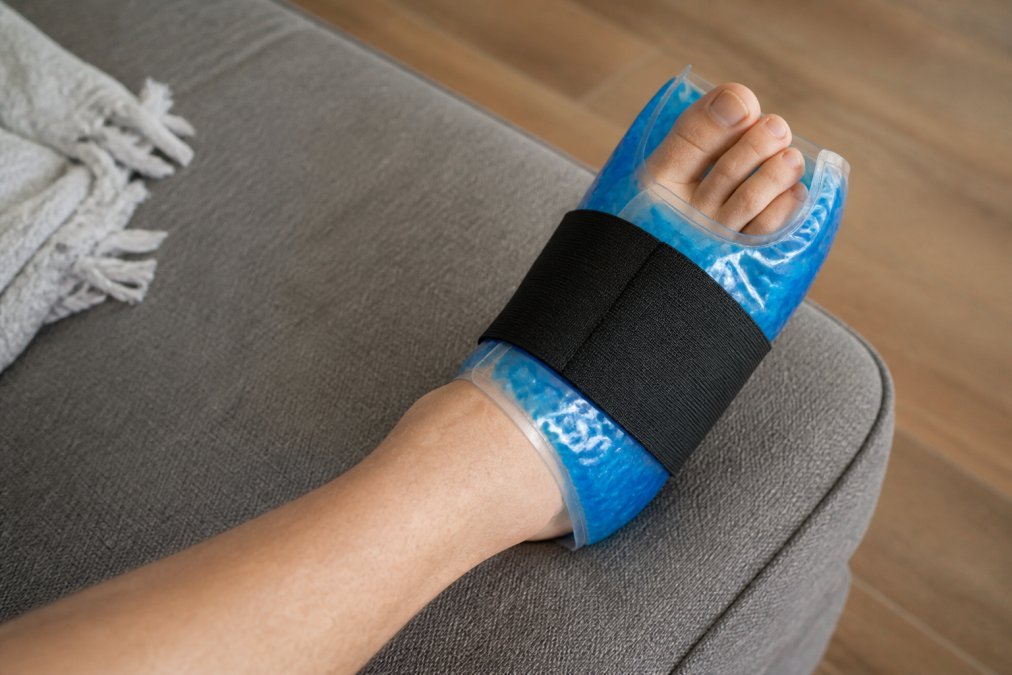
Gel Ice Packs for Fingers and Toes
Gel ice packs are the most portable cold therapy option. Unlike traditional ice, gel stays flexible when frozen, conforming to your toe's shape and distributing cold evenly. Non-toxic gel free of PVC, BPA, and phthalates is essential.
The Penguin Fingers Cold Compression Gel Pack for Fingers and Toes ($14.95) is designed specifically for this use. The pack is one size fits all, ultra-flexible, and reusable. Wrap it around your swollen toe using the integrated sleeve and leave it on for 15 to 20 minutes. The flexibility prevents pressure points that might restrict circulation.
The main limitation: gel packs provide cold only. For compression support alongside cold, wrap the pack with an elastic bandage or use a dedicated compression sleeve.
Reusable Compression Sleeves
Compression sleeves integrate cold therapy with sustained pressure to minimize swelling. The best designs use gel inserts that you freeze, then slide into a breathable sleeve wrapping around your foot or toe.
The Penguin Fingers Elbow and Foot Cold Compression Therapy Sleeve ($22.95) works for feet and toes, wrapping around your forefoot, ankle, or individual toes. The dual hot and cold capability means you can use the same sleeve for acute cold therapy and later-stage heat therapy.

Compression sleeves stay in place better than gel packs alone, allowing you to move around while managing swelling. Setup takes a few minutes: freeze the gel inserts (usually 2 to 4 hours), insert them into the sleeve, and wrap around the affected area. Ensure snug but not tight compression, you should fit a finger under the edge.
DIY vs. Professional-Grade Options
DIY cold therapy using household items carries real risks. Frozen vegetables or ice cubes wrapped in a towel get extremely cold, often below 32°F, and exposure time is hard to control. Frostbite can develop faster than expected, especially if you fall asleep with ice against your skin. natural anti-inflammatory herbs.
Professional-grade products like Penguin Fingers sleeves are engineered with safety in mind. The gel formulation reaches therapeutic cold without dangerous temperatures. The sleeve design distributes pressure evenly, preventing concentrated cold exposure that causes tissue damage. Medical-grade materials are tested for skin safety.
A quality compression sleeve costs $20 to $30 and pays for itself in convenience and safety over time. Professional-grade also means consistency, every use delivers the same cold temperature and compression level, crucial for managing chronic conditions over months or years.
Specific Toe Conditions and Cold Therapy Protocols
Different toe conditions benefit from slightly different cold therapy approaches.
Bunions and Forefoot Pain
Bunions cause swelling at the base of the big toe. Cold therapy reduces inflammation, especially after wearing tight shoes or standing for long periods.
Apply cold for 15 to 20 minutes immediately after activity that irritates the bunion. Many find icing before bed helps sleep. Compression is particularly helpful because pressure stabilizes the joint and prevents worsening swelling. A compression sleeve designed for the forefoot keeps the bunion supported while cold reduces inflammation.
Cold therapy won't shrink a bunion, the bony deformity is structural and requires surgery to correct. Cold manages pain and swelling, providing symptom relief that may delay or prevent surgery.
Plantar Fasciitis
Plantar fasciitis is inflammation of the thick tissue running along the bottom of your foot, often causing heel or forefoot pain. Cold therapy reduces inflammation in the fascia, providing relief especially after activity.
Ice the bottom of your foot for 15 to 20 minutes after activity or before bed. Some use a frozen water bottle rolled under the arch; others prefer a gel pack or compression sleeve covering the forefoot and heel. Applying cold immediately after activity, before inflammation fully develops, is more effective than waiting until pain peaks.
Compression helps by supporting the arch and reducing strain on the fascia. Wearing compression during the day, even without cold, can prevent flare-ups.
Post-Surgery Recovery
After foot or toe surgery, cold therapy is standard protocol. Ice aggressively in the first 48 hours, then transition to lighter use as swelling decreases.
Apply cold for 15 to 20 minutes every 2 to 3 hours for the first 48 hours. After that, reduce frequency to every 4 to 6 hours, or as your surgeon recommends. Most surgeons suggest continuing cold therapy for 1 to 2 weeks post-op.
Compression is essential post-surgery, preventing fluid reaccumulation at the surgical site. Penguin Fingers sleeves are suitable for post-op use; confirm with your surgeon that any product won't interfere with your specific recovery. Always follow your surgeon's specific instructions, as post-op protocols vary by procedure.
Skin Protection and Safe Cold Application
Direct ice contact damages skin. Frostbite can develop in 15 to 20 minutes with bare ice, especially if you have reduced sensation or circulation issues (the CDC). Always place a barrier between cold and skin, a thin cloth, gel pack sleeve, or compression wrap.
Watch for warning signs during and after cold application. Mild numbness is normal; redness that fades within 30 minutes is normal. Blanching, persistent redness, blistering, or unresolved tingling signals you've applied cold too long. Stop immediately and let skin rewarm naturally.
People with diabetes, neuropathy, or reduced circulation should limit cold application to 10 to 15 minutes, check skin frequently, and consider using a compression sleeve instead of concentrated ice packs (the American Dental Association). Moisturize after cold therapy to prevent irritation from daily use.
Combining Cold Therapy with Elevation and Compression
The most effective swelling management combines three elements: cold to reduce inflammation, elevation to use gravity against fluid buildup, and compression to restrict fluid movement.
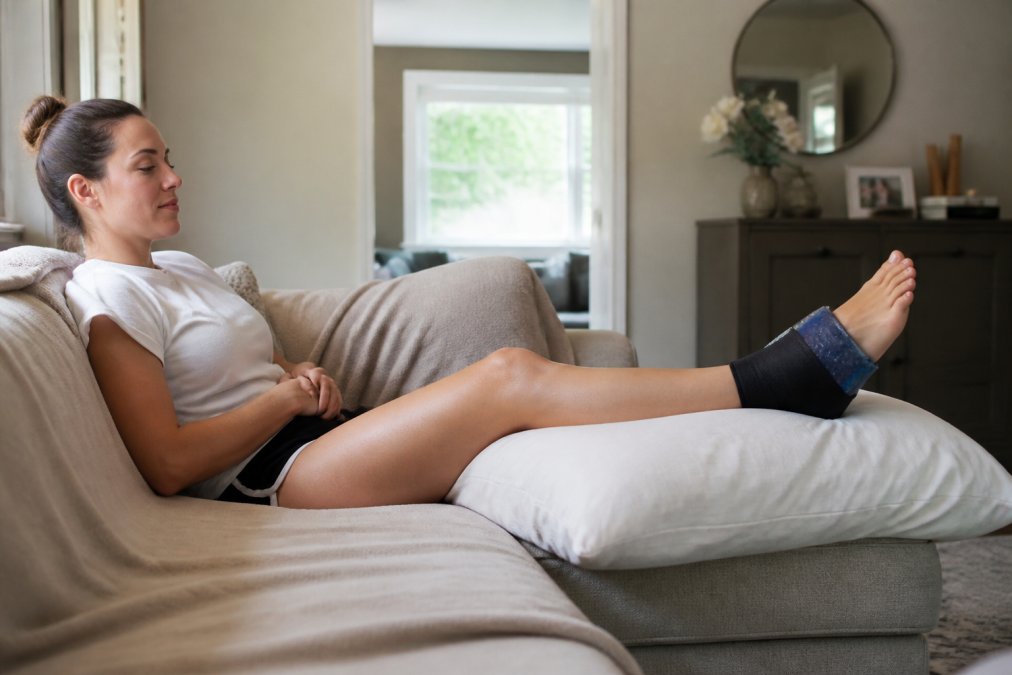
Elevation is simple but often overlooked. When your foot hangs down, gravity pulls fluid into tissue, worsening swelling. When raised above heart level, gravity helps fluid drain back toward your heart. Lying down with your foot on a pillow is more effective than sitting with your foot on a footstool.
Combine cold, elevation, and compression during rest periods. Apply your cold compression sleeve while lying down with your foot elevated on a pillow. This three-part approach addresses swelling from multiple angles. Many people do this for 15 to 20 minutes in the evening, significantly reducing next-morning swelling.
Compression alone (without cold) also helps. Wearing a compression sleeve during the day prevents swelling from worsening. Apply the full protocol immediately after activity that triggers swelling, the sooner you address inflammation, the less swelling develops.
For chronic conditions, establish a routine. Many benefit from a 20-minute cold + elevation + compression session each morning and evening, preventing swelling from accumulating over days or weeks.
Managing swollen toes doesn't require expensive treatments or prescriptions. Cold therapy, when applied correctly, reduces inflammation and pain while supporting your body's natural healing. The challenge is consistency, using cold therapy regularly, not just when pain peaks.
Penguin Fingers Cold Compression Gel Packs and Compression Sleeves are designed to make this easier, delivering targeted cold therapy without the mess of ice or bulk of generic compression wraps. Whether managing arthritis, recovering from surgery, or dealing with a sports injury, cold compression therapy can be your first line of defense against swelling and pain. Start with a gel pack if testing the approach, then upgrade to a compression sleeve for daily management. Both are reusable, affordable, and backed by practical design that makes consistency possible.
Frequently Asked Questions
How long should you ice a swollen toe?
Apply cold therapy for 15 to 20 minutes at a time, several times per day. For acute injuries, ice every 2 to 3 hours during the first 48 hours. After 48 hours, reduce frequency to 3 to 4 times daily as swelling decreases. Always use a barrier like a thin cloth between the ice pack and skin to prevent frostbite. If swelling persists beyond a week, consult a healthcare provider.
Is cold therapy or heat better for swollen toes?
Cold therapy is best for acute swelling, sprains, and the first 48 hours after injury because it reduces inflammation and numbs pain through vasoconstriction. Heat works better for stiff joints and chronic conditions like arthritis after the acute phase ends. Many people benefit from alternating: ice for 15 minutes, rest for 15 minutes, then heat for 15 minutes. This approach combines inflammation reduction with improved blood flow for tissue healing.
What makes cold compression therapy different from a regular ice pack?
Cold compression sleeves like Penguin Fingers' gel packs combine cooling with gentle pressure, which reduces swelling more effectively than ice alone. Compression limits fluid buildup (edema) while cold numbs pain and decreases inflammation. Reusable medical-grade gel packs stay flexible and conform to your toe, unlike rigid ice cubes. They're also hands-free, allowing you to move around during recovery instead of holding a pack in place.
Can cold therapy help with chronic conditions like arthritis?
Yes. Cold therapy reduces inflammation and provides temporary pain relief for arthritis flare-ups. Many arthritis sufferers find that wearing a cold compression sleeve during acute pain episodes helps them manage discomfort without relying solely on medication. For chronic use, alternate cold therapy with heat and movement. Wearable sleeves designed for specific joints, like those for toes and forefoot, allow you to apply consistent therapeutic temperature while continuing daily activities.
This article was written using GrandRanker


