

Last Updated: November 8, 2026
Quick Summary
To choose the right size compression sleeve, measure bare skin with a soft tape at the exact anatomical points the manufacturer's chart names, then match your circumference to the chart's range first and confirm your length fits the same size row. Size up for all-day wear and size down only if the chart or a clinician tells you to.
- Measure in the morning before swelling builds, and measure both limbs.
- Circumference decides your size, so let it win over length when numbers conflict.
- Size for the larger limb if your left and right measurements differ.
- A compression elbow sleeve should let a fingertip slide under the top edge.
- Never force a sleeve that tingles or turns your skin pale.
Table of Contents
- Why Compression Sleeve Sizing Is Not Clothing Sizing
- How to Measure for a Compression Sleeve
- Reading a Compression Sleeve Size Chart
- How Tight Should a Compression Elbow Sleeve Be?
- Compression Knee Sleeve Size Chart: Matching Size to Use
- When Your Measurements Fall Between Sizes
- Troubleshooting Fit After You Put the Sleeve On
- Pick Your Sleeve and Start With the Right Fit
- Frequently Asked Questions
Why Compression Sleeve Sizing Is Not Clothing Sizing
A compression sleeve is a medical-grade garment that applies measured pressure to a limb, not a piece of clothing sized like a T-shirt. That distinction is the whole ballgame. A loose sleeve does nothing; a tight one can restrict blood flow and cause real discomfort. Industry guidance for 2026 is blunt on this point: compression sizing follows its own rules, and a sleeve that is too loose fails to support while one that is too tight can be restrictive or harmful (LympheDIVAs 2026 compression sleeve buyer's guide(https://lymphedivas.com/blogs/default-blog/the-best-compression-sleeves-for-lymphedema-a-2026-buyers-guide)).
So forget the "medium" you grab off a rack. You need a tape measure, a size chart, and five minutes. Here is how to choose the right size compression sleeve.
If you are still weighing whether a sleeve beats taping or icing, our comparison of KT tape vs compression sleeves and ice packs vs compression sleeves covers which tool suits which problem before you commit to a size.
How to Measure for a Compression Sleeve
Measure for a compression sleeve with a soft, flexible tape measure, taken directly against bare skin, at the anatomical points the manufacturer's chart names. Measure both limbs, write the numbers down, and measure in the morning before swelling builds.
Four rules keep your numbers honest:
- Use a soft tape, not a rigid ruler.
- Keep the tape snug but never denting the skin.
- Measure bare skin, not over clothing.
- Stand or sit the way the chart instructs.
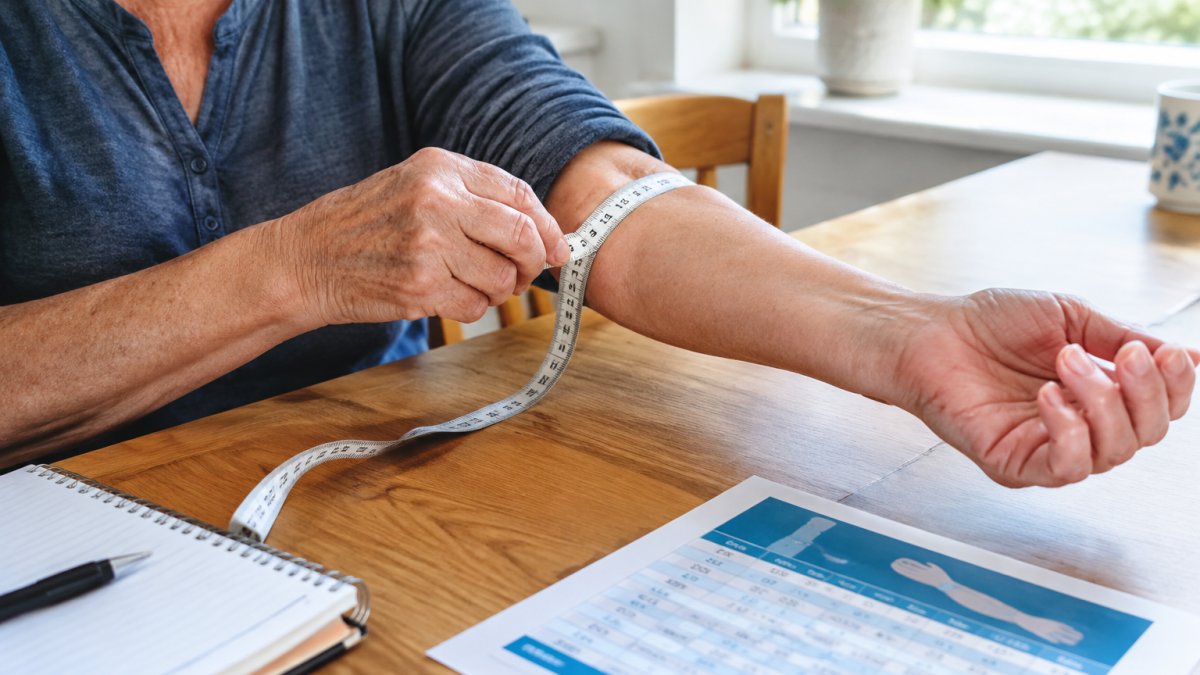
Measuring Circumference at the Right Anatomical Points
Circumference is the number that decides your size, and it must be taken at the exact landmark the chart specifies. Arm sleeves usually call for the wrist and the widest part of the upper arm. Calf sleeves use the widest part of the calf and the ankle. Knee sleeves use the center of the kneecap and the thigh above it.
A common mistake is measuring "about where it looks widest." Take the tape to the named point, note the number in centimeters or inches to match the chart, then repeat on the other limb. A sleeve sized from a guessed landmark is likely to fit wrong.
Measuring Sleeve Length and Choosing Regular vs Long
Length is a separate measurement from circumference, and skipping it is how people end up with a sleeve that rolls or bunches. Measure the limb length the chart asks for, often from a joint crease to a set point. Then pick regular or long based on that number.
Long lengths exist for taller frames and longer limbs. If your length lands near the top of the regular range, check the long option before ordering.
Reading a Compression Sleeve Size Chart
Read a compression sleeve size chart by matching your circumference to the chart's range first, then confirming your length fits the same size row. The chart is brand-specific, so a "large" in one line is not a "large" in another. Follow the manufacturer's chart, not general sizing habits (DocMiller calf compression sleeve size guide(https://docmillersports.com/blogs/articles/calf-compression-sleeve-size-guide)).
A typical chart reads like this:
| Measurement point | What to record | Why it matters |
|---|---|---|
| Wrist or ankle circumference | Smallest point, bare skin | Sets the base size |
| Calf or upper arm circumference | Widest point | Confirms the size band |
| Sleeve length | Joint crease to set point | Chooses regular vs long |
| Compression level | mmHg if listed | Matches medical vs athletic use |
One honest limitation: charts vary wildly between makers. Never carry a size across brands.
How Tight Should a Compression Elbow Sleeve Be?
A compression elbow sleeve should feel firm and supportive, with even pressure from the wrist to the upper arm and no pinching, numbness, or rolling at the edges. Because a sleeve that fits well should support movement without restricting circulation, the same attention to a secure, comfortable fit matters when choosing a youth baseball arm sleeve such as Heatstik.
Elbow sleeves are sized differently from arm sleeves because the elbow joint changes shape as you bend it. Most charts ask for two circumference measurements: the widest part of the forearm just below the elbow crease, and the widest part of the upper arm above the biceps. Some also ask for a length from the elbow crease to a set point on the forearm or upper arm.
A good fit check takes ten minutes:
- Bend and straighten the elbow fully. The sleeve should not bunch in the crease or pull down at the wrist.
- Press two fingers under the top edge. If they slide in easily, the sleeve may be too loose; if you cannot get a fingertip under, it is too tight.
- Wear it for ten minutes. Deep red marks that fade within a few minutes are normal; marks that last longer or feel numb are not.
Watch out: buying a smaller elbow sleeve "for more support" is a common fit mistake. It can cut comfort and wear time.
Sizing down is not a shortcut to a better fit. A sizing guide advises sizing down only when the maker recommends it, and a sleeve that is too tight can feel restrictive or uncomfortable (EXTERNAL_LINK: Danish Endurance compression fit guidance | danishendurance.com).
Compression Knee Sleeve Size Chart: Matching Size to Use
Knee sleeve sizing depends on how you plan to use it. A smaller size gives firmer compression for training, while a larger size suits comfort during all-day wear, travel, or long shifts (Copper Joint knee sleeve sizing guide(https://www.copperjoint.com/blogs/product-specific/how-to-choose-the-right-size-knee-sleeve)).
| Use case | Size choice | Fit goal |
|---|---|---|
| Training and high-intensity activity | Smaller end of your range | Firm, locked-in support |
| All-day wear or long shifts | Larger end of your range | Comfort without pressure marks |
| Post-injury recovery | Chart midpoint | Steady, even compression |
For athletic use, the target pressure range sits between 15 and 25 mmHg; below or above that band, a sports sleeve stops doing its job (EXTERNAL_LINK: Feel Recovery compression sizing guidance | feelrecovery.com). If you are sizing for recovery rather than training, our guide to the best cold compression for sports recovery walks through matching sleeve type to your routine.
When Your Measurements Fall Between Sizes
When measurements fall between sizes, size up for comfort and all-day wear, and size down only if the chart or a clinician tells you to. A half-size gap is normal. The tie-breaker is how long you plan to wear the sleeve.
Use this decision order when the chart gives you conflicting numbers:
- Circumference wins over length. If your circumference lands in one size and your length in another, choose the size that matches circumference, then switch between regular and long length in that size.
- The named landmark wins over a guessed one. If you measured "about where it looks widest," re-measure at the exact point the chart names before deciding.
- The larger limb wins. If your left and right measurements differ, size for the larger limb unless a clinician says otherwise.
- Morning measurements win for swelling. Measure before swelling builds; if you swell later in the day, note that and ask the maker whether to size up.
A simple rule set for common cases:
- All-day wear: size up.
- Short training sessions: size down within the chart's range.
- Medical compression: follow the prescriber's guidance, not guesswork.
- Conflicting numbers: let circumference win over length.
- Significant swelling or lymphedema: do not self-size; have a clinician or trained fitter measure you.
One more point most guides miss: custom-made garments are preferred for severe cases because of better adaptability, while standard garments are more cost-effective (PMC study on compression garment adherence(https://pmc.ncbi.nlm.nih.gov/articles/PMC12028548/)). If your measurements sit far outside the chart, ask about custom sizing.
Watch out: do not choose a size from only one body dimension. A sleeve that matches your calf but not your ankle will roll or pinch, and no amount of breaking in will fix it.
Troubleshooting Fit After You Put the Sleeve On
Troubleshooting fit starts with a simple check: does the sleeve stay put, feel even, and leave no deep marks after ten minutes? If yes, you likely have the right size. If not, here is how to read the symptoms.
- Rolls or slides down: too loose or too short. Try a long length or a smaller band.
- Pinches at one spot: wrong landmark. Re-measure the named point.
- Numb fingers or toes: too tight. Stop wearing it and size up.
- Bunches behind the knee or elbow: length mismatch. Switch regular to long, or the reverse.
- Loosens after washing: follow the care label; heat can shrink or stretch the fabric.
Watch out: never force a sleeve that tingles or turns your skin pale. That is a fit failure, not a break-in period. For step-by-step guidance on wearing one correctly, see our guide on how to use compression sleeves for swelling.
Pick Your Sleeve and Start With the Right Fit
Getting the size right helps a sleeve do its job. Measure at the named points, match circumference first, confirm length, and check the chart for that exact product.
At Penguin Fingers, we build wearable cold compression sleeves for the joints that ache most. The Elbow and Foot Cold Compression Therapy Sleeve wraps elbows, ankles, wrists, and feet in soft, stretchy neoprene with a fast-freezing gel pack that works hot or cold. Our Wrist Cold Compression Pack provides simultaneous cooling and compression to the wrist. And our Finger and Toe Gel Packs are one size fits all, latex free, and non-toxic, so there is no chart to wrestle with.

Measure once, choose well, and get back to moving.
Frequently Asked Questions
How do I know what size compression sleeve to get?
Measure the circumference of the limb at the points your product's size chart specifies, usually the widest part of the calf or the forearm plus the wrist or ankle. Use a flexible tape measure and keep it snug but not digging in. Compare those numbers to the manufacturer's chart rather than your clothing size. The lymphedema study indexed by PubMed Central in 2025 notes that custom-made garments suit severe cases better, while standard sizes work well for most everyday needs, so start with the chart and adjust only if the fit clearly fails.
What should I do if my measurements fall between two sizes?
Check the manufacturer's guidance first. Some brands tell you to size down for firmer compression; others warn that a sleeve that is too tight feels restrictive, so they recommend sizing up. Compression levels are often listed in mmHg on a product's chart, so check the rating for your intended use. If you are using the sleeve for extended wear, travel, or all-day comfort, the larger size is usually the safer pick. If you need firm support during training, the smaller size may fit better.
Can I use the same size chart for different types of compression sleeves?
No. Arm sleeves, knee sleeves, and calf sleeves are measured at different anatomical points, and each brand builds its chart around its own pattern. Charts from different makers and product types will not match one another. Always pull the chart for the specific product and body part you are buying, and measure again rather than reusing numbers from a previous purchase.
How should a compression sleeve fit once it is on?
It should feel snug and supportive without pinching, rolling, or leaving deep marks. You should be able to slide a finger under the top edge, and the fabric should lie flat without bunching behind the knee or elbow. If the sleeve feels restrictive, cuts off circulation, or causes numbness or tingling, take it off and move up a size. A proper fit stays in place through movement and remains comfortable during extended wear, which matters for cold compression sleeves worn during recovery or after activity.


