

Quick Summary
Do not use a cold compress on open wounds, on broken skin, when you see signs of infection, or on areas with poor circulation or numbness. People with peripheral artery disease, diabetes with neuropathy, or Raynaud's phenomenon should check with a clinician first. Cold is also a poor fit for children, older adults, and sensitive skin without a barrier.
- Never place a cold compress directly on an open cut, scrape, or puncture wound.
- Skip cold if you notice redness spreading, pus, fever, or red streaks from a wound.
- Check with a clinician first if you have peripheral artery disease, diabetes with neuropathy, or Raynaud's.
- Keep sessions to 15 to 20 minutes and wait at least an hour between them.
- Always place a towel between the compress and your skin to prevent cold burn.
Table of Contents
- Why a Cold Compress Helps Some Injuries and Not Others
- Open Wounds, Broken Skin, and Signs of Infection
- Circulation Problems, Numbness, and Nerve Conditions
- Cold Compress Use for Children, Older Adults, and Sensitive Skin
- When Heat Makes More Sense: Choosing Hot or Cold Compress
- How Long to Use a Cold Compress Safely
- Signs It's Time to Stop Treatment and Get Medical Care
- Frequently Asked Questions
Why a Cold Compress Helps Some Injuries and Not Others
Last Updated: November 7, 2026
A cold compress is a useful tool for a fresh injury, but it is not right for every situation. Knowing when to skip it matters just as much as knowing when to use it. This guide covers the situations where a cold compress can do more harm than good.
Cold therapy works by narrowing blood vessels and slowing swelling. Cold packs or ice can reduce inflammation in an injury, though cold may also delay healing in some cases. Cold therapy does not need to be entirely avoided. The key is knowing when the benefits outweigh the risks.
- Cold helps most in the first hours after a sprain, strain, or bruise.
- Cold can slow healing in some cases, so timing matters.
- Cold can harm skin and nerves when used too long or without a barrier.
Open Wounds, Broken Skin, and Signs of Infection
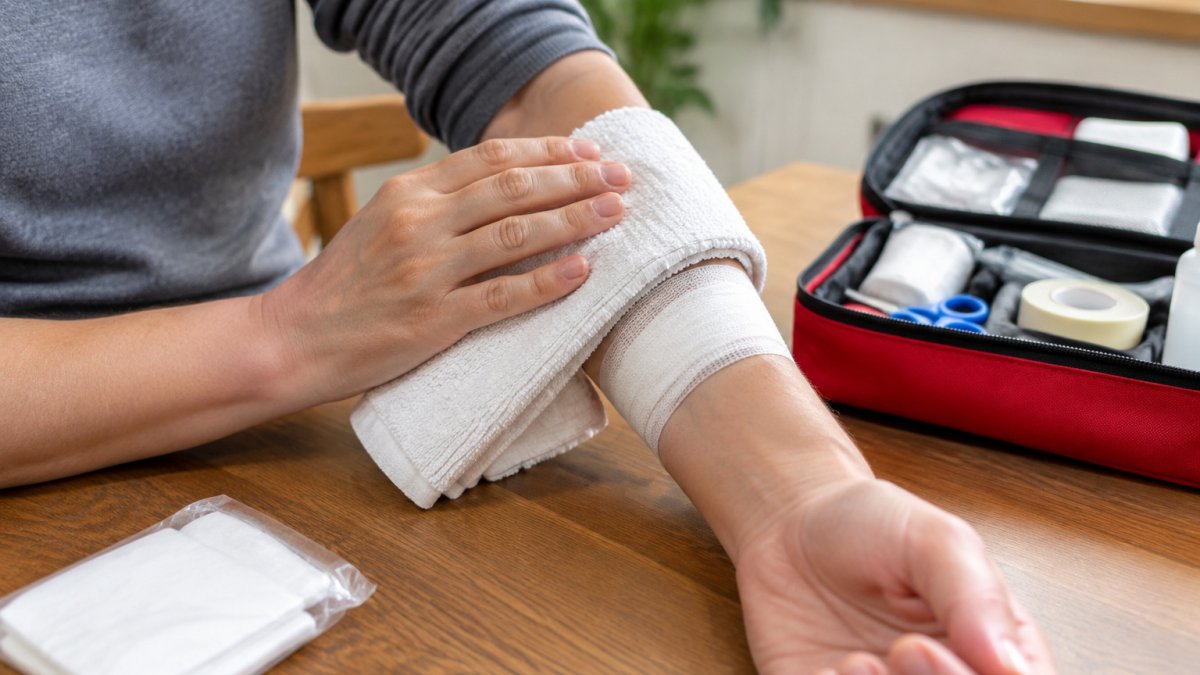
Never place a cold compress directly on an open cut, scrape, or puncture wound. Cold can slow the body's natural healing response in broken skin, and a wet compress can carry bacteria into the wound.
Skip the cold compress if you see signs of infection, such as:
- Redness that spreads outward from the injury
- Warmth, swelling, or pus around the area
- Red streaks moving away from the wound
- Fever or chills
A warm compress is sometimes used for infection, but warmth should only be applied under medical guidance. If symptoms are present, call a doctor rather than treating the area at home.
The article lists specific situations where a cold compress should be avoided or where caution is needed.
| Situation | Why to avoid cold | What to do |
|---|---|---|
| Open cut, scrape, or puncture | Slows healing and wet compress can carry bacteria | Do not place cold on the wound |
| Signs of infection | Infection needs medical assessment | Call a doctor rather than treating at home |
| Red streaks spreading from wound | Possible spreading infection | Seek medical care |
| Fever or chills | May indicate infection | Call a doctor |
Circulation Problems, Numbness, and Nerve Conditions
This is the group most likely to be harmed by a cold compress. Cold narrows blood vessels (vasoconstriction), which is exactly why it limits swelling, but in tissue that already has reduced blood flow, that same narrowing can push an area past the point where it can protect itself. The result is not just discomfort; it is a higher risk of cold burn, skin breakdown, and slow-healing tissue damage that can take weeks to appear.
Reduced circulation. People with peripheral artery disease, diabetes with peripheral neuropathy, or a history of blood clots in the limbs should treat cold therapy as a decision to clear with a clinician first. In peripheral artery disease, the legs and feet already receive less oxygenated blood; adding vasoconstriction can worsen cramping and, in severe cases, contribute to tissue injury. Diabetic neuropathy is a double problem: circulation is often reduced and sensation is blunted, so the person may not feel the cold damaging the skin.
Reduced sensation. Anyone with numbness or tingling in the area, from nerve damage, a spinal condition, or a previous stroke, should not use a cold compress on that area without supervision. The compress cannot be felt reliably, so the normal warning signals (aching, stinging, intense cold) never arrive.
Cold sensitivity and Raynaud's phenomenon. In Raynaud's, fingers and toes overreact to cold by turning white, then blue, then red as blood flow returns. A cold compress on the hand or foot can trigger an attack, and repeated exposure can make episodes more frequent. For these people, a cool, not cold, pack, or a warm compress instead, is usually the safer choice.
Nerve compression conditions. Carpal tunnel syndrome and similar compression neuropathies often feel worse with cold because cold stiffens the tissue around the nerve and reduces the flexibility of the wrist and hand.
- Check with a clinician before using cold if you have peripheral artery disease, diabetes with neuropathy, Raynaud's phenomenon, or any diagnosed circulation disorder.
- Skip cold entirely on an area you cannot feel well, or use it only under direct supervision with a timer.
- Stop immediately if fingers or toes turn white, blue, gray, or waxy, or if the skin stays cold to the touch after the pack is removed.
- Watch out: numbness that appears during or after a session, rather than before, is a sign the compress was too cold or left on too long, not a sign it is working.
If you are unsure which category you fall into, the safer default is a shorter session (10 minutes), a thicker barrier (a folded towel rather than a thin cloth), and a skin check every few minutes.
Cold Compress Use for Children, Older Adults, and Sensitive Skin
Children, older adults, and people with sensitive skin need extra care. Their skin can be thinner or less able to tell when it is getting too cold. This raises the risk of cold burn or skin irritation. Because their skin may not signal excessive cold reliably, choosing between cold and heat for muscle pain should also take individual sensitivity into account, as discussed by X-ZONE New Zealand.
Keep these tips in mind:
- Always wrap the compress in a thin towel or pillowcase.
- Use shorter sessions for children and older adults.
- Watch for changes in skin color, such as pale, gray, or waxy patches.
- Check the skin after each use and stop if it looks irritated.
Still, a doctor should guide the routine so that sensitive areas are protected.
When Heat Makes More Sense: Choosing Hot or Cold Compress
Heat and cold do different jobs. Cold is commonly used in the first days after a fresh injury, when swelling and bruising are the main problems. Heat is commonly used for stiffness, tight muscles, and joint pain that lingers.
A simple way to choose:
- Cold: New injury, swelling, sharp pain, or bruising
- Heat: Muscle stiffness, old aches, or tightness that has settled in
- Neither: Open wounds, infection, or numbness without a clear cause
Try one approach for a short period, and pay attention to how the area feels afterward.
How Long to Use a Cold Compress Safely
A common guideline is to use a cold compress for 15 to 20 minutes at a time. Leave a break of at least an hour before applying it again. Never fall asleep with a cold compress on the skin.
Always place a towel between the compress and your skin. Direct contact can cause frostbite or cold burn, especially with ice packs. Stop if the skin turns white, numb, or hard.
- Limit each session to about 15 to 20 minutes.
- Wait at least an hour between sessions.
- Remove the compress if pain or numbness increases.
Signs It's Time to Stop Treatment and Get Medical Care
Most cold-compress problems are minor and resolve when you remove the pack. The skill is telling the difference between a normal cold-therapy response and a warning sign that needs a clinician. Use this two-tier approach.
Stop the compress and reassess if you notice:
- Skin that is bright red, blanched white, gray, or waxy during or right after a session
- A burning or stinging sensation under the pack rather than a dull ache
- Numbness or tingling that was not there before you started
- Pain that climbs during the session instead of easing
- A hard, raised, or blistered area on the skin
Remove the pack, let the skin return to normal temperature on its own, and do not reapply that day. If the skin looks normal within 30 to 60 minutes and sensation returns, a shorter, better-barriered session later is usually fine. If the skin stays discolored, firm, or numb, treat it as a cold injury and have it looked at.
Seek medical care the same day if any of the following are present:
- Pain that is severe, steadily worsening, or out of proportion to the visible injury
- Swelling that continues to grow after 48 hours rather than plateauing
- Inability to bear weight, move the joint, or use the limb normally
- A limb that looks deformed or is held in an unnatural position
- Fever, chills, or a joint that is hot, red, and swollen, possible infection
- Red streaks spreading away from a wound, or pus
- Numbness, weakness, or a pins-and-needles feeling that does not resolve after the compress is off
Seek urgent or emergency care for a suspected fracture with deformity, a head injury with confusion or vomiting, a loss of consciousness, or a limb that is pale, cold, and painful with a tight, swollen compartment, that last pattern can signal a circulation emergency and should not wait.
A practical rule: a cold compress should make a fresh injury feel gradually better over 15 to 20 minutes. If it makes things worse, or if the area does not improve at all after 48 to 72 hours of rest, ice, compression, and elevation, the problem is beyond what a compress can fix. Watch out: using cold to 'push through' worsening pain is one of the most common ways a minor injury becomes a larger one.
Write down what you see, time, skin color, sensation, pain level, before you call. That record helps a clinician tell a cold-therapy reaction apart from the underlying injury.
Frequently Asked Questions
When should you avoid using a cold compress?
Avoid a cold compress on open wounds, broken skin, or areas with signs of infection such as spreading redness, warmth, pus, or fever. Also avoid it if you have poor circulation, numbness, or conditions like Raynaud's phenomenon, where cold can reduce blood flow further. People with cold sensitivity or cold-triggered reactions should skip cold therapy. Applying ice directly to skin raises the risk of frostbite and cold burns, so always place a towel between the pack and your skin. If symptoms worsen or do not improve after a short period, stop and contact a healthcare provider.
Can a cold compress make an injury worse?
Cold therapy is generally safe for new soft tissue injuries, but it can cause problems in specific cases. Leaving a cold compress on too long, applying it directly to skin, or using it on numb areas can cause skin damage or frostbite. A cold compress is also a poor choice for injuries where blood flow is already compromised, since cold further restricts circulation. A 2021 review published through PubMed Central notes that cold can reduce inflammation but does not need to be entirely avoided, so the key is using it correctly and stopping when something feels wrong.
Can you put an ice pack directly on your skin?
No. Placing an ice pack directly on the skin can cause ice burns, frostbite, and skin irritation. Wrap the cold pack in a thin towel or pillowcase before applying it. Keep sessions to about 15 to 20 minutes, then remove the pack and let the skin return to a normal color and temperature before reapplying. If the skin turns white, gray, or numb, remove the compress right away. People with diabetes, circulation problems, or reduced sensation in the area should be especially careful because they may not notice early warning signs.
When should you seek medical care instead of using a cold compress?
Seek medical care if an injury involves deformity, inability to bear weight, severe pain, numbness that persists, or a wound that is deep, bleeding heavily, or showing signs of infection. Get prompt care for swelling that continues to worsen, fever, red streaks spreading from a wound, or skin that stays pale or blue after removing cold therapy. A cold compress can ease mild pain and swelling, but it should not delay evaluation of a serious injury. Call a doctor or urgent care if symptoms are unclear or getting worse.


