

Last Updated: November 6, 2026
Quick Summary
Knuckle swelling after gardening usually comes from repeated gripping, pulling and pressing on tools, which irritates the joints and tendons around the knuckles. Most people notice the puffiness the next morning, and it often settles within a day or two of rest. Persistent, hot, red or painful swelling needs a doctor's review.
- Swelling that appears the morning after gardening usually points to cumulative strain from repetitive gripping.
- Stop the task and remove rings early, before overnight swelling makes them hard to remove.
- Elevate the hand above heart level and use a cold pack wrapped in cloth for 10 to 15 minutes.
- Pace work in shorter blocks, switching tasks every 20 to 30 minutes to reduce repetition.
- See a doctor if swelling lasts more than a few days or comes with numbness, redness or warmth.
Table of Contents
- Why Your Knuckles Swell After a Day in the Garden
- The Main Causes of Knuckle Swelling From Gardening
- Swollen Finger After Pulling Weeds: What Is Happening
- Swollen Painful Finger After Gardening: Symptom Guide
- Plant Thorn Wounds and Arthritis Infection Risk
- How to Treat Working Hand Syndrome at Home
- Booking Your Next Step: When to See a Doctor and Cold Compression Support
- Frequently Asked Questions
Why Your Knuckles Swell After a Day in the Garden
Knuckle swelling after gardening is common, and it usually comes from repeated gripping, pressure and small impacts on the hands. Most people notice the puffiness the next morning, when their rings feel tight or their fingers look thick and stiff. This guide from Penguin Fingers explains the likely causes, the warning signs to watch for, and simple steps to ease the swelling at home.
Gardening asks a lot from small joints. Each weed pull, pruning cut and handful of soil involves repeated bending and gripping. Over a long afternoon, those movements add up, and the tissue around the knuckles can react.
Warm, fast-moving swelling after a single session is often a sign of strain, not something serious. Persistent or worsening swelling deserves a closer look from a doctor.
The Main Causes of Knuckle Swelling From Gardening
Several things can cause knuckles to swell after time in the garden. Most come down to load, repetition and inflammation. Knowing the common triggers helps you spot the pattern in your own routine.
Common triggers include:
- Long periods of tight gripping on tools
- Repeated twisting or pulling motions
- Pressing hard on pruners, shears or trowels
- Working in cold weather, which can stiffen joints
- Small cuts or scrapes that invite inflammation
Repetitive gripping and overuse
Repetitive gripping is one of the most common reasons knuckles swell after gardening. Each squeeze of a pruner or hand fork strains the joints and the tendons that move them. Over several hours, the tissue can become irritated and puffy.
Overuse tends to build slowly. You may feel fine during the job and notice the swelling the next day.
Tendon inflammation and trigger finger
Tendon inflammation, sometimes called tendonitis, can also cause knuckle swelling. Tendons glide through a sheath at each joint, and repeated friction can make that sheath swell. Trigger finger is a related problem where a finger catches or locks when you bend or straighten it (Royal Orthopaedic Hospital).
Signs to notice include a tender lump at the base of a finger, a snapping or catching feeling, and stiffness in the morning.
The table below sums up the main gardening-related causes of knuckle swelling and what each one typically looks like.
| Cause | Typical pattern | Key sign |
|---|---|---|
| Repetitive gripping and overuse | Builds slowly over a long session | Swelling noticed the next day |
| Tendon inflammation | Friction in the tendon sheath | Tender lump at the base of a finger |
| Trigger finger | Finger catches or locks | Snapping or catching when bending |
| Cold weather | Stiffens joints | Stiffness during work |
| Small cuts or scrapes | Invite inflammation | Redness or soreness at the wound |
Swollen Finger After Pulling Weeds: What Is Happening
Pulling weeds is a repetitive task that combines grip, pinch and sudden pulling force. The finger joints take the strain each time you yank a root. Many gardeners notice one finger swelling more than the others, usually the one that does the most gripping.
Swelling after weeding often settles within a day or two of rest. If the finger stays hot, red or painful, it is worth a check-in with a healthcare provider.
Swollen Painful Finger After Gardening: Symptom Guide
Knuckle swelling after gardening is not one condition. It is a shared sign of several different processes, and the pattern of symptoms is what points toward the likely cause. The guide below compares the most common patterns gardeners report. It is not a diagnosis, and symptoms alone cannot confirm what is happening in a joint, tendon, or soft tissue.
Puffy knuckles with a dull ache and no redness. This is the most common pattern after a long session of gripping, pulling, and pruning. As the swelling settles, protect the skin from repeated washing and friction, since creams for cracked hands may be worth considering when dryness and fissures add to the discomfort.
Swelling centered on one knuckle with pinpoint tenderness. When a single knuckle is swollen and tender to the touch, think about direct pressure or a small impact rather than whole-hand overuse. Gardeners lean on trowels, press down on pruners, and bump knuckles against pots, stones, and raised bed edges.
Swelling along the side of the finger with a catching or locking sensation. This pattern points toward the flexor tendon and its sheath rather than the joint itself. Repeated squeezing of pruners, hand forks, and weed pullers creates friction where the tendon glides through the pulley system at the base of the finger. The sheath can swell, and the tendon can begin to catch.
Swelling with numbness, tingling, or night-time pins and needles. Numbness or tingling that runs into the thumb, index, middle, or ring finger is a nerve pattern, not a joint pattern. Prolonged wrist bending, tight gripping, and pressure from tool handles can compress the median nerve at the wrist, which is the carpal tunnel pattern.
Swelling with warmth, spreading redness, or fever. This is the pattern that should not wait. A thorn, splinter, rose prickle, or sharp branch can push bacteria deep into the hand, and a puncture near a joint or tendon sheath can seed an infection that shows up days later.
Swelling with bruising or a deformity. A fall onto an outstretched hand, a dropped stone, or a hard twist while pulling a stubborn root can bruise or fracture a finger. Bruising that appears after the swelling, a finger that looks crooked, or an inability to bend or straighten the joint warrants an evaluation.
Stiffness that eases with movement and returns with rest. Morning stiffness that loosens after a few minutes of movement is a common pattern in joints that have been worked hard, and it is also a familiar pattern in people with existing osteoarthritis. Gardening does not cause arthritis, but a long session can provoke a flare in a joint that is already sensitive.
A practical way to use this guide is to match your dominant symptom first, then check for the red flags. Swelling alone, without redness, warmth, numbness, bruising, or loss of movement, is usually a strain pattern. Swelling plus any red-flag symptom is a reason to stop gardening and get the hand looked at.
Plant Thorn Wounds and Arthritis Infection Risk
Small punctures from rose thorns, splinters or sharp branches can carry bacteria deep into the hand. Infection can show up days later, not right away. A puncture near a joint deserves extra care.
Clean any wound with soap and water, cover it, and watch it closely. People with existing arthritis may find that a wound-related flare makes the joint harder to move. Tell your doctor if a puncture is slow to heal or the area gets worse.
How to Treat Working Hand Syndrome at Home
Working hand syndrome is the aching, puffy, stiff-handed feeling that follows hours of repetitive gripping, pulling, and pruning. The goal of home care is to reduce swelling, protect the tissue while it settles, and return to gardening without provoking the same reaction.
1. Stop the task and remove rings first. The single most useful early step is to take rings off the affected hand before swelling peaks. Swelling often worsens overnight, and a ring that fits in the evening can become tight and hard to remove by morning.
2. Rest the hand in a relative, not absolute, way. Total immobilization is rarely necessary for a mild overuse flare, and it can make stiffness worse.
3. Elevate the hand above heart level. Elevation uses gravity to help move fluid out of the fingers and knuckles. A finger splint wrap can also support the joint while it settles.
4. Use a cold pack safely. Cold can help calm the swelling that causes puffiness. A flexible gel pack that wraps around the finger or knuckle is easier to use than a rigid ice bag because it conforms to the joint.
Watch out: cold packs that are too cold or left on too long can cause a cold burn, and numb fingers are a sign to remove the pack immediately.
5. Stretch gently, not aggressively. After the first day, gentle finger and wrist range-of-motion exercises help maintain movement and reduce morning stiffness. Open and close the fingers slowly, touch the thumb to each fingertip, and bend and straighten the wrist through a comfortable range. Stretching should not reproduce sharp pain.
6. Protect the knuckles during the next session. Padded gloves with a reinforced palm and a cushioned knuckle panel reduce direct pressure on the joints. Tool choice matters as much as glove choice: larger, cushioned handles spread grip force over a wider area, and ratcheting pruners reduce the number of full squeezes per branch.
7. Pace the work and change tasks. Repetition is the main driver of garden-related knuckle swelling, and the simplest way to reduce it is to break up the repetition.
8. Know when to return to gardening. A mild flare that settles within 24 to 48 hours with rest, cold, and elevation is a reasonable signal to return to light gardening. Start with tasks that need less grip force, such as watering or deadheading, and save pruning and weeding for a later session.
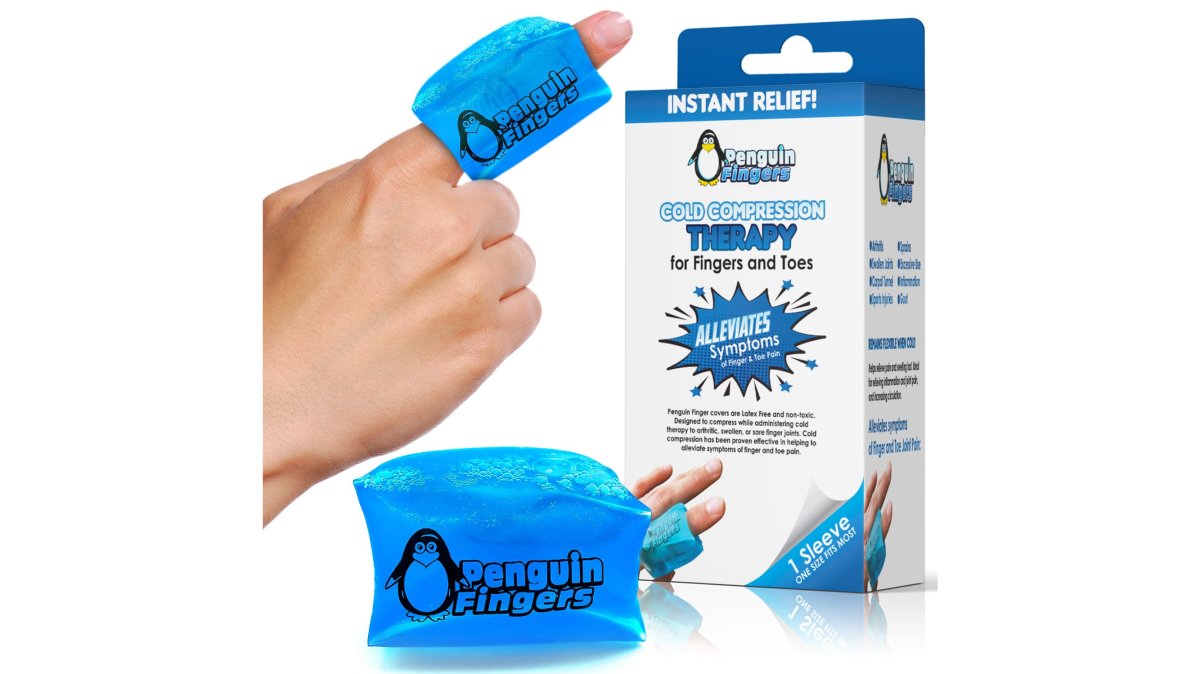
A flexible cold compression sleeve on the swollen finger can make resting easier. The Penguin Fingers Cold Compression Gel Packs for Fingers and Toes are a one-size-fits-all cold compression option for fingers and toes, priced at $14.95.

Booking Your Next Step: When to See a Doctor and Cold Compression Support
If swelling lasts more than a few days, keeps returning, or comes with numbness, deep pain or redness, book an appointment with your doctor or a hand specialist. Early care can prevent long-term stiffness.
For everyday relief between gardening sessions, you can browse the Penguin Fingers cold compression range for finger and joint support.
Frequently Asked Questions
Why are my hands swollen after yard work?
Hand swelling after yard work usually comes from repetitive gripping, prolonged bending, and pressure from tools like pruners and trowels. Tissues in the fingers and knuckles become irritated and fluid collects, which causes puffiness and soreness. Resting the hands, lightly elevating them, and applying a cold compression wrap for short periods often settles within a day or two. If swelling persists beyond several days, worsens, or comes with redness, warmth, or numbness, see a healthcare provider.
How long should knuckle swelling last after gardening?
Mild knuckle swelling from gardening often settles within 24 to 72 hours once the hands get rest. Swelling that lingers longer than a week, keeps returning after each session, or limits grip strength deserves a medical evaluation, since tendon irritation or trigger finger may be involved. Keeping a record of when the swelling starts and what tasks triggered it can help a clinician narrow the cause.
Can you get a bacterial infection from a plant thorn in the finger?
Yes. A thorn or splinter can carry soil bacteria or fungi into the skin, and a puncture can become infected even when it looks minor. Warning signs include spreading redness, increasing pain, warmth, pus, red streaks, or fever. Wash the wound with soap and water, keep it clean, and see a doctor promptly if any of these appear, especially if the puncture was deep or the hand was already sore.
When should I seek medical care for a swollen knuckle after gardening?
Seek care promptly if the knuckle is hot, very red, or getting worse, if you have fever, if a puncture wound shows signs of infection, or if you cannot fully bend or straighten the finger. Also see a clinician if the swelling does not improve after about a week of rest, or if you notice numbness, tingling, or a finger that locks in a bent position. Early evaluation helps distinguish simple overuse from tendon problems or infection.


