

Table of Contents
- How Cold Therapy Works for Arthritis
- Cold vs. Heat: When to Use Which for Joint Pain
- Benefits of Cold Compression Sleeves for Arthritis Management
- How Long to Ice Arthritic Joints for Maximum Relief
- Applying Cold Therapy at Home: Step-by-Step Instructions
- Safety Precautions and Risks of Cold Therapy
- Cold Therapy for Rheumatoid Arthritis vs. Osteoarthritis
- Integrating Cold Therapy Into Your Daily Arthritis Management
Last Updated: August 20, 2026
How Cold Therapy Works for Arthritis
Cold therapy reduces pain and inflammation in arthritic joints by triggering vasoconstriction, blood vessels constrict, limiting blood flow to the joint. This decreased circulation reduces swelling and numbs pain receptors temporarily, providing relief that can last several hours. Cold therapy also slows nerve conduction velocity, meaning pain messages travel more slowly from the joint to your nervous system, creating a window of relief during which you can move more freely or perform light activity.
Cold vs. Heat: When to Use Which for Joint Pain
Cold therapy works best for acute flare-ups, recent injuries, and active inflammation where joint swelling and sharp pain are present. Heat relaxes muscles and increases blood flow, making it ideal for chronic stiffness and muscle tension. For arthritis, cold therapy is the go-to for acute episodes; heat would worsen acute inflammation by increasing blood flow to an already inflamed area.
Many people with chronic arthritis benefit from alternating between cold and heat depending on the time of day or activity level. Morning stiffness often responds better to gentle heat, which increases joint mobility before movement. After activity or when inflammation spikes, cold therapy becomes the priority.
| Condition | Best Therapy | Why | Duration |
|---|---|---|---|
| Acute flare-up with swelling | Cold | Reduces inflammation and numbing effect | 15-20 minutes |
| Morning joint stiffness | Heat | Increases mobility and blood flow | 10-15 minutes |
| Post-activity inflammation | Cold | Prevents swelling after movement | 15-20 minutes |
| Chronic muscle tension | Heat | Relaxes surrounding muscles | 15-20 minutes |
Benefits of Cold Compression Sleeves for Arthritis Management
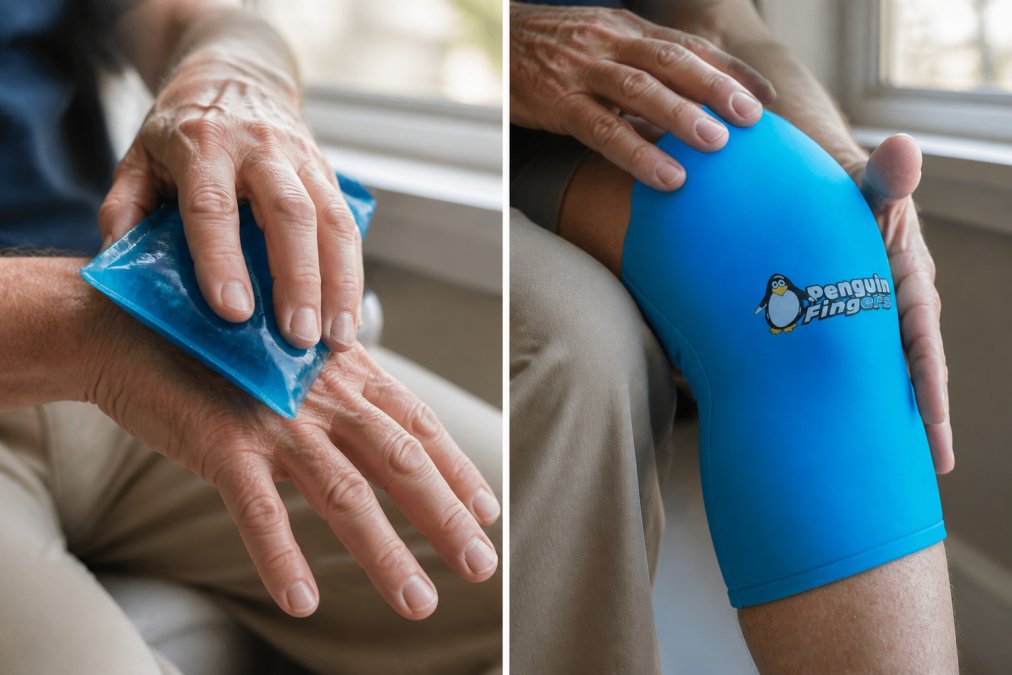
Cold compression sleeves combine cold temperature and gentle pressure to deliver stronger relief than either approach alone. The compression reduces swelling while cold numbs pain receptors and decreases inflammation. Unlike ice packs requiring you to sit still, sleeves stay on while you work, read, or move around, making therapeutic application convenient for daily arthritis management.
Cold compression sleeves also provide consistent, even pressure across the entire joint, reducing edema (fluid buildup) more effectively than cold alone. For finger and toe arthritis, specialized sleeves deliver targeted relief.
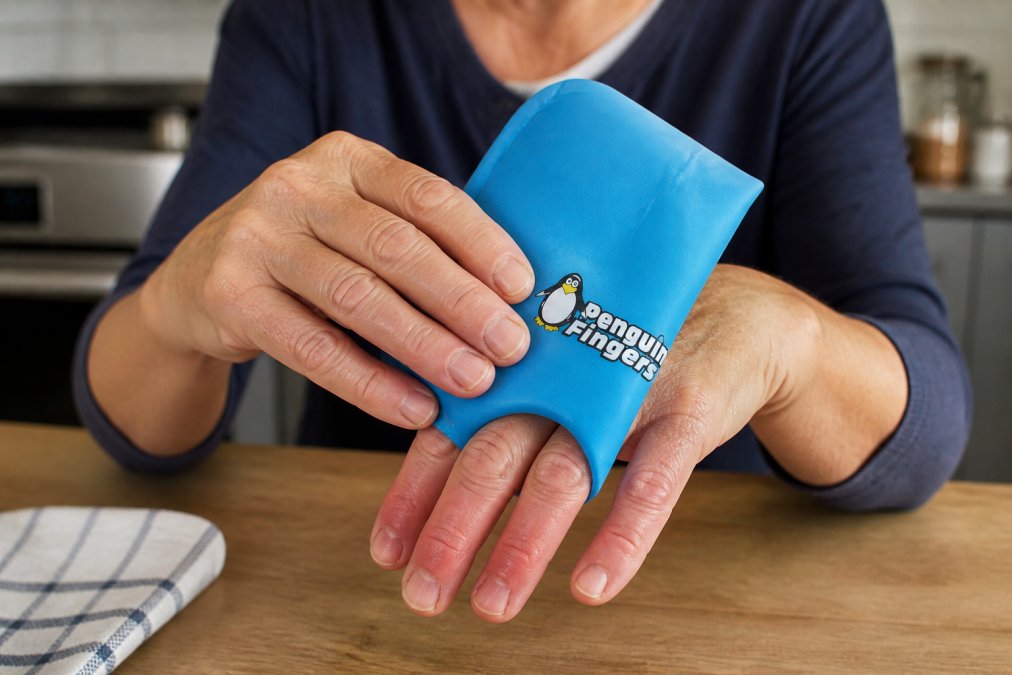
Penguin Fingers Cold Compression Gel Packs for Fingers and Toes are engineered for smaller joints most affected by arthritis. The ultra-flexible design conforms to your fingers or toes without restricting movement, and the patent-pending gel pack stays cold longer than standard ice. At $14.95, they offer an affordable way to manage arthritis pain.

For larger joints like knees or elbows, the Penguin Fingers Elbow and Foot Cold Compression Therapy Sleeve ($22.95) provides dual hot and cold capability in a wearable design, making consistent arthritis management realistic.
How Long to Ice Arthritic Joints for Maximum Relief
The optimal duration for cold therapy on arthritic joints is 15-20 minutes per application. This timeframe delivers maximum numbing effect and inflammation reduction without risking nerve damage. Most people find that 15 minutes provides noticeable relief lasting 1-2 hours afterward.
Applying cold longer than 20 minutes produces diminishing returns and increases skin damage risk. Your body's natural adaptation response kicks in after about 15 minutes, meaning additional time won't significantly increase relief.
For acute flare-ups, applying cold therapy 3-4 times daily (spacing applications at least 2-3 hours apart) provides consistent pain management. For chronic daily arthritis, morning and evening applications help manage stiffness and inflammation. Start with 10-15 minutes and assess your response; individual pain thresholds vary considerably.
Applying Cold Therapy at Home: Step-by-Step Instructions
What You'll Need Before Starting
Gather a cold pack or compression sleeve, a thin barrier (towel or cloth) to protect your skin, a timer, and a comfortable place to sit or recline. If using a reusable gel pack, ensure it's been in the freezer for at least 2-3 hours. Have your phone or clock nearby to set a timer, preventing accidental overuse.
Application Steps for Fingers and Toes
Step 1: Prepare the area. Wash your hands or feet with lukewarm water and pat dry completely. Dry skin ensures better contact between the cold pack and your joint, maximizing the numbing effect.
Step 2: Apply a thin barrier. Place a thin cloth or towel between the cold pack and bare skin. This prevents frostbite while allowing cold to transfer effectively.
Step 3: Position the cold pack. For finger arthritis, wrap the cold pack around affected fingers, ensuring even contact across the joint. The pack should feel cold and slightly uncomfortable, but not painful. herbal remedies for pain.
Step 4: Set a timer for 15 minutes. Start with 15 minutes and assess how you feel. Never exceed 20 minutes for fingers and toes, as these smaller joints are more susceptible to nerve damage from prolonged cold exposure.
Step 5: Remove and rest. After application, remove the cold pack and allow your skin to return to normal temperature. Wait at least 2-3 hours before applying cold again to the same joint.
Application Steps for Larger Joints
Step 1: Choose the right compression sleeve. For knees, elbows, or ankles, use a cold compression sleeve designed for that specific joint. The Penguin Fingers Knee Cold Compression Therapy Sleeve ($28.95) is engineered specifically for knee joints.

Step 2: Put on the sleeve properly. Slide the sleeve onto the affected joint slowly, ensuring it sits evenly without bunching. The sleeve should feel snug but not restrictive.
Step 3: Ensure the gel pack is positioned correctly. The cold gel pack should sit directly over the joint. For knee sleeves, the pack should cover the front and sides where inflammation typically concentrates.
Step 4: Set a timer for 15-20 minutes. Larger joints can tolerate the full 20-minute application. You can move around gently while wearing the sleeve.
Step 5: Remove the sleeve and assess. After application, remove the sleeve and check your skin for redness or irritation. Normal slight redness fades within 30 minutes.
Safety Precautions and Risks of Cold Therapy
Cold therapy is generally safe when applied correctly, but several precautions prevent serious complications. The most common risk is frostbite or cold-induced nerve damage from prolonged application beyond 20 minutes or when the cold pack touches bare skin without a barrier.
People with Raynaud's syndrome, neuropathy, or reduced sensation should avoid cold therapy or consult a healthcare provider first. Avoid applying cold directly to broken skin, open wounds, or areas with active skin infections. Never apply cold therapy while sleeping or when you cannot monitor the application.
Some people experience increased pain when first applying cold, a response called cold-induced pain. This typically subsides within 2-3 minutes as the numbing effect takes over. If pain increases throughout the session, remove the cold pack and try again later with a thicker barrier.
Cold Therapy for Rheumatoid Arthritis vs. Osteoarthritis
Rheumatoid arthritis is an autoimmune condition where the immune system attacks joint linings, causing inflammation, swelling, and pain. Cold therapy reduces this inflammatory response effectively, particularly during acute flare-ups. For RA sufferers, cold therapy works best when combined with other anti-inflammatory strategies and is most effective in the morning when inflammation peaks.
Osteoarthritis involves cartilage breakdown and joint wear rather than active inflammation. While osteoarthritis does involve some inflammatory response, the primary pain comes from bone-on-bone friction. Cold therapy still helps by reducing any inflammatory component and numbing pain receptors.
For osteoarthritis, cold therapy combined with gentle movement often provides the best results. Many practitioners recommend applying cold for 15 minutes, then performing light range-of-motion exercises while the joint is numb. Both conditions benefit from cold compression therapy's dual mechanism of cold and compression.

Integrating Cold Therapy Into Your Daily Arthritis Management
Successful arthritis management requires treating cold therapy as a consistent tool rather than an occasional remedy. Establish a routine by applying cold therapy at specific times each day, such as morning and evening, regardless of whether you're experiencing acute pain. This preventive approach reduces the frequency and severity of flare-ups over time.
Morning application addresses overnight stiffness, making movement easier as you start your day. Evening application manages inflammation from daytime activity and reduces nighttime pain that disrupts sleep. Apply cold after exercise to prevent post-activity inflammation that would otherwise build up.
Track which times and durations work best for your specific joints and arthritis type. Consistency matters more than perfection. Penguin Fingers cold compression sleeves make consistent application realistic because they're wearable and convenient, allowing you to wear a sleeve while working or moving around rather than blocking 15-20 minutes to sit with an ice pack.
Consider combining cold therapy with heat therapy based on your daily needs: cold for acute inflammation and post-activity management, heat for morning stiffness and chronic muscle tension.
Cold therapy can significantly help chronic arthritis when applied consistently and correctly. The combination of reduced inflammation, numbing effect on pain receptors, and improved joint mobility makes cold compression therapy a practical, medication-free approach to managing daily arthritis pain. Penguin Fingers cold compression sleeves deliver this relief in wearable designs engineered for specific joints, from fingers and toes to knees and elbows, so you can maintain therapeutic cold therapy while continuing your normal routine. Start with the Penguin Fingers Cold Compression Gel Packs for Fingers and Toes ($14.95) if you're managing hand arthritis, or explore the Knee Cold Compression Therapy Sleeve ($28.95) for larger joints. Consistent cold therapy combined with movement, physical activity, and proper joint care creates a sustainable approach to arthritis management that reduces pain and supports long-term joint health.
Frequently Asked Questions
How long should you apply cold therapy to an arthritic joint?
Most experts recommend applying cold therapy for 15-20 minutes at a time, several times per day. For chronic arthritis, you can ice affected joints up to four times daily, with at least 2-3 hours between applications. Cold compression sleeves allow longer wear (30-60 minutes) since they distribute temperature evenly and reduce frostbite risk. Start with shorter durations and gradually extend as your skin adapts. Stop immediately if you experience numbness, tingling, or skin discoloration.
What are the main benefits of cold compression sleeves for arthritis?
Cold compression sleeves offer several advantages over traditional ice packs: they provide consistent, even cooling across the entire joint, stay in place during daily activities, reduce swelling through compression, and deliver therapeutic cold without the mess of melting ice. They're especially effective for managing joint inflammation, reducing pain during flare-ups, and supporting physical activity. Many people with chronic arthritis find sleeves more convenient for ongoing pain management since they're wearable and reusable, making treatment easier to maintain consistently throughout the day.
Can cold therapy help both rheumatoid arthritis and osteoarthritis?
Yes, cold therapy helps both types, but for different reasons. With osteoarthritis, cold reduces joint inflammation and numbs pain receptors, providing immediate relief from stiffness and aching. For rheumatoid arthritis, cold therapy helps manage acute flare-ups by reducing inflammatory swelling and joint tenderness. However, some people with rheumatoid arthritis find heat more soothing during non-flare periods. The key is experimenting to see which works best for your symptoms. Many people alternate between cold and heat depending on whether they're experiencing an acute flare or chronic baseline pain.
Are there any risks to using cold therapy for chronic arthritis?
Cold therapy is generally safe when applied correctly, but certain precautions matter. Avoid applying ice directly to skin for more than 20 minutes at a time to prevent frostbite or nerve damage. People with Raynaud's disease, poor circulation, or numbness should consult their doctor before using cold therapy. Never apply cold to areas with open wounds or skin conditions. If you have diabetes or reduced sensation, monitor your skin closely during treatment. Stop use if you experience persistent numbness, skin discoloration, or increased pain. Always place a thin cloth between cold packs and skin.
This article was written using GrandRanker


