

Table of Contents
- Benefits of Cold Compression Therapy for Joint Pain
- How Cold Compression Sleeves Work
- How Long to Wear Cold Compression Sleeves
- How to Choose a Compression Ice Sleeve
- Cold Compression Sleeves for Specific Conditions
- Safety Warnings and When Not to Use Cold Therapy
- Cold vs. Heat: When to Use Each
- Top Cold Compression Sleeves to Buy Online
Last Updated: August 22, 2026
Benefits of Cold Compression Therapy for Joint Pain
Cold compression therapy combines the numbing effect of cold with compression support to reduce swelling, decrease pain signals, and improve blood flow. Cold narrows blood vessels to minimize inflammation while compression supports joint structure and prevents additional swelling. This dual approach allows your body to heal more effectively than ice packs or heat alone, making it standard guidance for sports injuries and chronic pain management.

A cold compression sleeve differs from passive ice packs because it stays in place during movement, allowing you to continue light activity, work, or rehabilitation exercises while receiving continuous relief. Unlike oral pain medications with systemic side effects, a reusable cold compression sleeve offers drug-free pain management you control. Many people use them daily for arthritis, several times weekly for sports recovery, or as needed during inflammation flares.
How Cold Compression Sleeves Work
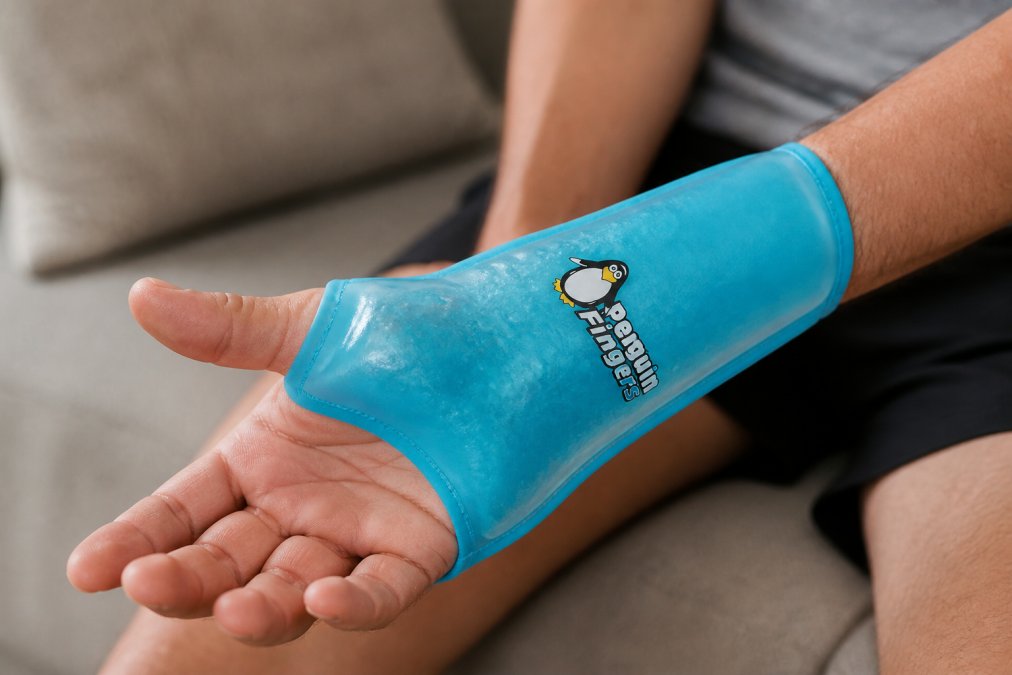
Cold compression sleeves combine gel technology and anatomical design to deliver therapeutic cold and targeted compression where needed. The gel pack absorbs and retains cold for extended periods while stretchy fabric conforms to your joint, applying consistent pressure that reduces swelling and stabilizes the affected area.
Gel Technology and Material
Modern cold compression sleeves use non-toxic gel that freezes solid in 2-4 hours and maintains therapeutic cold for 20-30 minutes of continuous wear (peer-reviewed research). The gel stays flexible when frozen, conforming to your body rather than becoming rigid like traditional ice packs, distributing cold evenly across the joint.
The outer material is typically neoprene, chosen for durability, flexibility, and ability to stretch around different body shapes. Quality sleeves use high-density neoprene that resists degradation through repeated freezing cycles. Penguin Fingers cold compression sleeves use safe gel formulations without harmful substances like PVC, BPA, or phthalates.
360-Degree Coverage and Fit
The best cold compression sleeves provide 360-degree coverage around the affected joint, ensuring uniform pressure and cold distribution. Sleeves designed specifically for your joint contour to that joint's natural shape and movement patterns, staying in place during daily activities and exercise without constant readjustment.
The slip-on design eliminates wrapping hassles and encourages consistent wear, critical for managing chronic conditions like arthritis where daily application delivers cumulative benefits.
How Long to Wear Cold Compression Sleeves
Most practitioners recommend wearing a cold compression sleeve for 15-30 minutes per session with the sleeve pre-chilled beforehand (the CDC). This duration balances therapeutic benefit with safety, as extended cold exposure can cause tissue damage or nerve irritation.

For acute injuries or post-workout recovery, apply cold compression immediately after activity and again 2-3 hours later to accelerate inflammation reduction. For chronic conditions like arthritis, wearing a pre-chilled sleeve for 20-30 minutes each morning can reduce joint stiffness and improve mobility throughout the day.
Some people benefit from multiple daily sessions during acute flare-ups, perhaps 3-4 sessions spread across the day. However, continuous wear beyond 30 minutes isn't recommended without medical guidance. Start conservatively with 15-20 minutes once or twice daily, then adjust based on your comfort and pain relief.
How to Choose a Compression Ice Sleeve
Selecting the right cold compression sleeve requires matching the product to your specific joint, body size, and intended use.

Sizing by Joint and Body Area
Cold compression sleeves come in designs tailored to specific joints since each has unique anatomy and movement patterns. Penguin Fingers offers distinct sleeves for fingers and toes, wrists, elbows and feet, and knees, each engineered for that joint's shape and range of motion.
For finger and toe sleeves, most designs are one-size-fits-all with ultra-flexible material. For larger joints like knees and elbows, measure your joint circumference at its widest point and compare it to the manufacturer's sizing chart. A sleeve that's too loose won't provide adequate compression; one that's too tight cuts off circulation.
Material and Durability Considerations
Durability depends on material quality and usage frequency. Check the gel pack construction for reinforced seams and multiple material layers to prevent leaks. Care extends sleeve life significantly: allow the sleeve to warm to room temperature before returning it to the freezer, hand wash with mild soap and water, and air dry completely before freezing. Never machine wash or dry.
Cold Compression Sleeves for Specific Conditions
Arthritis and Chronic Joint Pain
Arthritis involves inflammation and cartilage degeneration, causing chronic pain, stiffness, and reduced mobility. Cold compression reduces the inflammatory response while compression provides joint support that alleviates stress on damaged cartilage.
For arthritis sufferers, cold compression sleeves work best as part of a daily routine. Wearing a pre-chilled sleeve for 20-30 minutes each morning can reduce stiffness and improve mobility throughout the day. The Penguin Fingers finger and toe gel pack provides direct cold and compression to individual fingers, allowing you to manage pain in specific digits without immobilizing your entire hand.
Sports Injuries and Post-Workout Recovery
Acute sports injuries cause immediate inflammation that peaks within 24-48 hours (peer-reviewed research). Cold compression during this window significantly reduces swelling and accelerates recovery. Athletes apply cold compression immediately after injury, then repeatedly over the next 48 hours to manage inflammation.
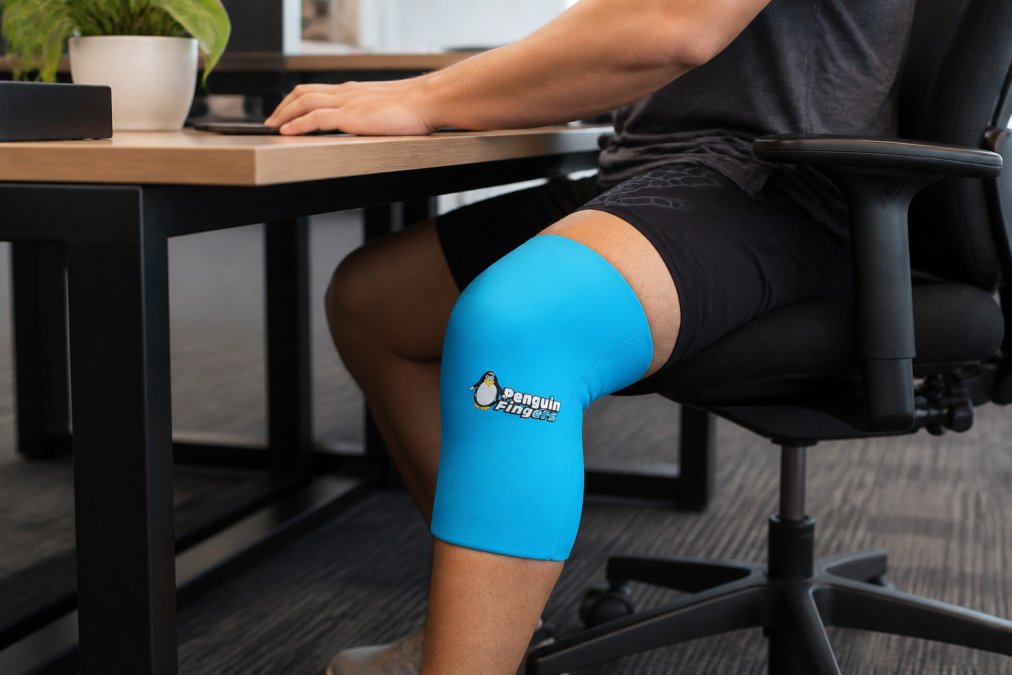
Post-workout soreness benefits from cold compression applied within 30 minutes of finishing your workout to reduce inflammatory response and potentially decrease soreness for your next training session. For sports like climbing, MMA, and weightlifting, targeted joint support matters. The Penguin Fingers knee sleeve and elbow sleeve are designed for these high-impact uses with durable materials that withstand frequent application.
Carpal Tunnel and Repetitive Strain
Carpal tunnel syndrome results from compression of the median nerve in the wrist, causing pain, numbness, and tingling. Cold compression reduces inflammation around the nerve and provides wrist support that alleviates pressure. For office workers and others whose jobs involve repetitive wrist motion, wearing a cold compression sleeve during or after work can prevent symptoms from worsening.
The Penguin Fingers wrist cold compression pack is specifically designed for these conditions, with anatomical fit that supports the wrist through its full range of motion and gel pack that delivers cold directly to inflamed tendons and nerve tissue. joint support salves.
Safety Warnings and When Not to Use Cold Therapy
Cold compression therapy is generally safe, but certain conditions contraindicate its use. Do not use cold compression if you have poor circulation, neuropathy, or reduced sensation in the affected area, as you risk frostbite or tissue damage without realizing it.
Avoid cold compression over open wounds, rashes, or broken skin. If you have Raynaud's disease or Raynaud's phenomenon, cold exposure triggers painful blood vessel constriction and is contraindicated. People with certain cardiac conditions should avoid cold therapy without medical clearance, as cold exposure can temporarily raise blood pressure. Pregnant women should consult their doctor before using cold compression on the abdomen or lower back.
Never apply cold compression for more than 30 minutes continuously without warming up the area. If you need longer relief, use multiple 20-30 minute sessions separated by at least 1-2 hours of normal temperature exposure.
Cold vs. Heat: When to Use Each
Use cold compression for acute inflammation, recent injuries, and swelling. Cold narrows blood vessels and reduces inflammatory chemicals, making it ideal for the first 48-72 hours after an injury and for post-workout soreness.
Heat therapy works best for stiffness, chronic muscle tension, and arthritis pain that isn't actively inflamed. Heat increases blood flow and relaxes muscles, improving mobility and comfort for chronic conditions. Some conditions benefit from alternating cold and heat, a technique called contrast therapy.
The Penguin Fingers sleeves work with both cold and heat, freeze them for cold therapy or warm them in the microwave for heat therapy. For acute injuries, start with cold. As inflammation decreases over several days, transition to heat for comfort and mobility.
Top Cold Compression Sleeves to Buy Online
Penguin Fingers Finger and Toe Gel Pack
The Penguin Fingers Finger and Toe Gel Pack stands out for targeted relief of individual finger and toe pain. Its patent-pending ultra-flexible design accommodates fingers of all sizes without requiring you to freeze your hands or feet alongside the affected digit.
This is the clear winner for arthritis sufferers, climbers managing finger strain, and anyone with conditions like carpal tunnel or trigger finger affecting individual digits. The one-size-fits-all design means no sizing guesswork. The gel pack provides continuous cold for 20-30 minutes and recharges in a standard freezer within 2-4 hours. At $14.95, it's the most affordable option in the Penguin Fingers lineup.
What works: Ultra-flexible material, one-size-fits-all design, affordable pricing, non-toxic gel formulation, reusable for months with proper care.
What to consider: Designed specifically for fingers and toes, not suitable for larger joints.
Penguin Fingers Wrist Cold Compression Pack
The Penguin Fingers Wrist Cold Compression Pack delivers 360-degree cooling and compression to the wrist, ideal for office workers managing carpal tunnel or repetitive strain. The anatomical fit supports the wrist through its full range of motion without slipping during typing or writing.
This sleeve is essential for anyone whose job involves repetitive wrist motion. The slip-on design makes it convenient to apply and remove multiple times throughout the day. At $16.95, it's justified by its larger size and wrist-specific engineering.
What works: Anatomical wrist fit, rapid cooling, slip-on design, affordable, supports daily work activities.
What to consider: Designed for wrists only, not suitable for fingers, elbows, or knees.
Penguin Fingers Elbow and Foot Cold Compression Sleeve
The Penguin Fingers Elbow and Foot Cold Compression Sleeve provides versatile relief for two commonly injured areas. The soft, flexible neoprene conforms to your elbow or foot while the fast-freezing gel delivers therapeutic cold.
This sleeve works well for athletes managing elbow pain from throwing or weightlifting, and for anyone with foot pain from plantar fasciitis or gout. At $22.95, it covers two distinct joint types, making it valuable for households where multiple people have different pain points.
What works: Covers two joint types, durable construction, flexible fit, therapeutic cold retention, affordable for the coverage.
What to consider: One-size approach may not fit all body types equally well if your elbows or feet are significantly larger or smaller than average.
Penguin Fingers Knee Cold Compression Sleeve
The Penguin Fingers Knee Cold Compression Sleeve is the largest in the lineup, designed for the knee joint and also suitable for thighs, calves, and biceps. The larger gel pack delivers more cold capacity, maintaining therapeutic temperature for longer sessions.
This is the right choice for serious athletes, people managing knee arthritis, and anyone recovering from knee surgery or injury. At $28.95, the larger size and extended cold retention justify the price for daily users managing chronic knee pain.
What works: Large gel pack, extended cold retention, versatile for multiple large joints, durable construction, excellent for daily use.
What to consider: Larger size takes longer to freeze completely (3-4 hours) and requires more freezer space.
| Product | Price | Best For | Key Advantage | Size/Fit |
|---|---|---|---|---|
| Finger & Toe Gel Pack | $14.95 | Individual finger/toe pain | Ultra-flexible, one-size-fits-all | Accommodates all finger sizes |
| Wrist Pack | $16.95 | Carpal tunnel, repetitive strain | Rapid cooling, anatomical fit | Wrist-specific support |
| Elbow & Foot Sleeve | $22.95 | Elbow or foot pain | Covers two joint types, durable | Flexible fit for varied sizes |
| Knee Sleeve | $28.95 | Knee pain, large joint support | Extended cold retention, versatile | Fits thighs, calves, biceps |
Cold compression therapy has become a standard tool for managing pain and accelerating recovery across dozens of conditions. Whether you're dealing with chronic arthritis, recovering from a sports injury, or managing workplace-related strain, the right cold compression sleeve delivers drug-free relief you can use daily. Penguin Fingers offers purpose-built sleeves for every major joint, with non-toxic gel formulations and durable materials designed for long-term use. Start with the sleeve that matches your specific pain point, use it consistently as directed, and you'll likely find that cold compression becomes an indispensable part of your pain management routine.
Frequently Asked Questions
Q: Can cold compression sleeves actually reduce arthritis pain and swelling?
A: Yes. Cold compression therapy reduces inflammation and numbs pain signals by constricting blood vessels and decreasing swelling around affected joints. For chronic arthritis sufferers, wearing a cold compression sleeve during flare-ups or after activity helps manage pain without medication. Results vary by individual, but consistent use as part of a recovery routine can help manage joint stiffness and discomfort.
Q: How long should you wear a cold compression sleeve each day?
A: Most users wear cold compression sleeves for 15 to 30 minutes at a time, several times daily. For acute injuries, apply cold therapy every 2 to 3 hours during the first 48 hours. For chronic conditions like arthritis, wearing the sleeve for 20 to 30 minutes when pain flares or after activity is effective. Avoid wearing continuously for more than 2 hours to prevent skin irritation. Listen to your body and adjust duration based on comfort and response.
Q: What's the difference between cold compression sleeves and regular ice packs?
A: Cold compression sleeves deliver simultaneous cooling and compression in a wearable, hands-free design. Unlike bulky ice packs, they conform to your body, provide 360-degree coverage, and stay in place during movement or daily tasks. Gel-filled sleeves retain cold longer than standard ice, and you can wear them while working, typing, or exercising. This makes them more practical for ongoing recovery and inflammation management.
Q: How do I choose the right cold compression sleeve for my joint?
A: Match the sleeve size and design to your specific joint: finger and toe sleeves for small joints, wrist sleeves for carpal tunnel or repetitive strain, elbow sleeves for tendinitis, and knee sleeves for larger joints. Check that the material stretches to fit comfortably without cutting off circulation. Look for non-toxic, flexible gel that freezes quickly and maintains cold retention. Penguin Fingers offers targeted designs for each body area, making selection straightforward based on where you need relief.
This article was written using GrandRanker


