

Last Updated: October 24, 2026
Quick Summary
The best temperature for arthritis hot packs is 104°F to 110°F at the pack surface, applied behind a towel barrier for 15 to 20 minutes. Never exceed 113°F, and always measure temperature rather than guess, especially if you have reduced sensation or fragile skin.
- Measure pack temperature with a digital thermometer; aim for 104°F to 110°F before applying a towel barrier.
- Apply heat for 15 to 20 minutes at a time, up to three times daily spaced 2 to 3 hours apart.
- Check skin every 5 minutes for redness that doesn't fade when pressed; stop if deep red or burning sensation occurs.
- Use cold therapy instead if the joint is visibly swollen or within 48 hours of injury.
- Never sleep on a heating pad, and avoid heat if you have reduced sensation, poor circulation, or fragile skin without clinician approval.
Table of Contents
- Why temperature matters for arthritis hot packs
- Safe temperature for a heating pad for arthritis
- How long to use a heating pad for arthritis pain relief
- Hot or cold therapy for arthritis: when to choose each
- Cold therapy for swollen joints and acute flare-ups
- Types of arthritis hot packs and how they retain heat
- Getting started with heat therapy for your arthritis
- Frequently Asked Questions
Why temperature matters for arthritis hot packs
Finding the best temperature for arthritis hot packs isn't just about comfort, too cold won't ease stiffness, and too hot risks burns or worsening inflammation. Temperature controls how deeply heat penetrates your joints and how long you can safely wear the pack. This article walks you through what temperature works best and why.
Safe temperature for a heating pad for arthritis
There is no single government-mandated "arthritis hot pack temperature", only a safety ceiling and a comfort window. Most clinicians converge on a pack surface temperature of roughly 104°F to 113°F (40°C to 45°C) for short applications on intact skin, with 110°F to 113°F as the upper edge used only briefly and with a barrier. For arthritis stiffness, the sweet spot is 104°F to 110°F, warm enough to relax muscle and boost blood flow, cool enough to tolerate for 15 to 20 minutes.
Why the range is a range, not a number
Three variables move the safe temperature:
- Skin sensitivity. Thin skin over the shin, ankle, or hand tolerates less heat than the back or thigh. Reduced sensation from diabetes, neuropathy, or stroke means you may not feel a burn developing, treat 104°F as your ceiling and shorten sessions.
- Pack design. Gel packs release heat fast then plateau; microwaved wheat or rice packs can have hot spots; electric pads hold steady but can spike if folded or covered.
- Barrier and contact. A single layer of dry towel drops the temperature reaching your skin; direct contact does not. Always use a barrier, and re-check the skin every few minutes.
How to measure pack temperature at home
You don't need lab equipment, but stop guessing from "low" and "medium" labels.
- Use a digital instant-read thermometer. An inexpensive kitchen probe works. Press it against the pack surface for 30 seconds; aim for 104°F to 110°F before the barrier.
- Do the forearm test. Hold the wrapped pack against your inner forearm for 10 seconds. If you want to pull away before 10 seconds, it is too hot.
- Check for hot spots. Run your hand over the whole pack; microwaved packs often heat unevenly, so knead them and re-check.
- Re-check mid-session. Check the skin every 5 minutes for redness that doesn't fade when pressed.
What the settings on an electric pad actually mean
Electric pads typically offer low, medium, and high rather than a numeric temperature. The instruction label is the authority for your device, read it. Low and medium suit arthritis stiffness; high is for brief, supervised use only.
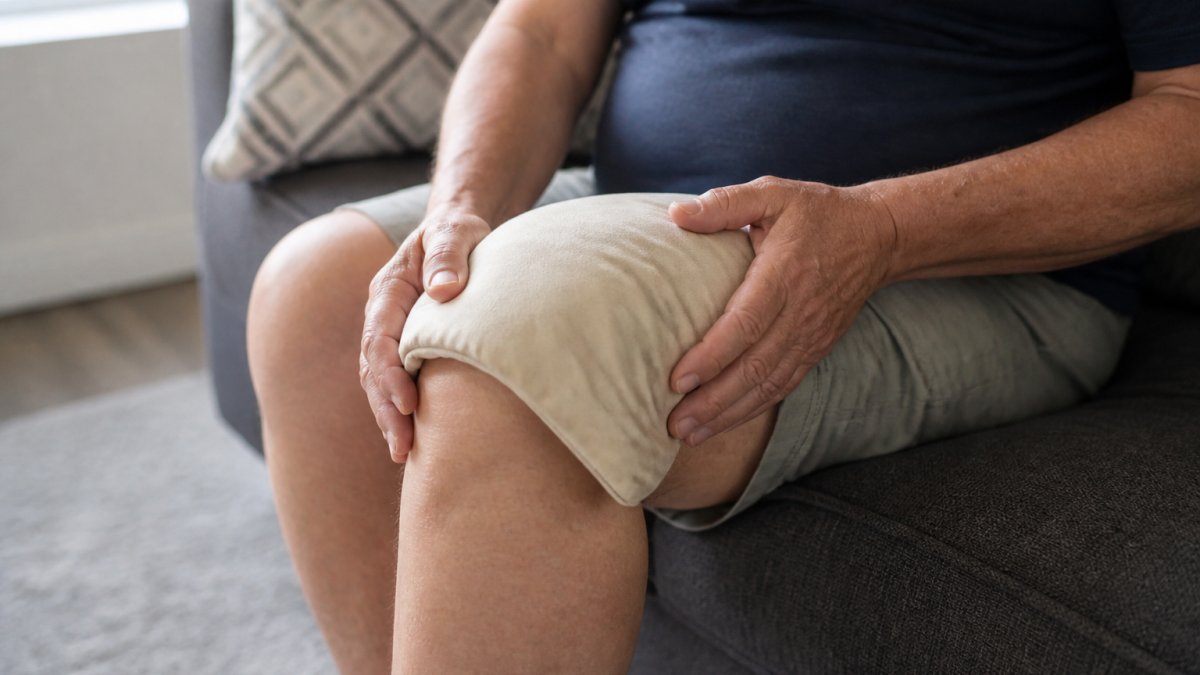
The bottom line on temperature
The best temperature for arthritis hot packs is 104°F to 110°F at the pack surface, behind a towel barrier, for 15 to 20 minutes, staying at or below 113°F. Measure rather than guess, re-check the skin, and lower the target if you have reduced sensation, fragile skin, or poor circulation, and clear heat therapy with your clinician first.
Here are the recommended surface temperatures for arthritis hot packs based on application type and skin sensitivity.
| Application Type | Temperature Range | Notes |
|---|---|---|
| Short applications on intact skin | 104°F to 113°F | Upper edge used only briefly with barrier |
| Arthritis stiffness (optimal) | 104°F to 110°F | Warm enough to relax muscle, cool enough for 15-20 minutes |
| Reduced sensation or fragile skin | 104°F maximum | Treat as ceiling; shorten sessions |
| Never exceed | Above 113°F | Risk of burns or worsening inflammation |
How long to use a heating pad for arthritis pain relief
Apply heat for 15 to 20 minutes at a time, long enough to penetrate joints and relax muscles without overheating skin. Most people benefit from heat three times a day, spaced at least 2 to 3 hours apart so skin can recover. Morning stiffness responds well to heat right after waking; evening application before bed can improve mobility and sleep.
Hot or cold therapy for arthritis: when to choose each
Heat works best for chronic stiffness and reduced range of motion, it relaxes tight muscles and increases blood flow.
Cold therapy serves a different purpose. The research shows that thermotherapy reviews indexed in PubMed Central document how people using heat alongside their regular medications reported continued symptom management, though the studies examined both heat and cold applications.
Most people get this wrong by using heat for everything.
A practical rule: if it's hot and swollen, use cold. If it's stiff and achy, use heat.
Rheumatoid arthritis often benefits from heat for morning stiffness, while osteoarthritis flare-ups may respond better to cold.
Cold therapy for swollen joints and acute flare-ups
Cold therapy constricts blood vessels to reduce inflammation and swelling, and numbs pain signals for quick relief during acute flare-ups.
Apply cold for 10 to 15 minutes at a time.
Clinical guidance warns that heat during acute inflammation can worsen swelling, making cold the better choice when joints are visibly puffy or tender to touch.
Penguin Fingers Elbow and Foot Cold Compression Therapy Sleeve →
Cold therapy pairs well with compression. Wearing a cold compression sleeve targets both temperature and gentle pressure, maximizing swelling reduction.
Never apply ice directly to skin. Always use a barrier like a cloth or sleeve to prevent ice burn.
Types of arthritis hot packs and how they retain heat
How a pack retains heat determines which one suits your needs.
Reusable gel packs stay warm longer than water-based packs because gel holds heat more effectively.
Microwaveable packs heat quickly, usually in 2 to 3 minutes. They're convenient for home use but less portable; wheat or gel packs hold warmth longer than water.
Moist heat packs penetrate deeper than dry heat because moisture conducts temperature more effectively, though they require more setup time.
Dry heat packs are simpler and easier to use while moving around; they take slightly longer to penetrate but work well for maintenance therapy.
For arthritis specifically, gel packs offer the best balance: reusable, hot and cold options, and conforming to joints. Learn about infrared heat technology as a specific type of heat therapy for arthritis, or discover paraffin wax baths as an alternative hot pack method for hand arthritis to explore additional specialized options.
Getting started with heat therapy for your arthritis
Most guides tell you to "start low and use a timer." Here is a repeatable sequence you can follow every time.
Step-by-step hot-pack application
- Inspect your skin. Check the joint for broken skin, a rash, or a new bruise. Do not apply heat over any of these.
- Heat the pack per its label. Microwave packs usually need 1 to 3 minutes; follow the manufacturer's time for your wattage. Electric pads should be set before they touch you.
- Wrap the pack in a towel. One layer of dry cotton is a reasonable default; add a second if the pack feels intense.
- Test on your inner forearm for 10 seconds. If you want to pull away, add a layer or let it cool.
- Position the pack on the joint, not around it. Do not strap a pack tightly enough to compress circulation.
- Set a timer for 15 to 20 minutes. Heat dulls your own warning signals over time.
- Check the skin every 5 minutes. Pink that fades when pressed is normal; deep red, blanched white, or a burning sensation means stop.
- Remove the pack and let the skin rest. Wait at least 2 to 3 hours before the next application, and do not exceed three sessions a day without your clinician's guidance.
Reusable, microwaveable, and electric packs: how each affects temperature control
- Microwaveable wheat, rice, or gel packs heat fast and are portable, but they heat unevenly and cool over 20 to 30 minutes. Knead them, check for hot spots, and never overheat.
- Reusable gel packs hold a steadier temperature and conform to the joint, making them good for knees, wrists, and elbows. They can also be frozen for cold therapy.
- Electric heating pads give the most consistent temperature and are best for a seated session, but they are not portable and carry the highest risk if you fall asleep or fold the pad. Use one with an automatic shutoff and never cover it with a blanket.
A practical pattern: gel or microwaveable packs for targeted joint relief and portability, an electric pad with a shutoff for a longer seated session at home.
Who should avoid heat or use extra caution
Heat is not right for every person or every joint. Use extra caution, and ask your clinician before starting, if you have:
- Reduced skin sensation from diabetes, peripheral neuropathy, spinal cord injury, or stroke.
- Poor circulation or peripheral artery disease.
- Fragile, thin, or previously burned skin, or skin treated with radiation.
- An acute flare with visible swelling, warmth, or redness, cold is the better choice there.
If any of these apply, do not self-treat with heat at home without guidance. A clinician or physical therapist can tell you whether heat is appropriate and at what temperature and duration.
Build the habit without overdoing it
Apply heat at consistent times, morning for stiffness, evening for mobility before bed, and keep a simple log of joint, temperature setting, duration, and how long relief lasted. Explore heat therapy products available for arthritis management to find options that fit your routine.
Our Penguin Fingers Elbow and Foot Cold Compression Therapy Sleeve ($22.95) handles both heat and cold therapy in one wearable design. Microwave it for heat therapy or freeze it for cold compression.

Frequently Asked Questions
What is the best temperature for an arthritis hot pack?
The best temperature for arthritis hot packs is typically 104°F to 110°F at the pack surface, behind a towel barrier, for 15 to 20 minutes, staying at or below 113°F. Always test the temperature on your inner forearm before applying to affected joints, and use a barrier like a cloth or sleeve to prevent burns.
How long should you use a hot pack for arthritis?
Apply heat for 15 to 20 minutes per session. Most people benefit from heat three times a day, spaced at least 2 to 3 hours apart so skin can recover. Never leave a heating pad on more than 30 minutes continuously; prolonged heat raises burn risk and can worsen inflammation.
Is heat or cold better for arthritis pain?
Heat works best for chronic stiffness and reduced joint mobility, especially morning stiffness. Cold therapy is better during acute inflammation, swelling, or flare-ups. If your joints are swollen or recently injured, use cold therapy first. Once swelling subsides and stiffness becomes the main issue, switch to heat. Many people benefit from both: cold to reduce acute inflammation, then heat to improve range of motion during recovery.
Can you use a hot pack on a swollen arthritic joint?
No, avoid heat on actively swollen joints. Heat can worsen swelling and discomfort during acute inflammation. Instead, use cold therapy for 15-20 minutes to reduce swelling first. Once swelling decreases and you're left with stiffness and chronic pain, heat becomes appropriate. If you're unsure whether your joint is in an acute or chronic phase, cold therapy is the safer starting point. Always monitor how your joint responds and adjust accordingly.


