

Table of Contents
- What Actually Works for Joint Pain in 2026
- Top Joint Pain Relief Products Compared
- Penguin Fingers Wrist Cold Compression Pack: Best for Desk Work and Carpal Tunnel
- Penguin Fingers Finger and Toe Gel Packs: Best for Arthritis in Small Joints
- Penguin Fingers Elbow and Foot Sleeve: Best for Tendinitis and Sprains
- How to Use Cold Compression Therapy for Arthritis
- Natural Remedies for Joint Inflammation That Complement Therapy
- When to See a Doctor for Joint Pain
- Frequently Asked Questions
Last Updated: September 5, 2026
What Actually Works for Joint Pain in 2026
Finding the best joint pain relief products 2026 has to offer means navigating a crowded market of pills, creams, and gadgets. Many people with chronic joint pain default to oral analgesics, but a growing number are turning to targeted, drug-free options that address inflammation right where it starts. This guide from Penguin Fingers breaks down what the evidence supports and how to match a product to your specific type of joint pain.
Cold compression therapy is one of the most consistently recommended approaches for reducing joint inflammation and easing stiffness. Cold constricts blood vessels to limit swelling, while compression provides structural support that improves the body's natural recovery response (the NIH). Unlike a generic ice pack that requires you to sit still for 20 minutes, modern wearable designs let you move around while treatment happens.
That distinction matters. A 2025 clinical review on cryotherapy for musculoskeletal pain notes that the combination of cold and pressure is what delivers measurable reductions in perceived pain and recovery time. Most guides miss that the delivery method determines whether you will actually use the product consistently, and consistency is what drives results for conditions like arthritis and tendinitis.
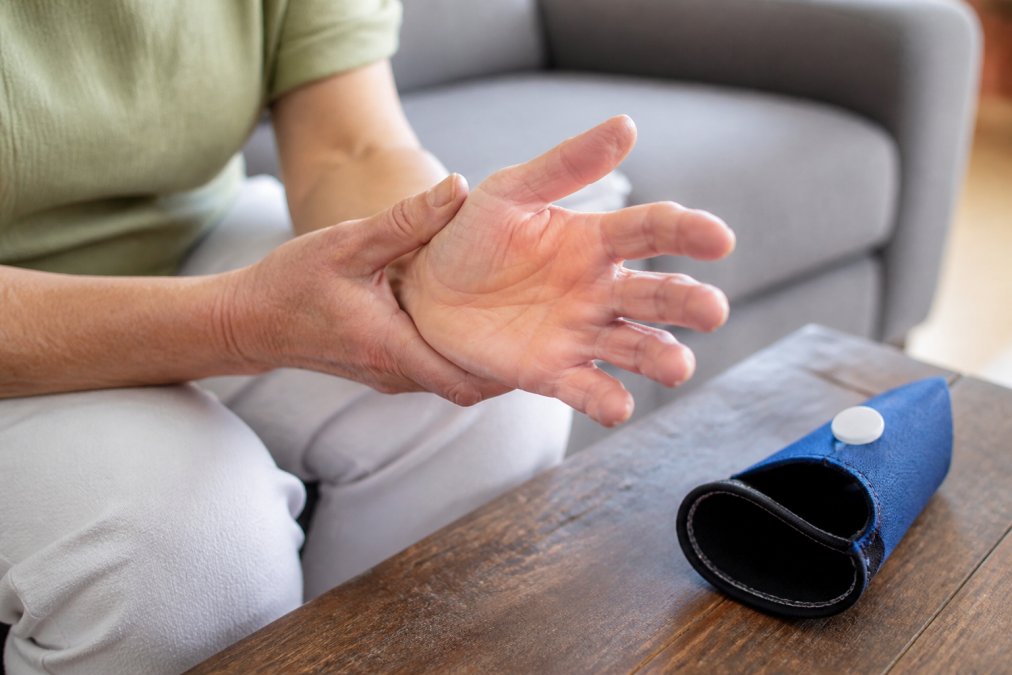
Top Joint Pain Relief Products Compared
The best joint pain relief products 2026 separates into a few clear categories, and the right choice depends on which joints hurt and what triggers the pain. Oral supplements like glucosamine and turmeric target systemic inflammation but can take weeks to show effect. Topical NSAID creams offer fast, localized relief but require reapplication. Wearable cold compression therapy provides immediate relief through a physical mechanism, supports recovery over time, and carries minimal risk of adverse reactions or drug interactions.

| Product Type | Onset of Relief | Best For | Key Limitation |
|---|---|---|---|
| Oral NSAIDs | 30-60 minutes | Widespread inflammation | Stomach irritation, drug interactions |
| Topical Creams | 15-30 minutes | Single localized joint | Short duration, reapplication needed |
| Cold Compression Sleeves | 1-2 minutes | Hands, wrists, elbows, knees | Requires 15-20 min sessions |
For acute flare-ups in specific joints, wearable cold compression consistently outperforms the alternatives because it combines two therapeutic mechanisms at once. When pain is concentrated in fingers, wrists, or elbows, a targeted wearable sleeve is often the most practical first-line choice.
Penguin Fingers Wrist Cold Compression Pack: Best for Desk Work and Carpal Tunnel
For office workers who type all day, wrist pain from carpal tunnel syndrome and repetitive strain is the most common complaint. The Penguin Fingers Wrist Cold Compression Pack delivers 360 degrees of cooling and compression, making it practical for a workday flare-up. At $16.95, it is designed to be rolled on while you continue typing.
What separates this from a cheap elastic brace is the gel core. The pack is free from PVC, BPA, phthalates, and other irritants, so it is safe for daily use even on sensitive skin. It provides simultaneous cooling and compression that targets the aching wrist directly.
Penguin Fingers Finger and Toe Gel Packs: Best for Arthritis in Small Joints
Arthritis in the fingers and toes is notoriously hard to treat because the joints are too small for standard ice packs and too sensitive for aggressive compression. The Penguin Fingers Cold Compression Gel Packs for Fingers and Toes solve that problem with a patent-pending, ultra-flexible design that fits all finger sizes. At $14.95, each sleeve cools and compresses only where you need it.
The material is non-toxic and latex-free, containing no PVC, BPA/BPS, phthalates, formaldehyde, or dioxins. That matters for people with arthritis who may have compromised skin or sensitivity to synthetic materials. The sleeve treats arthritis, trigger finger, sprains, strains, and general stiffness.
Penguin Fingers Elbow and Foot Sleeve: Best for Tendinitis and Sprains
Tendinitis and sprains need a larger treatment area that still conforms to the joint's natural movement. The Penguin Fingers Elbow and Foot Cold Compression Therapy Sleeve wraps elbows, ankles, feet, forearms, and wrists in a soft, stretchy neoprene shell filled with fast-freezing gel. At $22.95, it provides both hot and cold therapy, so the same sleeve can reduce acute swelling with cold or improve blood flow during recovery with gentle heat.

The dual hot and cold option is a genuine advantage for athletes and active people. A sprain benefits from cold in the first 48 hours, but heat therapy supports recovery in the days after. One sleeve that does both means you are not buying separate products for each phase of healing.
How to Use Cold Compression Therapy for Arthritis
Cold compression therapy for arthritis works best when applied consistently and correctly. The goal is to reduce synovial fluid inflammation and quiet the pain signal without numbing the joint completely. For arthritis in the hands, a 15-minute session with a finger gel pack can noticeably reduce morning stiffness and improve range of motion for several hours.
A practical protocol for most arthritis sufferers: apply the cold compression sleeve once in the morning to manage stiffness, once after physical activity, and once before bed if night pain interrupts sleep (the CDC). Sessions should last 15 to 20 minutes with at least an hour between applications. Unlike oral pain relievers, there is no cumulative dosage concern, making this a sustainable option for chronic pain management.

Natural Remedies for Joint Inflammation That Complement Therapy
Drug-free approaches to joint inflammation work best when layered together, but the supplement aisle is full of products that do not deliver what their labels imply. The two most studied natural options are omega-3 fatty acids and turmeric curcumin, yet their efficacy depends heavily on formulation and dosage, and both carry real interaction risks.
Omega-3 Fatty Acids: Dose and Form Matter
Omega-3s from fish oil reduce the production of pro-inflammatory cytokines, but the clinical evidence for joint pain relief is strongest when you take at least 2 grams per day of combined EPA and DHA, not just "fish oil" generically. Most standard capsules contain only 300-500 mg of combined EPA/DHA, meaning you would need four to six capsules daily to reach a therapeutic dose. Look for a supplement that states the EPA and DHA amounts explicitly on the label.
Turmeric and Curcumin: Bioavailability Is the Bottleneck
Curcumin, the active compound in turmeric, is poorly absorbed on its own. Standard turmeric powder or low-cost capsules deliver very little curcumin to the bloodstream. Products that combine curcumin with piperine (black pepper extract) or use a liposomal or phytosome delivery system show meaningfully better absorption in clinical studies. A typical anti-inflammatory dose is 500-1,000 mg of curcumin extract per day, split into two doses. muscle recovery technology.
The Interaction Gap Most Articles Miss
Many people stack supplements without considering how they interact with prescription medications. A few common patterns worth knowing:
- Turmeric and blood thinners: Curcumin inhibits platelet aggregation. Combined with warfarin or aspirin, it can amplify bleeding risk.
- Glucosamine and warfarin: Some case reports suggest glucosamine may increase the anticoagulant effect of warfarin, requiring closer INR monitoring.
- High-dose vitamin E and blood thinners: Often added to joint formulas for its antioxidant effect, vitamin E above 400 IU daily can also thin the blood.
If you take any prescription medication, not just blood thinners, review your supplement list with a pharmacist. Drug-supplement interactions are underreported and can turn a well-intentioned routine into a safety problem.
Cost-Per-Dose Reality Check
A practical way to evaluate natural joint supplements is cost per effective daily dose, not cost per bottle. A $12 bottle of turmeric that requires six capsules daily for a therapeutic effect may cost $1.20 per day. A $30 product with a bioavailable curcumin complex at one capsule per day may cost $0.50 per day, and deliver more consistent results. The same logic applies to fish oil: count the cost per 1,000 mg of combined EPA/DHA.
What the Evidence Does Not Support
Some supplements remain popular despite weak evidence. Collagen peptides show promise in small studies for joint comfort, but the effect size is modest and the optimal dose is not well established. MSM (methylsulfonylmethane) is often paired with glucosamine, yet clinical trials show inconsistent results. Devil's claw and boswellia have some supportive data but are less studied than turmeric and omega-3s. None of these are dangerous at label doses, but they should not replace the better-documented options above.
For acute flare-ups, cold compression therapy remains the fastest-acting drug-free option. Supplements address systemic inflammation over weeks; a cold compression sleeve handles the pain in front of you right now. The smartest 2026 strategy combines both: a consistent, evidence-based supplement routine for baseline inflammation plus on-demand wearable therapy when a joint flares up.
When to See a Doctor for Joint Pain
Cold compression and natural remedies are effective for everyday aches, but certain symptoms require medical evaluation, and delaying care can mean permanent joint damage. The challenge is knowing where the line falls between a flare-up you can manage at home and a condition that needs a diagnosis.
Red Flags That Warrant Prompt Evaluation
Seek medical attention within a few days, not weeks, if you experience any of the following:
- Joint swelling with redness and warmth: This combination can signal septic arthritis, a bacterial infection inside the joint that requires urgent antibiotic treatment. Septic arthritis can destroy cartilage within 48 hours if untreated.
- Fever above 100.4°F alongside joint pain: An infected joint or an autoimmune flare can present this way.
- Sudden, severe pain or inability to bear weight: This may indicate a fracture, ligament tear, or other structural injury that needs imaging.
- Joint deformity or a joint that locks or catches: Mechanical blockages from loose bodies or meniscal tears often require surgical evaluation.
- Pain that wakes you from sleep: Night pain is a classic feature of inflammatory arthritis and some malignancies; mechanical osteoarthritis typically hurts with use, not at rest.
The Two-Week Rule and What Happens After
Pain that persists beyond two weeks despite consistent home treatment, including cold compression, topical NSAIDs, and activity modification, warrants a professional opinion. The American College of Rheumatology recommends evaluation for pain that interrupts sleep, limits daily activities, or fails to improve with over-the-counter options.
When you see a doctor, expect a workup that includes:
- A focused history and physical exam: The doctor will assess which joints are involved, whether the pattern is symmetric (both hands, both knees) or asymmetric, and whether morning stiffness lasts longer than 30 minutes, a hallmark of inflammatory arthritis.
- Blood tests: A complete blood count, inflammatory markers (ESR and CRP), and rheumatoid factor or anti-CCP antibodies can help distinguish osteoarthritis from rheumatoid arthritis. Uric acid levels may be checked if gout is suspected.
- Imaging: X-rays are the first-line study for evaluating joint space narrowing, bone spurs, and erosions. MRI is reserved for suspected soft-tissue injuries or when X-rays are inconclusive.
Why the Distinction Between Osteoarthritis and Inflammatory Arthritis Matters
Osteoarthritis is mechanical wear on cartilage, the joint surface degrades from years of load and use. Inflammatory arthritis, including rheumatoid arthritis and psoriatic arthritis, involves the immune system attacking the joint lining. The treatment paths diverge sharply:
- Osteoarthritis: Physical therapy, joint protection strategies, weight management, and activity modification often help as much as medication. Topical NSAIDs and cold compression are first-line symptom tools. Surgery is reserved for advanced cases.
- Inflammatory arthritis: Disease-modifying antirheumatic drugs (DMARDs) such as methotrexate or biologics may be necessary to prevent irreversible joint erosion. Delaying these medications by months can mean the difference between preserved function and permanent deformity.
What to Bring to Your Appointment
To make the visit productive, bring a simple pain diary covering the past two weeks: which joints hurt, when the pain peaks, what makes it better or worse, and how it affects sleep and daily tasks. List every supplement and medication you take, including dose and frequency, this is where the interaction risks discussed earlier become clinically relevant. Bring the product labels or a photo of the bottles.
:::takeaway Cold compression therapy is a safe, drug-free complement to medical care, but it is not a substitute for a diagnosis. Use it for symptom management while you work with a healthcare provider to address the underlying cause. If you see red flags, fever, redness, sudden deformity, or night pain, do not wait out the two-week rule; seek care promptly.
Frequently Asked Questions
What is the best product on the market for joint pain?
For targeted, non-drug relief, cold compression therapy sleeves are among the most effective options. Unlike oral supplements that take weeks to build up in your system, a wearable sleeve delivers cooling and compression directly to the painful joint within minutes. The Penguin Fingers line covers wrists, fingers, toes, elbows, and knees, so you can match the product to the specific joint causing you trouble.
How does cold compression therapy compare to oral supplements for joint pain?
Cold compression therapy and oral supplements address joint pain differently. Supplements like glucosamine and omega-3s target systemic inflammation and require consistent daily use for weeks before you notice a difference. Cold compression therapy works locally and immediately: the cold numbs nerve endings to dull pain, while compression reduces swelling and restricts fluid buildup. Many people use both together for round-the-clock relief.
How long should I wear a cold compression sleeve for arthritis pain?
The standard recommendation is 15 to 20 minutes per session, up to several times daily. Leaving a cold pack on longer risks skin irritation or nerve damage. The Penguin Fingers sleeves are designed for convenient wear, so you can ice a flare-up while reading or watching TV, then remove the sleeve and move freely. Always place a thin cloth between your skin and the gel pack if you have sensitive skin.
Can natural remedies for joint inflammation replace prescription medication?
Natural remedies like turmeric, omega-3 fatty acids, and cold therapy can reduce inflammation, but they should not replace medications prescribed by your doctor. For mild osteoarthritis or sports-related swelling, these approaches often provide enough relief. For autoimmune conditions like rheumatoid arthritis, they work best as a complement to your treatment plan. Talk to your physician before changing how you manage chronic joint pain.
This article was written using GrandRanker


