

Last Updated: October 22, 2026
Quick Summary
How to safely use ice packs for knee arthritis involves applying ice for 15 to 20 minutes per session, waiting at least 40 minutes between applications, and always wrapping the pack in a towel to protect your skin. You can safely ice 3 to 4 times daily, with cold therapy working best during acute flares when your knee is swollen and warm to the touch.
- Apply ice for 15 to 20 minutes per session to numb pain and reduce swelling without risking skin damage.
- Wait at least 40 minutes between icing sessions to allow your skin to return to normal temperature.
- Always wrap the ice pack in a thin towel or cloth; never apply ice directly to bare skin.
- Position your knee bent about 15 to 20 degrees while icing to reduce joint strain and keep the pack in place.
- Stop immediately if you notice skin turning white or gray, persistent numbness after 30 minutes, or intensifying burning sensations.
Table of Contents
- When Cold Therapy Works Best for Knee Arthritis
- How Long to Ice Knee Pain: Timing and Duration
- How Often to Ice a Swollen Knee: Frequency and Rest Periods
- Step-by-Step Guide to Applying Ice Packs Safely
- Ice Pack Safety for Knee Pain: Recognizing Warning Signs
- Who Should Avoid or Use Extra Caution with Cold Therapy
- Building an Arthritis-Specific Icing Routine
- When to Seek Medical Advice
- Frequently Asked Questions
When Cold Therapy Works Best for Knee Arthritis
Cold therapy is one of the most effective ways to manage knee arthritis pain and swelling. At Penguin Fingers, we help thousands of people find relief using targeted cold compression solutions.
Cold therapy numbs pain signals and reduces inflammation: applying ice to a swollen knee constricts blood vessels, slowing swelling and providing temporary pain relief. This is especially helpful during arthritis flares, when inflammation spikes suddenly.
Ice or Heat for Knee Arthritis: Which Helps More
The answer depends on what's happening with your knee right now. Heat, by contrast, is better for chronic stiffness and ongoing pain. Hinge Health's guidance on heat and cold therapy distinguishes between these two situations: ice works well for new inflammation, while warmth soothes long-term stiffness.
Here's the practical breakdown:
- Use cold therapy when: Your knee is swollen, warm to the touch, or you're in the first 48 hours of a flare
- Use heat when: Your knee feels stiff but not actively swollen, or you have chronic pain without acute inflammation
- Try both: Many people alternate, ice in the morning for swelling, heat in the evening for stiffness
If you're unsure whether it's acute inflammation or chronic stiffness, cold therapy is the safer starting point.
How Long to Ice Knee Pain: Timing and Duration
The standard recommendation is 15 to 20 minutes per session. This duration is long enough to numb pain and reduce swelling without risking skin damage or cold injury. Research from the National Institutes of Health on cold therapy for joint pain examined ice massage protocols and found that consistent application improved outcomes.
Don't ice for longer than 20 minutes at a time; extended exposure increases the risk of skin irritation and cold injury, especially with sensitive skin or reduced sensation.
Here's what happens at different time intervals:
- First 5 minutes: Numbing begins, mild discomfort as cold sets in
- 10-15 minutes: Maximum pain relief and swelling reduction
- 20+ minutes: Risk of skin damage increases significantly
Set a timer, a kitchen timer or phone alarm prevents accidental overuse once relief kicks in.
How Often to Ice a Swollen Knee: Frequency and Rest Periods
Wait at least 40 minutes between icing sessions so your skin returns to normal temperature and avoids cumulative cold damage.
A practical routine: 15-20 minutes in the morning, midday after activity or if swelling increases, and before bed.
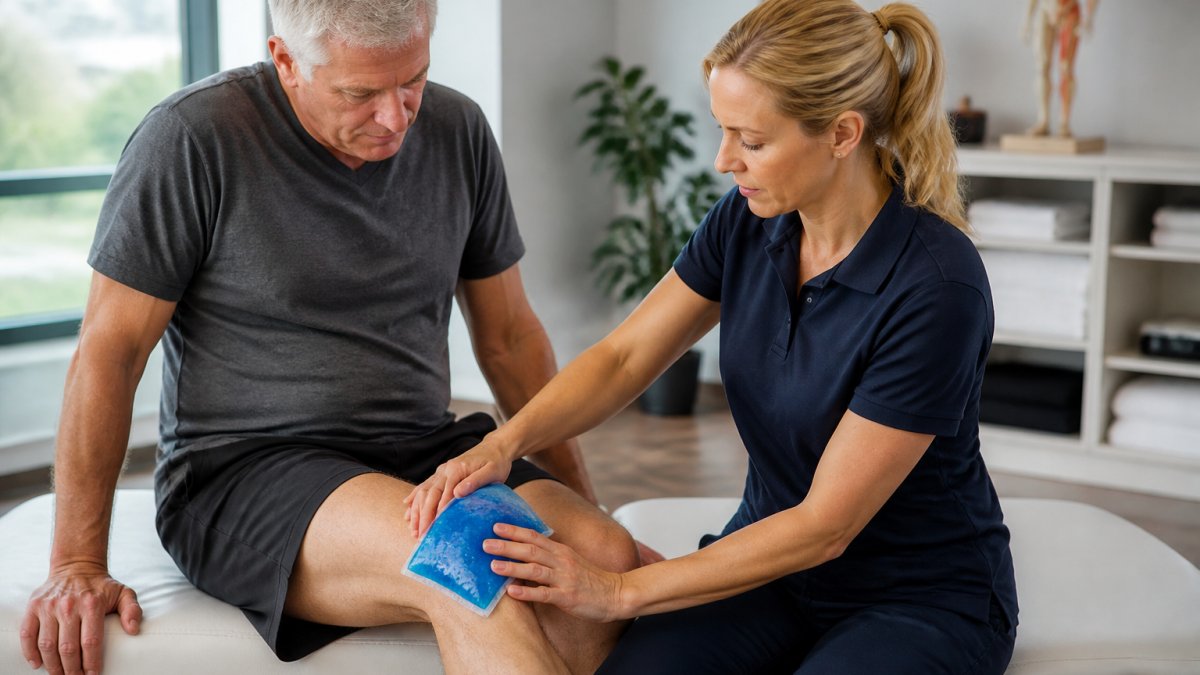
Step-by-Step Guide to Applying Ice Packs Safely
Proper technique prevents skin damage and maximizes pain relief.
Choosing the Right Ice Pack Type
Gel packs, ice bags, and frozen vegetables all work, the key is consistency and safety.
Research comparing gel packs and ice bags found that both deliver similar cooling effects on knee skin temperature. The choice comes down to comfort and convenience.
- Gel packs: Reusable, mold to your knee shape, stay cold longer (30-40 minutes)
- Ice bags: Inexpensive, easy to make at home, thaw faster (15-20 minutes)
- Specialized knee wraps: Designed for knee-specific cold therapy, often include compression
For knee arthritis specifically, Penguin Fingers cold compression sleeves combine cold therapy with gentle compression, which many people find more comfortable than traditional ice packs.
Protecting Your Skin with a Towel Barrier
Never apply ice directly to bare skin, the most common mistake and the easiest to prevent. Wrap the pack in a thin cloth, hand towel, or t-shirt so it's fully covered, then drape it over your knee. The towel slows cooling slightly, but you'll still get full pain relief within 15 to 20 minutes.
Positioning and Holding the Pack
Position the ice pack directly over the painful area, usually the front of the knee or along the sides of the kneecap. Sit or lie down with your knee bent about 15 to 20 degrees: this reduces joint strain, keeps the pack in place without gripping, and feels more comfortable than a straight leg. Hold it gently; if it slips, secure it with an elastic bandage or compression sleeve.
Ice Pack Safety for Knee Pain: Recognizing Warning Signs
Most icing problems are preventable if you know what to look for. Normal cold and early cold injury feel similar at first; the difference is what happens next. Harmless cold settles into numbness and fades after removal, while cold injury gets worse once the pack is off.
What Normal Cold Sensation Looks Like
In the first few minutes, expect a predictable sequence: sharp cold, then mild burning or aching, then numbness, the body's normal response as blood vessels constrict and nerve signaling slows. Skin may look pink or slightly pale. All expected; no reason to stop.
Warning Signs That Mean Stop Now
Remove the ice pack immediately and let the skin rewarm gradually if you notice any of the following:
- Skin turning white, gray, or waxy: This suggests blood flow to the surface has dropped too far. Rewarm at room temperature; do not rub the area or apply heat directly.
- Numbness that persists more than 30 minutes after removing the pack: Normal numbness fades within 10 to 20 minutes. Prolonged numbness can signal superficial nerve irritation from cold.
- Burning or stinging that intensifies rather than fades: A burning sensation that builds instead of easing is a classic early sign of cold injury, not a sign the ice is "working."
What to Do If a Warning Sign Appears
- Remove the pack and any compression wrap.
- Let the knee rewarm at room temperature, no hot water, heating pads, or friction massage, which can worsen tissue damage.
- Check the skin every 15 to 20 minutes for returning color and sensation.
- If color, sensation, or pain doesn't return to normal within about an hour, contact a clinician.
- Don't ice that knee again until a clinician has reviewed it, especially if blistering occurred.
Why the Towel Barrier Matters More Than You Think
A single layer of fabric slows heat transfer enough to protect skin while still allowing therapeutic cooling, and skipping it is the most common cause of the warning signs above. If the pack feels "not cold enough," swap it, don't apply it bare.
If you are icing a knee with thin or fragile skin, check the skin under the towel every 5 minutes during the first few sessions. Once you know how your skin responds, you can extend to standard 15- to 20-minute sessions with routine checks.
Who Should Avoid or Use Extra Caution with Cold Therapy
Cold therapy is safe for most people with knee arthritis, but a small group should skip it or use it only under clinician guidance. Ice narrows blood vessels and slows nerve signals, helpful unless your circulation or sensation is already compromised, in which case it can cause harm before you feel it.
Conditions That Call for Extra Caution
- Peripheral artery disease or other circulation problems: Cold further reduces blood flow to tissue that is already under-supplied. If you have been diagnosed with poor circulation in the legs, ask your doctor whether short, supervised icing is appropriate before trying it at home.
- Diabetic neuropathy or other nerve damage: Reduced sensation means you may not feel the burning or numbness that signals cold injury. If you have neuropathy, check the skin visually every few minutes and keep sessions shorter than standard.
- Raynaud's syndrome: Cold triggers exaggerated vessel narrowing in the fingers and toes, and some people with Raynaud's also react strongly on the knees and lower legs. A trial session under supervision is reasonable; unsupervised long sessions are not.
Practical Screening Questions Before You Ice
Before your first session, ask:
- Has a clinician ever told me I have poor circulation, neuropathy, or Raynaud's?
- Do I have diabetes with any loss of feeling in my feet or legs?
- Is the skin on my knee intact, with no cuts, rash, or sores?
- Have I ever had an unusual reaction to cold, such as hives or prolonged numbness?
- Has my knee been operated on or injected in the past few weeks?
If you answered yes to any, talk to your doctor before icing, they can clarify whether you can ice at home, need supervision, or should use a different approach.
Safer Alternatives If Cold Therapy Isn't Right for You
If icing is off the table, these approaches are commonly used instead:
- Heat therapy for stiffness: A warm pack or warm shower can ease chronic stiffness without the circulation risks of cold. Use the same 15- to 20-minute limit and barrier principle.
- Topical pain relievers: Over-the-counter topical NSAIDs or capsaicin creams are widely used for knee osteoarthritis and involve no temperature changes.
- Activity pacing and low-impact exercise: Walking, swimming, and cycling maintain joint function without the risks of hot or cold therapy.
Building an Arthritis-Specific Icing Routine
A consistent routine works better than random icing, your body adapts to regular cold therapy, and pain control improves over time.
Here's a practical routine to start:
| Timing | Duration | Frequency | Notes |
|---|---|---|---|
| Morning | 15-20 minutes | Daily | Best right after waking, before activity |
| After activity | 15-20 minutes | As needed | If swelling increases during the day |
| Evening | 15-20 minutes | Daily | Helps with overnight stiffness |
| Flare management | 15-20 minutes | Every 2-3 hours | During acute inflammation episodes |
Stick with it for at least 2 weeks, many people notice reduced swelling and improved mobility within 7-10 days.
Penguin Fingers cold compression sleeves make this routine easier because they're wearable and reusable, you can ice while working, reading, or watching TV, removing the friction of stopping for 20 minutes.
When to Seek Medical Advice
Cold therapy is a helpful self-care tool, not a complete arthritis treatment. Contact your doctor if:
- Swelling that doesn't improve after 2 weeks of regular icing: Your arthritis may need additional treatment
- Pain that worsens despite consistent cold therapy: Your condition may require medication or physical therapy
- Swelling that comes back within hours of icing: Ongoing inflammation that needs medical attention
Your doctor can recommend additional treatments like anti-inflammatory medication or physical therapy. Cold therapy works best as part of a broader arthritis plan, not a standalone solution.
Managing knee arthritis means finding what works for your specific situation. Our wearable cold compression sleeves provide consistent, convenient relief while supporting your mobility and recovery. Learn more about cold therapy best practices from medical professionals.
Frequently Asked Questions
How long should you apply ice to a knee with arthritis?
Apply ice for 15 to 20 minutes per session. Research shows this duration effectively reduces knee skin-surface temperature without risking cold injury. Start with 15 minutes if your skin is sensitive, then extend to 20 minutes as tolerated. Always use a towel barrier between the ice pack and your skin to prevent direct contact, which can cause irritation or cold injury. Remove the pack immediately if you experience numbness, tingling, or skin discoloration.
How often can you use an ice pack for knee arthritis?
Wait at least 40 minutes between icing sessions, and limit applications to 3 to 4 times daily. A study examining cold pack effectiveness found that gel packs and ice bags maintained lower knee temperatures equally well over a 4-hour period. Space sessions throughout the day: morning, midday, evening, and before bed if needed. This frequency allows your skin and tissues to recover between applications while managing inflammation during arthritis flares.
Is ice or heat better for knee arthritis pain?
Ice works best for acute flares and swelling; heat suits chronic stiffness and ongoing pain. Use ice when your knee is hot, puffy, or acutely inflamed, common during arthritis flares. Heat feels more soothing for long-standing stiffness and may help you move more easily. Many people benefit from ice first (to reduce inflammation) followed by gentle movement and heat (to ease stiffness). Experiment with both and choose what your knee responds to best.
What should you put between an ice pack and your knee?
Always use a towel, cloth barrier, or thin fabric between the ice pack and your skin. Direct skin contact risks cold injury, including frostbite and numbness. A single layer of cloth is usually sufficient; fold a hand towel or use a thin washcloth. Wet towels conduct cold faster, so use a dry barrier for safer, more comfortable application. Check your skin every 5 minutes during the first session to ensure the barrier is protecting adequately.


