

Table of Contents
- Frozen Peas and Corn: The Fastest Kitchen Cold Pack
- How to Make a Homemade Gel Ice Pack That Stays Flexible
- Cold Compress for Swelling: Wet Towels, Rice Socks, and Cool Water
- How Long to Ice a Sore Joint (and How to Protect Your Skin)
- Heat or Ice for Arthritis Pain: Choosing the Right Therapy
- Best Cold Option by Body Area: Fingers, Wrists, Knees, and Head
- When to Skip Cold Therapy and See a Doctor
- Frequently Asked Questions
Last Updated: October 21, 2026
Frozen Peas and Corn: The Fastest Kitchen Cold Pack
Frozen peas and frozen corn are the fastest natural alternatives to ice packs for pain because they mold to a joint within seconds and stay cold for roughly 10 to 15 minutes.
The small, loose kernels conform to a wrist or knee far better than a rigid block of ice, so cold spreads evenly instead of pressing one spot.
A few practical notes:
- Use the bag once for cold therapy only, then keep it for cooking. Repeated freeze-thaw cycles make the vegetables mushy.
- Double-bag it in a zip-top freezer bag to contain condensation.
- Mark the bag so nobody eats it by accident.
Frozen corn works the same way and holds its shape a little longer.
A Ranked List of Household Alternatives to Ice Packs
Here is a practical ranking of common household options by cold duration, moldability, safety, and convenience.
- Frozen peas or corn (best all-around for joints). Small kernels mold to a knee, wrist, or ankle; cold lasts about 10 to 15 minutes. Wrap in a thin towel, apply for 10 to 15 minutes, then rest the area for at least an hour.
- Homemade gel pack (best reusable option). A zip-top bag with a slushy water-and-rubbing-alcohol mix stays flexible and can be reused for months. Double-bag it, freeze for at least two hours, and inspect for leaks before each use; cold typically lasts 15 to 20 minutes.
- Rice sock (best for neck and shoulder). Fill a clean cotton sock with uncooked rice, chill for an hour, and drape it over the area. It molds well and is gentle on bony spots. Never microwave a sock you have been chilling unless you intend to switch to heat.
- Wet towel (best for face and migraine). Soak a hand towel in cold water, wring it out, and freeze for 15 minutes. It is soft and gentle but warms quickly, so plan to refresh it.
- Cool-water immersion (best for fingers and toes). A bowl of cool water needs no freezer space and is the least fussy option for a single digit. Submerge for about 10 minutes.
- Dish-soap or corn-syrup gel bag (best pantry fallback). A few tablespoons of dish soap or a 50/50 corn-syrup-and-water mix in a zip-top bag freezes pliable. Label it and check for leaks.
- Chilled canned goods or a cold drink (last resort). A can from the fridge works in a pinch, but it is rigid and does not mold, so wrap it well and keep it moving to avoid one spot getting too cold.
Safety First: Skin Protection and Application Duration
Every option on that list follows the same safety rules. Place a thin cloth between the cold source and your skin, check the skin every five minutes, and stop immediately if it turns white, waxy, or hard. Keep sessions to 10 to 20 minutes with at least an hour between them. Never fall asleep with a cold pack on, and skip cold therapy if you have poor circulation or reduced sensation.
How to Make a Homemade Gel Ice Pack That Stays Flexible
A homemade gel ice pack stays flexible because the gel lowers the freezing point of water, so it never sets into a hard block.
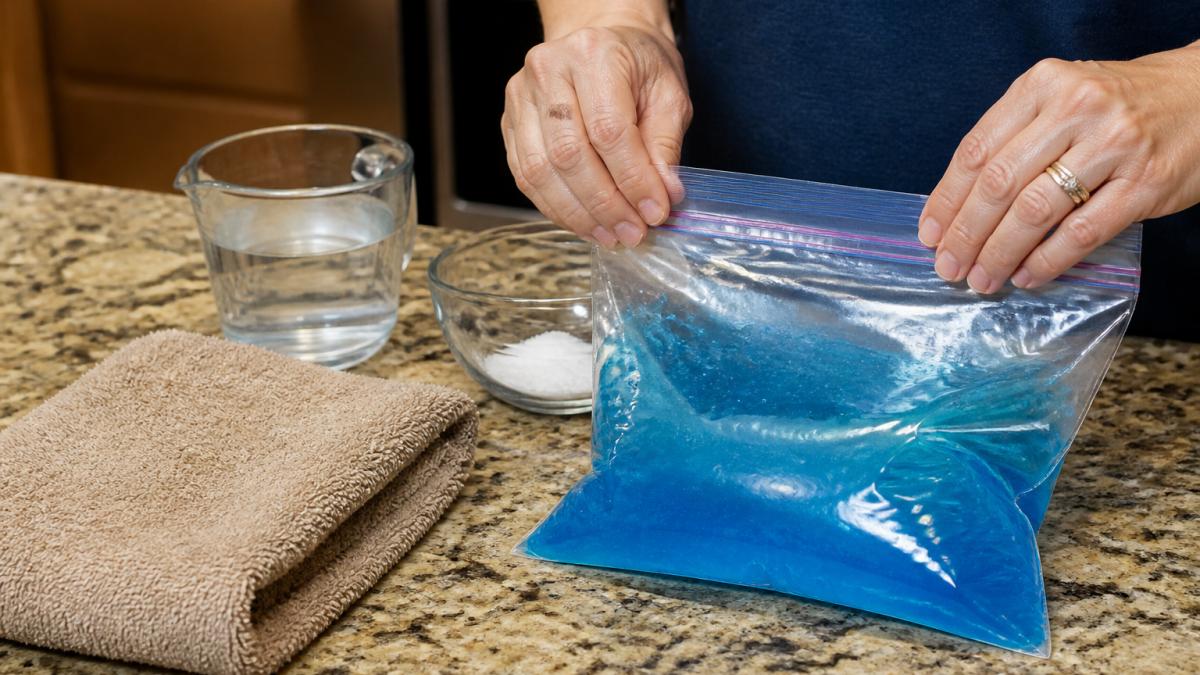
The Salt-Water Freezer Bag Method
Mix roughly one part rubbing alcohol with three parts water in a heavy-duty zip-top freezer bag; the alcohol keeps the mixture slushy at freezer temperatures. Seal it, press out the air, double-bag it against leaks, and freeze for at least two hours. The result is a reusable pack that bends around a wrist or ankle and costs almost nothing.
DIY Gel Pack Recipes Using Household Items
If you would rather skip the alcohol, a few pantry staples work well:
- Dish soap: pour a few tablespoons into a zip-top bag, seal, and freeze. It stays pliable and holds cold for a good stretch.
- Corn syrup and water: a 50/50 mix produces a soft, gel-like consistency.
- Water-absorbing polymer beads: sold for gardening, these swell into a gel when soaked, then freeze into a moldable pack.
Whatever you make, label the bag and inspect it for leaks before each use.
Cold Compress for Swelling: Wet Towels, Rice Socks, and Cool Water
A cold compress for swelling works best when it stays cold for at least ten minutes and conforms to the injured area.
The wet towel. Soak a hand towel in cold water, wring it out, and freeze for 15 minutes.
Cool water immersion. For fingers and toes, a bowl of cool water does the job. Submerge the digit for 10 minutes.
Which Compress Works Best for Each Body Area
The practical question is which option to reach for given where it hurts. Use this body-area guide.
- Fingers and toes: cool-water immersion is easiest and needs no freezer. A wet towel wrapped around the digit is a good backup. Loose bags slide off, so avoid them here.
- Wrists and ankles: a homemade gel pack or a wet towel wrapped around the joint works, but both shift as you move. A flexible gel pack that can be secured is the most reliable household option.
- Knees and elbows: frozen vegetables or a large gel pack conform well. Wrap in a thin towel and keep the joint supported.
No Freezer? Limited Mobility? Portable Options
Not everyone has freezer space or the ability to hold a pack in place. A bowl of cool water, a chilled wet towel, or a cold can from the fridge can still help. For limited mobility, choose a compress you can rest on or wrap and leave in place rather than one you have to hold. If you need to move around, a wearable sleeve that stays put without your hands is the most practical choice.
How Long to Ice a Sore Joint (and How to Protect Your Skin)
The safe answer for how long to ice a sore joint is 10 to 20 minutes at a time, with at least a one-hour break before reapplying. Longer sessions do not speed recovery and raise the risk of skin damage.
Skin protection matters as much as timing. Cold narrows blood vessels, which reduces swelling, but prolonged contact can leave skin numb, red, or damaged. Follow these rules:
- Wrap every pack in a thin towel or cloth.
- Check the skin every five minutes for color changes.
- Never fall asleep with a cold pack on.
- Skip cold therapy if you have poor circulation or reduced sensation in the area.
- Stop immediately if the skin turns white, waxy, or hard.
The American Academy of Orthopaedic Surgeons guidance on cold therapy echoes this: short, repeated sessions protect the skin while still easing pain and swelling.
Penguin Fingers Cold Compression Gel Packs for Fingers and Toes →
Heat or Ice for Arthritis Pain: Choosing the Right Therapy
The choice between heat or ice for arthritis pain comes down to timing: ice for a fresh flare-up with swelling, heat for stiffness and tight muscles before movement.
Cold therapy slows nerve conduction and narrows blood vessels, calming acute inflammation. Heat relaxes tissue and improves blood flow, helping a stiff joint loosen up in the morning.
| Situation | Best Choice | Why |
|---|---|---|
| New injury or swelling | Cold | Reduces inflammation and numbs pain |
| Morning stiffness | Heat | Loosens tight tissue before movement |
| Post-exercise flare-up | Cold | Calms heat and swelling |
| Aching joint before activity | Heat | Prepares muscles and joints |
| Migraine or tension headache | Cold | Slows nerve signals and dulls pain |
Many people with arthritis use both, alternating cold after activity and heat before it.
Best Cold Option by Body Area: Fingers, Wrists, Knees, and Head
The best cold option depends on the body area, because a bag of peas that works on a knee will slide right off a finger.
For fingers and toes, loose bags are awkward and immersion is messy. A wearable finger and toe cold compression sleeve, like our overview of cold compression therapy from Cleveland Clinic-style targeted approach, wraps the digit directly.

For wrists, a flexible gel pack or a wet towel wrapped around the joint works, but it shifts as you move.
For knees and elbows, frozen vegetables or a large gel pack conform well.
For the head, a cool, damp towel over the forehead is the classic remedy.
When to Skip Cold Therapy and See a Doctor
Cold therapy is not right for everyone. Skip it and seek medical advice if you have poor circulation, diabetes with reduced sensation, or Raynaud's phenomenon, since cold can worsen these conditions.
See a doctor promptly if you notice:
- Severe swelling or deformity after an injury
- Pain that worsens instead of easing
- Skin that stays pale, blue, or numb after the pack is removed
Cold therapy manages symptoms; it does not diagnose the cause. If joint pain persists for more than a few days or keeps returning, a proper evaluation matters more than another ice session. The MedlinePlus resources on cold therapy and injury care are a solid starting point for understanding safe use.
Managing joint pain without a freezer full of gel packs is possible, but household fixes have limits, especially on fingers, toes, and wrists where a bag will not stay put. Our wearable cold compression sleeves deliver targeted cooling and compression to specific body parts, and our dual hot and cold designs let you switch from ice to heat without buying twice.

Frequently Asked Questions
What can I use as an alternative to an ice pack?
A bag of frozen peas or corn works immediately and molds to the joint. A homemade gel ice pack made from dish soap and water, or a salt-water freezer bag, stays flexible for repeated use. A cold compress made from a wet towel chilled in the fridge is the gentlest option for sensitive skin. For targeted relief on fingers, wrists, or the head, a wearable cold compression sleeve holds the cold against the joint without you having to sit still and balance a bag.
How do I make a homemade gel ice pack?
Mix two parts water with one part rubbing alcohol or dish soap in a heavy-duty freezer bag, press out the air, and seal it inside a second bag. Freeze for at least two hours. The alcohol or soap lowers the freezing point, so the pack stays slushy and flexible instead of turning into a hard block. Wrap it in a thin towel before applying it to bare skin, and label the bag so it is not mistaken for food.
Should I use heat or ice for arthritis pain?
Use ice when a joint is hot, swollen, or newly irritated, such as after activity or a flare-up. Use heat, like a warm bath or a heat pad, when the joint is stiff and achy but not swollen, especially before movement. Many people with arthritis alternate between the two. Keep cold applications to about 15 to 20 minutes at a time, and never apply heat to a joint that is red or warm to the touch.
How long should I apply a cold pack to a sore joint?
Apply cold for 15 to 20 minutes at a time, then leave the skin to return to normal temperature for at least an hour before reapplying. Always place a thin cloth between the pack and your skin. Longer sessions do not speed up relief and raise the risk of cold burns, especially on fingers, toes, and thin skin. If the area goes numb or turns white, stop and let it warm up gradually.
When should I avoid using cold therapy?
Skip cold therapy if you have poor circulation, Raynaud's phenomenon, nerve damage, or open wounds in the area. Do not apply cold to a joint that feels numb or has lost sensation. Seek medical care instead of self-treating if swelling comes with severe pain, deformity, fever, or a joint that cannot bear weight. A cold pack manages symptoms, but it does not treat fractures, infections, or serious injuries.


