

Table of Contents
- How Cold Therapy Helps Carpal Tunnel Symptoms
- How to Reduce Carpal Tunnel Inflammation with Cold
- How Long to Ice Carpal Tunnel for Best Results
- Cold Compression Therapy for Wrists: How to Apply It Safely
- When Cold Therapy Isn't Enough: Other Nonsurgical Options
- Who Should Avoid Cold Therapy for Carpal Tunnel
- Building Cold Therapy Into Your Daily Routine
- Frequently Asked Questions
Last Updated: September 20, 2026
How Cold Therapy Helps Carpal Tunnel Symptoms
Does cold therapy help carpal tunnel? Yes, for many people it does. Cold therapy is one of the most accessible ways to calm the pain, tingling, and swelling of carpal tunnel syndrome. This guide from Penguin Fingers breaks down when ice helps, when it does not, and how to use it safely.

What Cold Therapy Does to the Median Nerve
Cold works on two fronts. First, it narrows blood vessels (vasoconstriction), reducing blood flow and swelling. Second, it slows nerve pain signals, which is why an ice pack can dull sharp, burning pain within minutes.
Less swelling means less pressure on the median nerve.
Here is what cold therapy can realistically do:
- Ease acute pain during a flare-up
- Reduce swelling around the wrist
- Numb the dull pain signals from nerve compression
- Make it easier to sleep through nighttime symptoms
How to Reduce Carpal Tunnel Inflammation with Cold
To reduce carpal tunnel inflammation, apply cold to the wrist in short bursts several times a day. Timing matters more than intensity: a few minutes of consistent cold beats one long session that leaves skin numb and irritated.
A simple daily rhythm looks like this:
- Morning: 10 minutes if you wake up stiff or swollen
- Midday: 10 minutes after long typing or tool use
- Evening: 10 to 15 minutes if symptoms flare
- Before bed: 10 minutes to calm nighttime tingling
Cold Packs vs. Heat: Which One to Use and When
Use cold for fresh flare-ups, swelling, and sharp pain. Use heat for stiffness, tight muscles, and chronic aches without swelling. They solve different problems.
| Situation | Best Choice | Why |
|---|---|---|
| New flare-up with swelling | Cold | Shrinks swelling, calms nerve pain |
| Morning stiffness | Heat | Loosens tight tissue |
| Sharp, burning pain | Cold | Slows pain signals |
| Dull ache, no swelling | Heat | Improves blood flow |
| After heavy typing or lifting | Cold | Reduces fresh inflammation |
| Before stretching exercises | Heat | Warms tissue for movement |
Cleveland Clinic overview of carpal tunnel syndrome
How Long to Ice Carpal Tunnel for Best Results
How long to ice carpal tunnel comes down to a simple rule: 10 to 15 minutes per session, with at least an hour between sessions. Past 20 minutes, you risk skin damage and a rebound effect where blood rushes back and swelling returns.
A safe schedule:
- Acute flare: every 2 hours, 10 minutes each
- Mild symptoms: 2 to 3 times daily, 10 to 15 minutes
- Maintenance: once daily, or as needed after activity
Cold Compression Therapy for Wrists: How to Apply It Safely
Follow these steps:
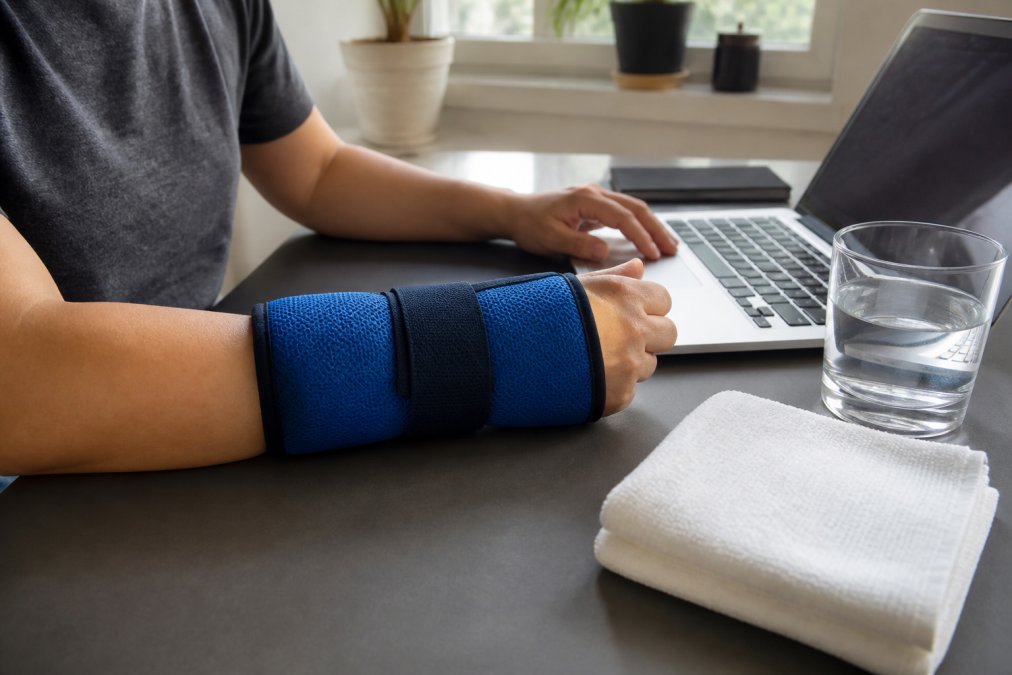
- Check your skin first. Look for cuts, rashes, or numbness you cannot feel.
- Wrap, do not clamp. The sleeve should feel snug, never tight enough to cut off feeling.
- Set a timer for 10 to 15 minutes. Stop when it goes off, even if you feel fine.
- Rest the wrist on a flat surface. Let the hand relax, fingers slightly open.
- Remove and check the skin. It should be pink, not white or blotchy.
- Wait at least an hour before the next session.
For a wearable option, the Penguin Fingers Wrist Cold Compression Pack delivers 360 degrees of cooling and compression in as fast as 1 to 2 minutes. It is free from PVC, BPA, phthalates, and similar additives, so daily use is less likely to irritate sensitive skin.
DIY Cold Pack Alternatives for Wrist Relief
You do not need special gear. A few household items work fine.
- Frozen gel pack: Reusable and molds to the wrist. Always wrap in a towel.
- Bag of frozen vegetables: Peas or corn conform well. Label it so it stays out of the kitchen.
- Ice water in a bowl: Soak the wrist for 5 to 10 minutes. Simple and effective.
- Wet towel in the freezer: Cheap, flexible, and easy to shape around the joint.
- Cold gel sleeve: The most hands-free option, and the easiest to wear while sitting at a desk.
When Cold Therapy Isn't Enough: Other Nonsurgical Options
Cold therapy is a tool, not a cure. If symptoms keep returning, wake you most nights, or your grip is weakening, you need a broader nonsurgical plan. Most people improve without surgery by combining several approaches, cold therapy is one piece, not the whole thing.
- Wrist splint: A neutral-position splint worn at night keeps the wrist straight so the carpal tunnel stays as open as possible. This is usually the first-line recommendation because it addresses the compression directly rather than just the symptoms. Cold therapy before bed can calm a flare so the splint is comfortable enough to keep on all night.
- Activity and ergonomic changes: Adjusting keyboard height, mouse position, chair armrests, and wrist posture reduces the repetitive strain that drives swelling. Cold is most useful here as a recovery tool after long typing or tool-use sessions, not as a substitute for fixing the setup.
- Physical therapy: Stretches and nerve-gliding exercises improve mobility and reduce nerve irritation over time. Cold works best as a pre-exercise tool for a swollen wrist and a post-exercise tool after a session that stirs up symptoms. See the routine section below for how to sequence this.
- Over-the-counter anti-inflammatories: Short-term relief for acute flares. They reduce inflammation systemically, while cold reduces it locally, the two can be used together during a bad week, but neither replaces the other.
- Steroid injections: A medical option for stubborn inflammation that has not responded to splinting and activity changes. Cold therapy is generally paused for a day or two around an injection site unless your doctor says otherwise.
- Hand therapy and ultrasound-guided treatments: Some clinics offer these for persistent cases. Ask your provider whether cold therapy should be continued alongside them.
Who Should Avoid Cold Therapy for Carpal Tunnel
Cold therapy is not safe for everyone. Skip it, or check with your doctor first, if you have:
- Poor circulation or peripheral artery disease
- Raynaud's phenomenon, where fingers turn white or blue in the cold
- Diabetes with reduced feeling in the hands
- Cold allergy or cold-induced hives
- Open wounds, rashes, or recent surgery on the wrist
- Nerve damage that limits your ability to feel temperature
Building Cold Therapy Into Your Daily Routine
The people who get the most from cold therapy ice at the right moments and pair it with wrist-protecting habits. Two situations deserve extra attention: nighttime symptoms and exercise recovery.
Cold Therapy for Nighttime Symptoms
Nighttime numbness and tingling are often the worst part of carpal tunnel, because the wrist curls inward during sleep and the carpal tunnel narrows. Cold therapy can help, but timing matters more than temperature.
A practical nighttime routine:
- Cold session 30 to 60 minutes before bed. Ten minutes on the wrist, wrapped in a thin cloth, to calm any lingering swelling from the day.
- Dry the wrist completely. Moisture under a splint overnight can irritate skin.
- Put the splint on after the cold session, not before. Icing inside a splint traps cold against the skin and makes it hard to judge how cold the wrist is getting.
- Keep a second cold pack in the freezer so you are not tempted to reuse a still-frozen one that has already warmed unevenly.
Using Cold Therapy Around Physical Therapy Exercises
Cold therapy and exercise are not competing strategies. They solve different problems at different points in a session.
- Before exercise, if the wrist is swollen or hot: 5 to 10 minutes of cold to reduce swelling so you can move through the range of motion more comfortably. If the wrist is stiff but not swollen, heat is the better pre-exercise choice.
- After exercise, especially nerve-gliding or stretching: 10 minutes of cold to calm any flare the movements stirred up. This is the most common pattern practitioners recommend.
- On rest days: skip the cold unless you have symptoms. Cold is a response to irritation, not a daily ritual.
A Sample Daily Pattern
- Morning: 10 minutes of cold if you wake up swollen or tingling; heat if you wake up stiff but not swollen.
- Workday: Short breaks every hour to rest the wrist and stretch. Cold after long typing or tool-use blocks.
- Pre-exercise: Cold only if swollen; otherwise heat or nothing.
- Post-exercise: 10 minutes of cold after nerve-gliding or stretching.
- Before bed: 10 minutes of cold, then splint on.
Tracking What Actually Helps
Track your symptoms for two weeks: time of day, activity, whether the wrist was swollen or just stiff, and whether cold helped. Patterns show up fast. If cold helps after activity but not in the morning, adjust your routine. If it stops helping at all, revisit the broader treatment plan rather than increasing ice time.
American Academy of Orthopaedic Surgeons on carpal tunnel syndrome
Frequently Asked Questions
Does cold therapy help carpal tunnel symptoms?
Yes, for many people. Cold therapy narrows blood vessels, which reduces swelling around the carpal ligament and eases pressure on the median nerve. That pressure is what causes the numbness, tingling, and dull pain linked to carpal tunnel syndrome. Cold also slows nerve signals, so flare-ups feel less intense. It works best as part of a broader routine that includes wrist splints, ergonomic changes, and rest from repetitive typing or gripping.
How long should you ice carpal tunnel?
Apply cold for 10 to 15 minutes at a time, then let your wrist return to normal temperature for at least an hour before repeating. Most people ice three to four times a day during a flare-up and once or twice daily for ongoing management. A wearable cold compression sleeve makes timing easier because it stays in place while you work. Stop sooner if your skin turns bright red, burns, or feels numb.
Is ice or heat better for carpal tunnel inflammation?
Ice is the better choice when your wrist is swollen, hot, or newly irritated, because it constricts blood vessels and calms inflammation. Heat helps when the joint feels stiff and tight but isn't swollen, since warmth increases blood flow and loosens tissue. Many people alternate: cold after typing or gripping, heat before stretching exercises. If you're unsure which to use, start with cold during acute pain and switch to heat for chronic stiffness.
Can a cold compression sleeve reduce carpal tunnel swelling?
A cold compression sleeve combines two effects at once: cooling to narrow blood vessels and gentle pressure to limit fluid buildup. Together they can ease swelling and the median nerve pressure it creates. Look for a sleeve that fits your wrist snugly without cutting off circulation, stays flexible when frozen, and uses gel that conforms to the joint. Wear it for 10 to 15 minutes per session, and check your skin afterward for any irritation.
Carpal tunnel pain rarely disappears on its own, and waiting for it to pass usually makes it worse. Cold therapy gives you a fast, drug-free way to calm flare-ups while you address the root causes. Penguin Fingers builds wearable cold compression sleeves and packs designed for wrists, fingers, and other aching joints, with dual hot and cold options and safe, reusable materials. Get started with Penguin Fingers and take back your grip on the day.


