

Table of Contents
- What a Muscle Sprain Is and Why Early Care Matters
- The RICE Method for Muscle Sprains at Home
- Cold Compression Therapy Benefits for Swelling and Pain
- When to Use Heat vs Ice for Injuries
- How Long Does a Muscle Sprain Take to Heal?
- Choosing Wearable Cold Compression Sleeves for Home Use
- Ergonomics, Nutrition, and Mental Support for Muscle Sprain Recovery
- When to See a Doctor for a Muscle Sprain
- Frequently Asked Questions
Last Updated: September 19, 2026
What a Muscle Sprain Is and Why Early Care Matters
A muscle sprain is a stretch or tear of a ligament, the tough band of tissue that connects one bone to another at a joint. The first 48 hours matter most.
Sprain vs. Strain: Knowing the Difference
A sprain damages a ligament at a joint. A strain damages a muscle or tendon. Both are soft tissue injuries, and both can happen at home.
The difference matters for treatment:
- Sprains usually follow a twist, roll, or awkward landing
- Strains usually follow a sudden pull or overstretch
- Sprains cause swelling and bruising around a joint
- Strains cause pain and weakness in the muscle itself
The RICE Method for Muscle Sprains at Home
The RICE method for muscle sprains is the standard first-line home treatment. It stands for Rest, Ice, Compression, and Elevation. Each step has one job.
How to Apply Each Step Correctly
- Rest. Stop using the joint. Avoid weight and repeated motion for the first day or two.
- Ice. Apply cold for 15 to 20 minutes at a time, several times a day. Always wrap the cold pack in a thin cloth first.
- Compression. Wrap the area with even, gentle pressure. It should feel snug, never tight or numb.
- Elevation. Raise the injured limb above heart level when you can, especially in the first 48 hours.
A common mistake is leaving ice on too long. That can damage skin and nerves. Set a timer.
Cold Compression Therapy Benefits for Swelling and Pain
Cold compression therapy benefits come from combining two actions at once: cooling and pressure. Cold narrows blood vessels, which reduces blood flow to the injured area and calms inflammation. Compression pushes excess fluid away from the joint.

When to Use Heat vs Ice for Injuries
The rule for when to use heat vs ice for injuries is simple: ice for fresh injuries, heat for old stiffness. Ice in the first 48 to 72 hours. Heat after the swelling has settled.
Here is how to choose:
- Use ice for new swelling, sharp pain, and fresh bruising
- Use heat for stiff, tight muscles and joints that feel locked up
- Skip heat while the area is still swollen or warm to the touch
- Never use heat right after an injury
How Long Does a Muscle Sprain Take to Heal?
Most mild muscle sprains heal in one to three weeks with home care. Moderate sprains can take four to six weeks. Severe sprains, where the ligament is fully torn, may need months and a doctor's care. Those ranges are useful, but they hide the part that actually matters: recovery is not one block of time. It moves through stages, and each stage has its own job.
The Three Stages of Soft Tissue Healing
Inflammatory stage (roughly the first 48 to 72 hours). The body sends blood, fluid, and repair cells to the injury. This is why swelling, warmth, and bruising show up fast. Your job here is to protect the area and control swelling, not to stretch or test it.
What Progress Should Look Like
A common pattern is that symptoms resolve in a predictable order:
- Sharp pain at rest drops first
- Swelling and bruising fade next
- Full range of motion returns
- Strength and stability come back last
Return-to-Activity Markers
Do not judge readiness by the calendar alone. Use function instead:
- Pain-free walking on the injured limb without a limp
- Full range of motion matching the uninjured side
- No swelling after a normal day of use
- Single-leg balance held for about 30 seconds without wobbling (for leg and ankle sprains)
- Light resistance through the joint without a sharp catch
Why Pushing Too Soon Backfires
Pushing too hard too soon is the most common setback. Tissue that is still remodeling can be re-torn by a single hard twist or heavy lift, and a re-injury often takes longer to heal than the first one. Gentle stretching and light mobility exercises should start only when the sharp pain is gone. A physical therapist can guide this stage if progress stalls, and a therapist can also tell you whether your timeline is normal or lagging.
Choosing Wearable Cold Compression Sleeves for Home Use
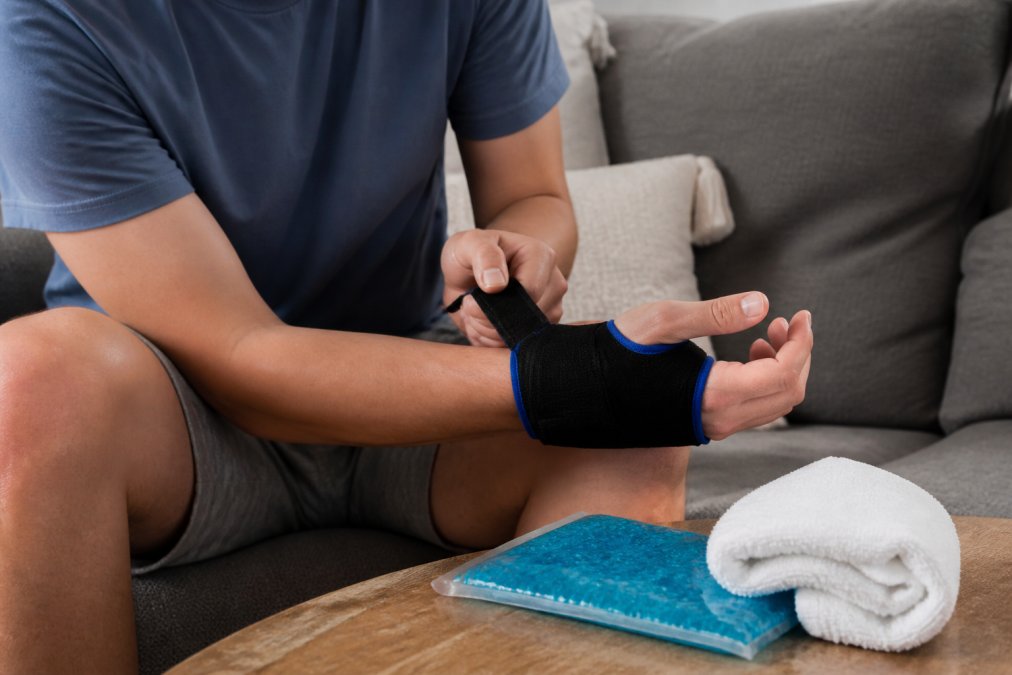
The best cold compression sleeve for home use is one that fits the injured joint, stays cold long enough, and applies even pressure without slipping. Fit matters more than brand. Most guides stop there. What they skip is the part that decides whether a sleeve helps or hurts: how to fit it, how long to wear it, and how to match it to the severity of the sprain.
Step-by-Step Fitting Guide
- Measure the joint, not the limb. Wrap a soft tape around the center of the joint and note the circumference. Sleeves are sized by joint circumference, not by height or weight.
- Check the fit at rest. The sleeve should sit snug against the skin with no gaps and no pinching. You should be able to slide one finger under the edge, not two.
- Test the pressure. A correct fit feels firm and even. If your toes or fingers tingle, turn cold, or go numb, it is too tight. Remove it and reposition.
- Recheck after 10 minutes. Cold causes tissue to shrink slightly, so a sleeve that felt right at first can tighten. Loosen or adjust if needed.
- Keep seams and gel packs off bony points. Pressure over a kneecap, ankle bone, or wrist bone can cause skin irritation.
How Long to Wear It
- Cold phase (first 48 to 72 hours): about 15 to 20 minutes at a time, several times a day, with at least an hour of skin rest between sessions.
- Compression-only phase (after swelling settles): a sleeve worn for support can stay on during activity, but take it off for sleep unless a clinician tells you otherwise.
- Heat phase (stiffness, no swelling): switch to the warm setting for 15 to 20 minutes, once or twice a day.
Never sleep in a cold sleeve. Prolonged cold can damage skin and nerves, and you cannot monitor numbness while asleep.
Matching the Sleeve to the Sprain
- Mild sprain (minor stretch, little swelling): a light compression sleeve with optional cold is enough. Wear it during activity for a week or two.
- Moderate sprain (some tearing, visible swelling and bruising): a fitted cold compression sleeve for the first few days, then a compression-only sleeve for support during the repair stage.
- Severe sprain (full tear, instability): a sleeve is not a substitute for medical care. A clinician may recommend a brace or immobilizer instead, and fitting should be done in person.
Features Worth Paying For
- A design shaped for the specific body part, not a one-size-fits-all wrap
- Flexible gel that conforms to the joint and stays put
- Dual hot and cold use so one sleeve covers both stages of healing
- Skin-safe materials you can wear daily
- A strap or closure that lets you adjust pressure as swelling changes
Penguin Fingers builds wearable sleeves for knees, elbows, feet, and wrists. The U.S. Food and Drug Administration overview of cold therapy devices explains how these products are regulated for safety.
| Product | Best For | Hot & Cold | Price |
|---|---|---|---|
| Wrist Cold Compression Pack | Wrists, typing pain | Yes | $16.95 |
| Elbow and Foot Sleeve | Elbows, ankles, feet | Yes | $22.95 |
| Knee Cold Compression Sleeve | Knees, thighs, calves | Yes | $28.95 |
Ergonomics, Nutrition, and Mental Support for Muscle Sprain Recovery
Recovery is not only about the injured joint. Your setup, your diet, and your stress level all shape how fast you heal.
When to See a Doctor for a Muscle Sprain
See a doctor if you cannot bear weight, cannot move the joint, or feel numbness or tingling. These signs point to a severe sprain, a torn ligament, or a possible fracture.
Watch for these red flags:
- Pain that gets worse instead of better after a few days
- Swelling that will not go down
- A joint that looks deformed or gives way
- No feeling, or a cold, pale limb
Frequently Asked Questions
How can I treat a muscle sprain at home?
Start with the RICE method: rest the injured area, apply cold therapy for 15-20 minutes every 2-3 hours, wrap with a compression sleeve, and elevate above heart level. Wearable cold compression sleeves like Penguin Fingers' wrist or knee packs combine cooling and compression in one step, saving time. Avoid heat in the first 48 hours, and gradually reintroduce gentle movement as pain allows. If swelling worsens or you cannot bear weight, see a doctor.
What is the RICE method for sprains?
RICE stands for Rest, Ice, Compression, and Elevation. Rest prevents further injury, ice reduces inflammation and numbs pain, compression limits swelling, and elevation drains excess fluid. Apply ice for 15-20 minutes at a time with a cloth barrier. For compression, a wearable sleeve provides consistent pressure. Elevate the injury above heart level when possible. Follow RICE for the first 48-72 hours after a muscle sprain.
How long does a muscle sprain take to heal?
Most mild to moderate muscle sprains heal within 2 to 6 weeks. Grade I sprains may improve in 1-2 weeks, while Grade II sprains can take 4-8 weeks with rehabilitation. Grade III sprains, which involve complete tears, may require surgery and months of recovery. Consistent cold compression therapy, gentle stretching, and physical therapy can support faster functional recovery. See a doctor if pain persists beyond a few days.
When should you see a doctor for a muscle sprain?
See a doctor if you cannot bear weight, have severe swelling or bruising, feel numbness or tingling, or if pain worsens after 48 hours. A doctor can rule out fractures with diagnostic imaging and recommend physical therapy. For home healthcare, use cold compression therapy as first aid, but do not delay medical evaluation for severe symptoms. Telehealth visits can be a convenient first step for mild to moderate sprains.
Muscle sprain recovery at home works best when you start early and stay consistent. Cold compression, elevation, and a little patience go a long way. Penguin Fingers makes that easier with wearable cold compression sleeves built for specific joints. The dual hot and cold design means one sleeve covers both stages of healing, and the flexible gel conforms to your body for comfortable, hands-free relief. Get started with Penguin Fingers and give your joints the steady support they need to heal.


