

Table of Contents
- Ice Pack vs Compression Sleeve: Quick Comparison
- How Ice Packs and Compression Sleeves Work
- How Long to Ice an Injury: Timing and Safety
- Benefits of Cold Compression Therapy for Recovery
- Best Cold Compression for Sports Recovery
- Skin Safety, Frostbite Prevention, and Maintenance
- Conclusion: Choosing the Right Cold Therapy for You
- Frequently Asked Questions
Last Updated: September 21, 2026
Ice Pack vs Compression Sleeve: Quick Comparison
The choice between an ice pack vs compression sleeve comes down to one question: do you want cold alone, or cold plus pressure? An ice pack delivers static cold that numbs pain and slows blood flow. A compression sleeve wraps that same cold in steady pressure that limits swelling and holds the cold against the joint. For swollen, stiff joints, the combination usually wins.
Penguin Fingers delivers targeted relief for sore, swollen, and aching joints through our specialized cold compression therapy sleeves and wraps. A loose bag of frozen peas cools the surface of your skin. A fitted sleeve cools and squeezes at the same time, which is why it tends to work better on knees, wrists, fingers, and toes.
Here's what most guides get wrong: they treat these as interchangeable. They aren't. Each one solves a different problem, and picking the wrong one wastes both your time and your recovery window.
Comparison Table: Ice Pack vs Compression Sleeve
| Feature | Ice Pack | Compression Sleeve |
|---|---|---|
| How it works | Static cold application | Cold plus active pressure |
| Best for | Quick numbing, acute flare-ups | Swelling control, joint stability |
| Coverage | Spot treatment, shifts when you move | 360-degree coverage, stays put |
| Mobility | You usually have to sit still | Wear it while you work or move |
| Reusable | Yes, if gel-based | Yes, gel stays flexible when frozen |
| Skin risk | Higher without a barrier | Lower, fabric buffers the cold |
| Typical cost | Low upfront | Higher, but replaces two products |
How Ice Packs and Compression Sleeves Work
Both methods use cold to calm an injury, but they get there differently. An ice pack pulls heat out of tissue through the skin. A compression sleeve does that plus applies pressure, and the pressure is what changes the outcome.
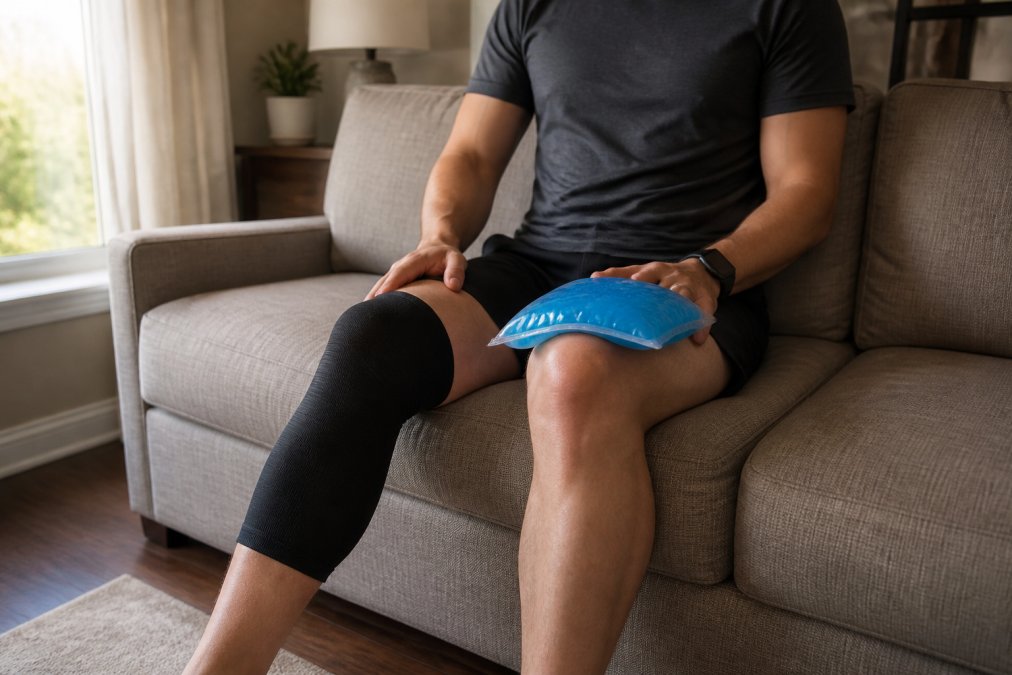
Static Cold Application: How Ice Packs Work
An ice pack works by lowering tissue temperature, which triggers vasoconstriction. Blood vessels narrow, blood flow to the area drops, and that slows the swelling that follows an acute injury. The cold also dulls nerve signals, which is the numbing effect you feel within a few minutes.
The catch is that an ice pack doesn't stay where you put it. Wrap it around a knee and it slides. Hold it on a wrist and your hand goes numb from the position, not the cold. That's the practical limit of static cooling.
Active Cold Compression: How Compression Sleeves Work
A cold compression sleeve is a wearable wrap that combines a frozen gel layer with fitted pressure. The pressure supports the joint, limits edema, and keeps the cold in direct contact with the tissue instead of hovering above it.

That contact matters more than people realize. Gel conforms to the shape of a joint, so cold penetration is more even than a rigid pack. Penguin Fingers' wrist cold compression pack is built for this: it delivers 360 degrees of cooling and compression in as little as one to two minutes, and you can keep typing while you wear it.
How Long to Ice an Injury: Timing and Safety
The standard answer is 15 to 20 minutes at a time, with at least an hour between sessions. That window is long enough for cold to reach the tissue and short enough to protect your skin.
Go longer and you risk tissue damage. Go shorter and you barely cool the joint. The clock matters more than most people assume.
A few rules worth following:
- 15-20 minutes per session for most joints and most people
- Wait at least 60 minutes before icing again
- Always use a fabric barrier between gel and bare skin
- Check the skin every 5 minutes for the first few sessions
- Stop immediately if the area turns white, waxy, or hard
Cold therapy is for the first 48 to 72 hours after an acute injury, when swelling peaks. After that, many people switch to heat for stiffness and muscle tightness. Penguin Fingers sleeves are designed for both: freeze them for cold therapy or warm them in the microwave for heat.
Benefits of Cold Compression Therapy for Recovery
Cold compression therapy does two jobs at once, and that's the whole point. Cold reduces inflammation and numbs pain. Compression supports the joint and pushes excess fluid out of the tissue. Together they shorten the window where a joint is swollen, stiff, and hard to use.
The benefits show up in a few specific ways:
- Faster swelling control than cold alone
- Better joint stability during the early recovery phase
- Less reliance on pain relievers for everyday aches
- Functional recovery you can work around, since the sleeve stays on
For chronic conditions like arthritis or tendinitis, the goal shifts. You're not chasing an acute injury. You're managing recurring joint soreness and stiffness, and a wearable sleeve you can put on during a flare-up beats sitting on the couch with a bag of ice.
Penguin Fingers Knee Cold Compression →
Arthritis Foundation guidance on heat and cold for joint pain
Best Cold Compression for Sports Recovery
Generic advice like "ice your sore muscles" doesn't help anyone. What matters is matching the cooling method to the joint you actually stress and the type of damage you're managing. A climber's finger pulley strain and a runner's knee inflammation are different problems that need different tools.
Here's how to think about it by activity:
Runners and endurance athletes. The knee, ankle, and foot take repetitive impact. After a long run, the goal is swelling control around the joint capsule, not just numbing. A fitted knee or ankle sleeve that stays put through movement works better than a pack you have to hold. Ice within the first 30 to 60 minutes after a hard effort, then again in the evening if swelling persists.
Climbers and grip-sport athletes. Finger and wrist injuries are the most common in climbing, and they're notoriously slow to heal because the tissue is small and poorly vascularized.
- Finger and toe gel packs for climbing, jiu jitsu, and jammed fingers, $14.95
- Wrist cold compression pack for carpal tunnel and typing strain, $16.95
- Elbow and foot sleeve for sprains and strains, $22.95
- Knee cold compression sleeve for knee joints, thighs, and calves, $28.95
Skin Safety, Frostbite Prevention, and Maintenance
Frostbite prevention is the part most guides skip, and it's the part that matters most. Cold injury happens when ice sits directly on skin for too long, or when the cold is intense enough to freeze tissue. The tricky part is that sleeves and packs have different risk profiles, and the safe duration isn't the same for both.


Warning signs to watch for:
- Skin turning white, gray, or waxy
- A hard, numb feeling that doesn't fade when you remove the sleeve
- Burning or stinging that gets worse, not better
- Blisters or dark patches
- Loss of sensation that lasts more than a few minutes after removal
Cleveland Clinic overview of cold therapy and cryotherapy
Conclusion: Choosing the Right Cold Therapy for You
If you want a fast, cheap way to numb a fresh bump, an ice pack does the job. If you're dealing with swelling, joint stiffness, or a recurring flare-up that you need to work around, a compression sleeve is the better tool.
Frequently Asked Questions
Is a compression sleeve better than an ice pack for swelling?
For swelling control, a compression sleeve often works better because it combines cold application with steady pressure. The compression helps move excess fluid away from the injury while the cold reduces inflammation. Static ice packs cool the surface but do not provide that circulatory support. For post-surgical swelling or acute injuries, a wearable cold compression sleeve delivers both benefits at once.
Can you use a compression sleeve and an ice pack at the same time?
You can, but a cold compression sleeve already does both jobs in one step. Layering a separate ice pack under a compression sleeve can make the cold too intense and raise frostbite risk. If you want to combine them, keep the ice pack session under 15 minutes and check your skin frequently. A dual-purpose sleeve is simpler and safer for most people.
How long should you wear a cold compression sleeve?
Most guidelines suggest 15 to 20 minutes per session, with at least a 20-minute break before reapplying. For chronic conditions like arthritis, two to three sessions per day work well. If you are using a compression sleeve for sports recovery, wear it right after activity and again a few hours later. Always check your skin between sessions for numbness or discoloration.
Do compression sleeves help with tendonitis?
Yes. Tendonitis causes localized inflammation and pain, and cold compression sleeves address both. The cold numbs the area and reduces swelling, while the compression supports the joint and limits movement that aggravates the tendon. For wrist tendonitis or elbow tendonitis, a targeted sleeve like the Penguin Fingers Wrist Cold Compression Pack ($16.95) delivers 360-degree cooling in as fast as 1 to 2 minutes.
Are cold compression sleeves effective for arthritis?
Cold compression sleeves can help manage arthritis pain by reducing joint swelling and providing a numbing effect. For finger and toe arthritis, the Penguin Fingers Cold Compression Gel Packs ($14.95) are designed to fit fingers of all sizes and use non-toxic, latex-free materials. Many users find that cold therapy works best during flare-ups, while heat therapy helps with morning stiffness.


