

Table of Contents
- How Compression Sleeves Work for Wrist Pain
- Clinical Evidence: Do Compression Sleeves Actually Reduce Carpal Tunnel Symptoms?
- Key Features to Look for in a Wrist Compression Sleeve
- How Long to Wear Compression Sleeve for Wrist Recovery
- Compression Gloves vs. Wrist Splints: Which Offers Better Support?
- Best Practices for Carpal Tunnel Pain Management Beyond the Sleeve
- Choosing the Right Compression Sleeve for Your Needs
Last Updated: August 15, 2026
How Compression Sleeves Work for Wrist Pain
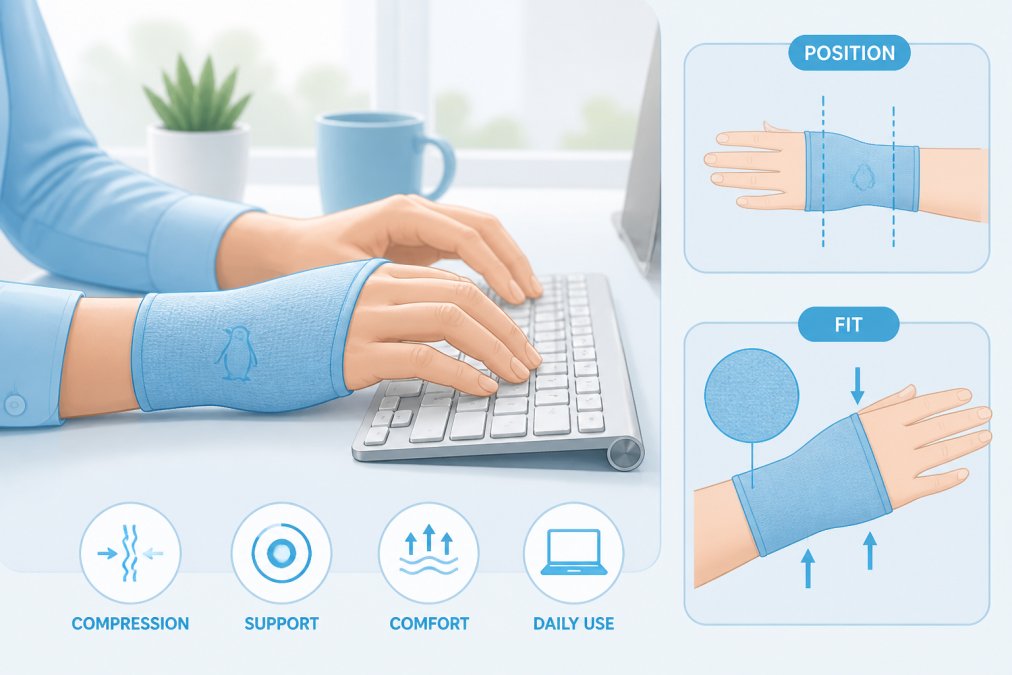
Compression sleeves for carpal tunnel relief work by applying targeted pressure around the wrist and hand, stabilizing the median nerve and reducing inflammation in the carpal tunnel. The compression knit fabric creates uniform pressure across the joint, reducing excessive movement that can irritate the nerve, particularly important during repetitive activities like typing. This pressure also helps maintain a neutral wrist position, which minimizes strain on the nerve.
Many sleeves are designed with anatomical fit to match your wrist and hand contours, ensuring even pressure distribution rather than creating pressure points. Quality compression sleeves use breathable, moisture-wicking materials that allow sweat to evaporate, preventing skin irritation during extended wear.
Clinical Evidence: Do Compression Sleeves Actually Reduce Carpal Tunnel Symptoms?
The clinical efficacy of compression sleeves for carpal tunnel syndrome is mixed, though many individuals report symptom relief. Evidence supports that compression sleeves can reduce symptom progression in mild to moderate cases by preventing the wrist from bending into positions that compress the median nerve, resulting in fewer pain flare-ups during triggering activities.
Carpal tunnel syndrome varies widely in severity and cause from person to person. A compression sleeve that works well for mild, activity-related symptoms may do little for severe nerve compression requiring surgery. Additionally, the placebo effect is genuine and powerful in pain management.
Compression sleeves are non-invasive with minimal downside risk compared to corticosteroid injections or surgery, and they cost far less. For office workers experiencing repetitive strain injury symptoms, a compression sleeve is a reasonable first-line approach before pursuing more aggressive interventions.
Key Features to Look for in a Wrist Compression Sleeve
Not all compression sleeves are created equal. The features that separate an effective sleeve from a mediocre one come down to material quality, pressure distribution, and anatomical design.
Compression Level and Pressure Distribution
Look for sleeves that offer graduated compression, where pressure is stronger at the wrist and gradually decreases toward the hand and forearm. This approach promotes better blood flow stimulation than uniform pressure. A good range for carpal tunnel relief is 15-20 mmHg, which provides meaningful support without restricting circulation.
Material and Breathability
The best compression sleeves use moisture-wicking, breathable fabrics that prevent sweat buildup. Look for neoprene, spandex, or specialized synthetic blends designed for athletic or medical use. Neoprene provides excellent compression and durability but can feel warm; spandex-based sleeves breathe better but may not provide as much support. A hybrid approach often offers the best balance.
Anatomical Fit and Wrist Support
Your sleeve should have reinforced panels or stays that provide targeted support where you experience the most pain. Many quality sleeves include gel-infused or foam padding on the inner wrist for shock absorption and comfort. The sleeve should fit snugly without bunching or sliding.
Ease of Application and Daily Wearability
A compression sleeve that's difficult to put on is one you'll avoid wearing. Look for easy-open designs, velcro straps, or pull-on construction that lets you get the sleeve on in seconds.
Dual Therapy Options
Some sleeves, like the Penguin Fingers Wrist Cold Compression Pack at $16.95, offer both cold and hot therapy capabilities. Cold compression is ideal for acute inflammation and flare-ups, while heat therapy can benefit stiffness and chronic pain.

How Long to Wear Compression Sleeve for Wrist Recovery
The duration you wear a compression sleeve depends on the severity of your carpal tunnel symptoms and your daily activities.
For Mild Symptoms During Work
If your carpal tunnel pain is mild and activity-triggered, wear your compression sleeve during work hours only, typically 6-8 hours per day. Removing the sleeve during evenings and nights allows your wrist to move freely and reduces the risk of muscle atrophy from prolonged immobilization.
For Moderate Symptoms and Recovery
If you're recovering from a flare-up or dealing with moderate daily pain, wearing the sleeve 12-16 hours per day is more typical. This means wearing it throughout your workday and into the evening, but removing it before bed.
For Severe or Constant Symptoms
In cases where pain is constant or severely limits your function, 24-hour wear may be necessary during the acute phase. However, this should be temporary, typically 2-4 weeks, while you pursue other treatments like physical therapy or anti-inflammatory management.
Gradual Reduction Strategy
As your symptoms improve, gradually reduce the hours you wear the sleeve rather than stopping abruptly. Move from all-day wear to work-hours-only, then to wearing it only during activities that trigger symptoms.
Compression Gloves vs. Wrist Splints: Which Offers Better Support?
Compression gloves and wrist splints represent two different approaches to managing carpal tunnel symptoms, each with distinct advantages.
Compression Gloves for Carpal Tunnel
Compression gloves extend coverage from the wrist down through the fingers, providing pressure across the entire hand. This broader coverage can benefit people whose symptoms include finger numbness or tingling. They allow moderate finger mobility while providing wrist stabilization, making them suitable for people who need to maintain dexterity for work. The downside is they're more cumbersome to put on and harder to clean.
Wrist Splints for Immobilization
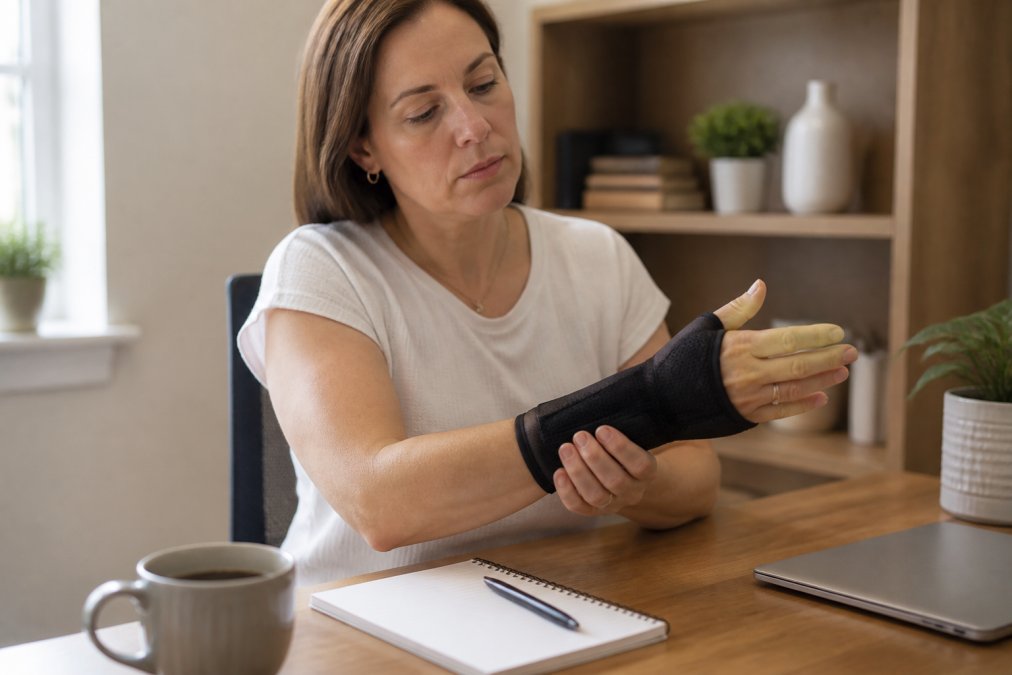
Rigid wrist splints provide maximum immobilization by preventing wrist bending entirely. This is most effective for severe carpal tunnel symptoms or for sleeping, where unconscious wrist flexion can aggravate the nerve. Splints are typically worn at night to maintain neutral wrist position. The tradeoff is they eliminate wrist mobility, making them impractical for daytime work.
Hybrid Approach: Compression Sleeves
Compression sleeves occupy the middle ground between gloves and splints, providing meaningful wrist stabilization without completely eliminating mobility. This makes them ideal for daytime wear during work, while you might use a rigid splint at night for maximum immobilization during sleep.
Best Practices for Carpal Tunnel Pain Management Beyond the Sleeve
A compression sleeve is one tool in a broader pain management strategy. Combine sleeve use with ergonomic changes, activity modification, and targeted exercises.
Ergonomic Workspace Integration
Position your keyboard and mouse so your wrists remain neutral while typing. Your elbows should be at roughly 90 degrees, and your forearms parallel to the ground. An ergonomic keyboard, wrist rest, or adjustable desk can make a significant difference.
Activity Modification and Pacing
Reduce repetitive gripping and pinching activities when possible. Implement frequent breaks every 30-60 minutes to stretch your wrists and fingers. Avoid activities that require forceful gripping or prolonged wrist bending, especially during flare-ups.
Targeted Stretching and Strengthening
Gentle stretching of the forearm flexor muscles can reduce tension on the median nerve. Extend your arm straight out, palm up, then gently press the back of your hand downward with your other hand. Hold for 15-30 seconds and repeat 2-3 times. Strengthening exercises for wrist stabilizer muscles help reduce compensatory strain.
Inflammation Management
Ice application during acute flare-ups (15-20 minutes, several times daily) reduces swelling. Some people benefit from NSAIDs like ibuprofen during acute phases, though this should be discussed with your healthcare provider.
Sleep Position and Night Support
Sleeping with your wrist bent compresses the median nerve throughout the night and can trigger morning pain or numbness. Use a pillow to support your arm in a neutral position, or wear a rigid night splint to prevent unconscious wrist bending.
Choosing the Right Compression Sleeve for Your Needs
Selecting the right compression sleeve requires matching the sleeve's features to your specific symptoms, activity level, and lifestyle.
Assess Your Symptom Severity
Evaluate whether your carpal tunnel symptoms are mild (occasional pain during specific activities), moderate (daily pain that limits some activities), or severe (constant pain and significant functional limitation). Mild symptoms may respond well to a basic compression sleeve worn during work. Moderate symptoms typically require a higher-quality sleeve with better compression distribution. Severe symptoms may need a rigid night splint combined with a daytime compression sleeve.
Consider Your Work Environment
If you work in an office with frequent typing, you need a sleeve that's comfortable for extended wear and doesn't interfere with keyboard use. If you work in a physically demanding job with heavy gripping, you need superior compression and durability. Athletes need sleeves that stay in place during movement.
Material Preference and Sensitivity
Consider whether you have sensitive skin or latex allergies. If you tend to sweat heavily or live in a warm climate, prioritize moisture-wicking materials. If you prefer warmth, neoprene-based options work better than lightweight spandex.
Budget and Value
Compression sleeves range from budget options under $20 to premium sleeves over $50. The Penguin Fingers Wrist Cold Compression Pack at $16.95 offers excellent value for basic compression support with cold therapy capability. If you want dual hot and cold therapy options with superior anatomical design, investing in a higher-quality sleeve is justified.
Trial and Return Considerations
Before committing to a sleeve, understand the return policy. Many quality brands offer 30-day money-back guarantees, giving you time to test whether the sleeve actually reduces your symptoms.
Carpal tunnel pain doesn't have to limit your work or daily activities. A properly chosen compression sleeve, combined with ergonomic adjustments and targeted pain management, addresses the root causes of your symptoms. Penguin Fingers compression sleeves deliver targeted cold therapy support designed specifically for wrist and hand pain, with options like the Wrist Cold Compression Pack that combines compression with therapeutic cold to reduce inflammation and provide immediate relief. Start with consistent sleeve use during activities that trigger your symptoms, monitor your progress over 2-4 weeks, and adjust your approach based on what you observe. If your symptoms aren't improving or are worsening, consult a healthcare provider to rule out severe nerve compression requiring more aggressive treatment.
Frequently Asked Questions
Do compression sleeves actually help with carpal tunnel syndrome?
Compression sleeves provide relief by stabilizing the wrist in a neutral position, reducing median nerve irritation and swelling. They work best when combined with ergonomic adjustments and rest. Many users report symptom relief within days to weeks, though results vary based on severity. For chronic cases, compression sleeves are most effective as part of a broader pain management strategy that includes breaks from repetitive activities.
How long should I wear a compression sleeve for wrist pain?
Start with 2-3 hours during peak activity times, then gradually increase to 6-8 hours daily if comfortable. Many people wear them during work hours when repetitive strain is highest. For flare-ups, wearing them throughout the day can help reduce inflammation. Avoid 24/7 wear without breaks, as your wrist needs time to engage stabilizing muscles. Listen to your body and adjust duration based on comfort and symptom response.
What's the difference between compression gloves and wrist splints?
Compression gloves provide gentle, distributed pressure across the hand and wrist, allowing more mobility for daily activities. Wrist splints immobilize the joint in a fixed position, offering maximum stability but limiting movement. For carpal tunnel, compression sleeves sit between these options, providing targeted support while maintaining functionality. Splints work better for acute flare-ups or nighttime wear, while compression sleeves suit ongoing daily wear during work or activity.
Can wearing a compression sleeve make carpal tunnel worse?
A properly fitted compression sleeve should not worsen carpal tunnel. However, wearing one that's too tight can restrict blood flow and increase nerve irritation. Ensure your sleeve fits snugly but allows circulation, you should be able to fit a finger under the fabric. If you experience increased pain, numbness, or tingling after wearing a sleeve, remove it and consult a healthcare provider. Quality sleeves with breathable fabric and ergonomic design minimize this risk.
This article was written using GrandRanker


