

Table of Contents
- How Cold Compression Relieves Carpal Tunnel Pain
- Cold vs Heat for Carpal Tunnel: Which One Should You Use?
- How Long to Ice Your Wrist for Carpal Tunnel
- What to Look for in a Cold Compression Wrap
- Best Cold Compression Products for Carpal Tunnel Relief
- Integrating Cold Compression with Physical Therapy Exercises
- When to See a Doctor for Carpal Tunnel
- Conclusion
Last Updated: August 9, 2026
How Cold Compression Relieves Carpal Tunnel Pain
Cold compression therapy is one of the most effective non-surgical tools for managing carpal tunnel symptoms. It works by targeting two root problems simultaneously: nerve irritation and the soft tissue inflammation surrounding it.

What Happens to the Median Nerve During a Flare-Up
The median nerve runs through a narrow passage in the wrist called the transverse carpal ligament. When surrounding tendons become inflamed due to repetitive strain, tenosynovitis, or conditions like rheumatoid arthritis, that tunnel tightens. The resulting nerve compression produces tingling, numbness radiating into the thumb and first three fingers, and a burning ache that often worsens at night.
In early-stage carpal tunnel, the nerve itself isn't damaged, swelling presses against it. Address the swelling, and nerve conduction improves.
Vasoconstriction, Numbing, and Swelling Reduction
Cold therapy works through vasoconstriction: blood vessels in the wrist narrow in response to cold, reducing blood flow to the inflamed area. Less blood flow means less fluid accumulation, which directly reduces swelling. The numbing effect follows as nerve signal transmission slows at lower temperatures, providing immediate symptom relief.
Compression amplifies both effects by preventing fluid pooling while cold drives vasoconstriction. A fitted cold compression wrap outperforms a loose ice bag. According to American Academy of Orthopaedic Surgeons guidance on cryotherapy, cold application combined with compression is a foundational component of conservative injury management.
Cold vs. Heat for Carpal Tunnel: Which One Should You Use?
Cold therapy is the right choice for carpal tunnel during acute flare-ups or after extended periods of repetitive wrist use. Heat increases blood flow to an already inflamed median nerve, which can worsen swelling and intensify symptoms.
Use cold when the wrist feels hot, swollen, or acutely painful. Use heat only for stiffness without active inflammation, such as morning joint tightness without tenderness. Many people instinctively reach for heat because it feels soothing, but for carpal tunnel flare-ups driven by inflammation and nerve compression, cold is clinically more appropriate.
| Situation | Recommended Therapy | Reason |
|---|---|---|
| Acute flare-up after typing | Cold | Reduces swelling, numbs nerve |
| Morning stiffness, no swelling | Heat | Loosens connective tissue |
| Post-activity soreness | Cold | Limits inflammatory response |
| Chronic ache, no inflammation | Heat or alternating | Promotes circulation |
| Night pain, swelling present | Cold | Reduces overnight fluid buildup |
Some physical therapists recommend alternating hot and cold therapy for chronic carpal tunnel past the acute phase.
How Long to Ice Your Wrist for Carpal Tunnel
The recommended duration for cold therapy on the wrist is 15 to 20 minutes per session. This window achieves meaningful vasoconstriction and pain relief without risking skin or nerve damage from prolonged cold exposure. The National Institutes of Health clinical guidance on cryotherapy duration consistently supports this 15-20 minute therapeutic window for soft tissue injuries.
Never apply ice directly to bare skin. Always use a cloth barrier or purpose-designed gel sleeve to prevent frostbite. After each session, allow at least 45 minutes before reapplying to let circulation normalize. Most people benefit from two to three sessions per day during a flare-up.
Cold Therapy for Nighttime Use
Nighttime is when carpal tunnel symptoms often peak. Many people wake with numb hands, tingling fingers, and aching wrists from sustained flexion during sleep. Cold therapy before bed can reduce this pattern significantly.
The challenge is safety: you can't monitor a standard ice pack while sleeping. A wearable gel sleeve that reaches therapeutic temperature in the freezer and gradually warms over 20-30 minutes solves this. Applied 15-20 minutes before sleep while awake, it reduces inflammation before you lose consciousness. A low-profile, stretchable sleeve stays in place better than a rigid brace and won't interrupt sleep if it slips.
What to Look for in a Cold Compression Wrap
The best cold compression for carpal tunnel isn't just about how cold it gets. Fit, material, and usability determine whether a product gets used consistently, and consistency drives results.

Material and Ergonomic Design Considerations
A wrap that's uncomfortable gets abandoned. Look for these specific characteristics:
- Flexibility when frozen: Gel that hardens into a rigid slab can't conform to wrist anatomy. The best formulations stay pliable below freezing.
- Latex-free, non-toxic gel: Important for anyone with latex sensitivity or skin conditions.
- Stretchable outer sleeve: Nylon-spandex blends conform to the wrist without pressure points.
- Thumb hole or contoured fit: Wraps covering the palm and thumb base provide better median nerve coverage.
- Size options: Proper sizing ensures both compression and cold contact.
Ergonomic design matters for people with limited hand dexterity. Velcro closures are easier to manage than buckles or ties.
Reusable Gel Packs vs. Basic Ice Packs
Basic ice packs are inexpensive but create practical problems for carpal tunnel management. They drip as they melt, lose cold quickly, and don't conform to wrist anatomy. They also can't provide compression independently.
Reusable gel packs solve these issues. They maintain therapeutic cold for 15-20 minutes, stay flexible when frozen, and integrate into a fitted sleeve that provides simultaneous compression. For anyone managing a chronic condition, reusable systems are the practical choice.
Best Cold Compression Products for Carpal Tunnel Relief
Quick Picks:
- Best Overall Value: Penguin Fingers Wrist Cold Compression Pack at $16.95 - targeted wrist fit, reusable gel, latex-free
- Best for Elbow/Forearm Involvement: Penguin Fingers Elbow and Foot Cold Compression Sleeve at $22.95
- Best for Post-Surgical or Clinical Use: Motorized cold therapy systems for extended, controlled therapy
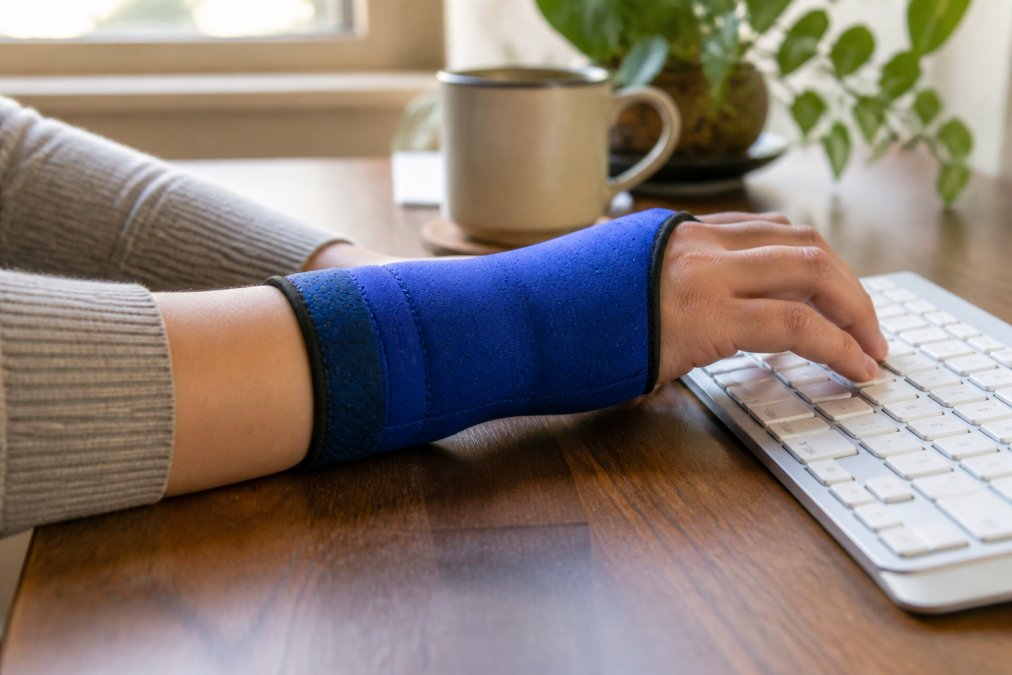
1. Penguin Fingers Wrist Cold Compression Pack ($16.95)
The Penguin Fingers Wrist Cold Compression Pack is our top pick because most people need something they'll actually use every day, not a clinical device that lives in a drawer.
At $16.95, this is the most accessible entry point for targeted wrist cold therapy. The soft, stretchable gel sleeve hugs the wrist and hand without rigid straps or complicated closures. The gel is non-toxic, latex-free, and stays pliable after freezing so it conforms to the wrist. It's available in Small/Medium and Large/XL for proper fit.
The dual hot/cold function is worth highlighting: the same sleeve works for both cold and heat therapy, so you're not buying separate products for morning stiffness versus afternoon flare-ups. For office workers whose wrist pain correlates with typing volume, this is the kind of product you apply during a break and remove 20 minutes later.
Best for: Office workers, people with chronic carpal tunnel, anyone managing both arthritis and repetitive strain who needs daily-use cold therapy.
Purchase the Penguin Fingers Wrist Cold Compression Pack
2. Penguin Fingers Elbow and Foot Cold Compression Sleeve ($22.95)
Carpal tunnel doesn't always stay in the wrist. For many people, forearm tightness and elbow soreness compound wrist symptoms, particularly when the condition stems from repetitive strain. The Penguin Fingers Elbow and Foot Cold Compression Sleeve addresses the broader kinetic chain at $22.95.
The sleeve design works across multiple body parts, making it practical for anyone managing more than one site of inflammation. The hot/cold dual capability is built in, covering both phases of carpal tunnel management in one product.
Best for: People with forearm or elbow involvement alongside wrist symptoms, athletes with multi-site inflammation, anyone who wants one product covering multiple body parts.
Purchase the Penguin Fingers Elbow and Foot Cold Compression Sleeve
3. Higher-End Motorized Systems: When They're Worth It
Motorized cold therapy units circulate chilled water continuously through a pad, maintaining consistent temperature throughout the session. They're the standard of care in post-surgical recovery and clinical rehabilitation because they eliminate temperature variability inherent in gel packs.
The tradeoff is cost and complexity. These systems require an electrical outlet, a water reservoir, and periodic maintenance. They're not practical for a 20-minute desk break or nighttime use. For most people managing carpal tunnel conservatively at home, the added consistency doesn't justify the cost premium over a quality gel sleeve.
Motorized systems genuinely earn their price in post-operative recovery from carpal tunnel release surgery or severe chronic cases where gel pack duration is consistently insufficient. For daily home management, a well-designed reusable gel sleeve delivers the therapeutic duration you need at a fraction of the cost.
Integrating Cold Compression with Physical Therapy Exercises
Cold therapy works best as part of a structured approach, not as a standalone fix. The most effective sequence is: cold compression first to reduce acute inflammation and numb the area, followed by gentle nerve gliding and tendon exercises once acute pain subsides.
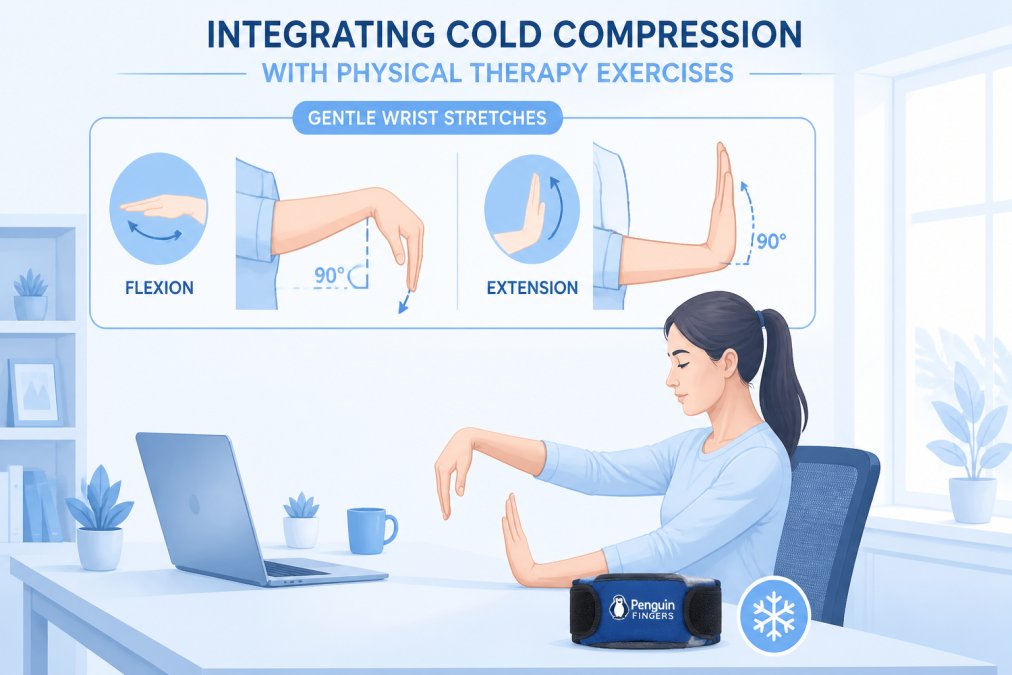
Nerve gliding exercises are the cornerstone of conservative carpal tunnel physical therapy. They gently mobilize the median nerve through its full range of motion within the carpal tunnel, reducing adhesions and improving nerve conduction over time. According to American Physical Therapy Association guidance on carpal tunnel management, nerve gliding combined with tendon gliding exercises is a first-line conservative intervention for carpal tunnel syndrome.
The practical integration looks like this:
- Apply cold compression for 15-20 minutes to reduce acute swelling
- Wait 10 minutes after removing the wrap for sensation to normalize
- Perform 10 repetitions of median nerve gliding in each position
- Follow with wrist flexion and extension stretches held for 15-30 seconds
- Finish with tendon gliding sequences targeting the finger flexors
This sequence takes about 35-40 minutes total and can be done twice daily during a flare-up.
When to See a Doctor for Carpal Tunnel
Conservative management with cold compression, nerve gliding exercises, and ergonomic adjustments resolves many carpal tunnel cases. But clear signals indicate a physician evaluation is necessary.
See a doctor if:
- Symptoms have persisted beyond 6-8 weeks of consistent conservative treatment without improvement
- Weakness in grip or pinch strength is developing, particularly difficulty with fine motor tasks
- Constant numbness rather than intermittent paresthesia, suggesting sustained nerve compression
- Muscle wasting at the base of the thumb, indicating nerve damage requiring prompt evaluation
- Bilateral symptoms that appeared suddenly, which can indicate systemic conditions including hypothyroidism, diabetes, or rheumatoid arthritis
- Symptoms that disrupt sleep consistently despite cold therapy and positional adjustments
A physician will typically order nerve conduction studies to assess median nerve compression severity. Based on results, treatment may progress to corticosteroid injections, splinting protocols, or surgical consultation. The National Institute of Neurological Disorders and Stroke information on carpal tunnel syndrome provides a clear overview of when surgical intervention becomes appropriate.
Cold compression and conservative care are appropriate first steps, not substitutes for medical evaluation when warning signs are present.
Comparing Your Options: Cold Compression Summary
| Product | Price | Best For | Cold Duration | Hot/Cold Dual Use |
|---|---|---|---|---|
| Penguin Fingers Wrist Pack | $16.95 | Daily home use, office workers | 15-20 min | Yes |
| Penguin Fingers Elbow Sleeve | $22.95 | Multi-site inflammation, athletes | 15-20 min | Yes |
| Motorized systems | High (clinical pricing) | Post-surgical, clinical recovery | Extended/continuous | Cold only (typically) |
| Basic ice pack | Low | One-time use | 10-15 min | No |
Carpal tunnel management requires consistency, and the biggest barrier to consistency is inconvenience. A cold compression wrap you'll actually use beats a clinical system that stays in the closet.
Finding relief from carpal tunnel pain requires the right combination of targeted cold therapy, consistent application, and appropriate product design. Penguin Fingers offers wearable cold compression solutions specifically designed for this purpose, with the Wrist Cold Compression Pack at $16.95 providing targeted gel compression for daily use, and the dual hot/cold capability covering both acute inflammation and morning stiffness in one product. Get started with Penguin Fingers and experience the difference that purpose-built, wearable cold therapy makes for wrist pain management.
Frequently Asked Questions
Will a cold compress help with carpal tunnel?
Yes. Cold compression targets two of the main drivers of carpal tunnel symptoms: inflammation around the transverse carpal ligament and swelling that presses on the median nerve. Applying a cold compression wrap reduces swelling through vasoconstriction and creates a numbing effect that dulls acute pain. It won't reverse nerve compression permanently, but it is an effective non-surgical option for managing flare-ups and reducing discomfort between other treatments.
How long should you apply cold compression to your wrist?
Most physical therapists recommend 15 to 20 minutes per session, with at least 45 minutes between applications. Going beyond 20 minutes continuously can cause tissue damage rather than relief. For carpal tunnel flare-ups triggered by heavy typing or repetitive motion, applying cold compression immediately after activity and again before bed tends to give the most consistent symptom relief. Never apply ice directly to bare skin; always use a sleeve or cloth barrier.
Is cold compression better than heat for carpal tunnel?
Cold compression is generally the better choice during active flare-ups or when swelling and inflammation are present, because it slows nerve conduction of pain signals and reduces fluid buildup around the median nerve. Heat works better for chronic stiffness and muscle tightness when there is no acute inflammation. A practical approach: use cold therapy after activity or when symptoms are sharp, and switch to gentle heat in the morning to loosen stiff joints before movement.
Can cold make carpal tunnel worse?
Cold therapy applied correctly is safe, but overuse or improper application can cause problems. Applying ice for longer than 20 minutes at a time risks frostbite or increased nerve sensitivity. People with Raynaud's disease or certain circulatory conditions should consult a doctor before using cold compression regularly. If your symptoms consistently worsen after cold therapy rather than improve, that is a signal to stop and get a professional evaluation rather than continuing home treatment.
What features should I look for in a carpal tunnel ice pack?
Prioritize a wrap with a flexible gel pack that stays pliable after freezing, so it conforms to your wrist contours without stiff edges. Adjustable compression, either via Velcro straps or a stretchable sleeve, lets you dial in the right pressure without cutting off circulation. Look for non-toxic, latex-free materials, especially if you have sensitive skin. Dual hot and cold capability adds long-term value. A reusable design with a washable cover is more cost-effective than disposable options.
This article was written using GrandRanker


