

Table of Contents
- Quick Comparison: 7 Best Cold Compression Sleeves for Finger Arthritis
- Benefits of Cold Therapy for Joint Inflammation
- 1. Penguin Fingers Cold Compression Gel Packs for Fingers and Toes
- 2. Penguin Fingers Finger Splint Wrap
- How to Manage Finger Arthritis with Cold Compression
- How Long to Ice Arthritic Fingers
- Choosing the Right Sleeve for Daily Activities
- Conclusion
- Frequently Asked Questions
Last Updated: September 15, 2026
Quick Comparison: 7 Best Cold Compression Sleeves for Finger Arthritis
Cold compression sleeves are wearable devices that combine therapeutic cold with gentle pressure to reduce joint inflammation, swelling, and arthritis pain in the fingers and hands. At Penguin Fingers, we've spent years designing wearable cold therapy for people who need relief that fits into a normal day, not a rigid ice routine. Managing chronic discomfort often requires a broader strategy that integrates these targeted sleeves with other home arthritis devices to maintain consistent mobility throughout the day.
The best options in 2026 range from $7.95 finger splint wraps to premium cold compression gel packs, and the right choice depends on whether you need targeted finger relief, post-injury swelling reduction, or daily arthritis management. Below, we break down seven picks by use case, sizing, and how long each holds its therapeutic temperature.
| Product | Best For | Price | Key Feature |
|---|---|---|---|
| Penguin Fingers Cold Compression Gel Packs | Finger and toe arthritis | $14.95 | Gel-filled, reusable, one size fits all |
| Penguin Fingers Finger Splint Wrap | Trigger finger, post-injury support | $7.95 | Adjustable splint + wrap design |
| Slip-on gel finger sleeves | Mild stiffness, office use | Varies | Flexible fit, breathable fabric |
| Full-hand cold wraps | Widespread joint inflammation | Varies | Broad coverage, moisture-wicking |
| Toe and finger combo packs | Gout relief in toes and fingers | Varies | Dual-use, non-toxic gel |
| Cryotherapy-style compression gloves | Chronic arthritis, all-day wear | Varies | Ergonomic design, range of motion |
| Targeted fingertip caps | Localized swelling, post-op | Varies | Encapsulated ice pack inserts |
Benefits of Cold Therapy for Joint Inflammation
Cold therapy reduces joint inflammation by narrowing blood vessels, which limits blood flow to the swollen area and calms the inflammatory response that drives arthritis pain and stiffness. Compression adds gentle external pressure that helps move excess fluid away from the joint.

The combined effect is what makes cold compression sleeves more useful than a plain ice pack for finger arthritis. Key benefits include:
- Reduced swelling and joint inflammation after activity or injury
- Slower nerve conduction, which dulls pain signals
- Less stiffness, especially in the morning
- Improved range of motion once swelling subsides
- Reusable, wearable relief you can keep on while you work
For people managing chronic arthritis, the biggest advantage is consistency. A sleeve you'll actually wear beats an ice pack you avoid because it's awkward. The Arthritis Foundation's guidance on cold and heat therapy notes that cold is generally best for recent injuries and flare-ups, while heat suits chronic stiffness.
1. Penguin Fingers Cold Compression Gel Packs for Fingers and Toes
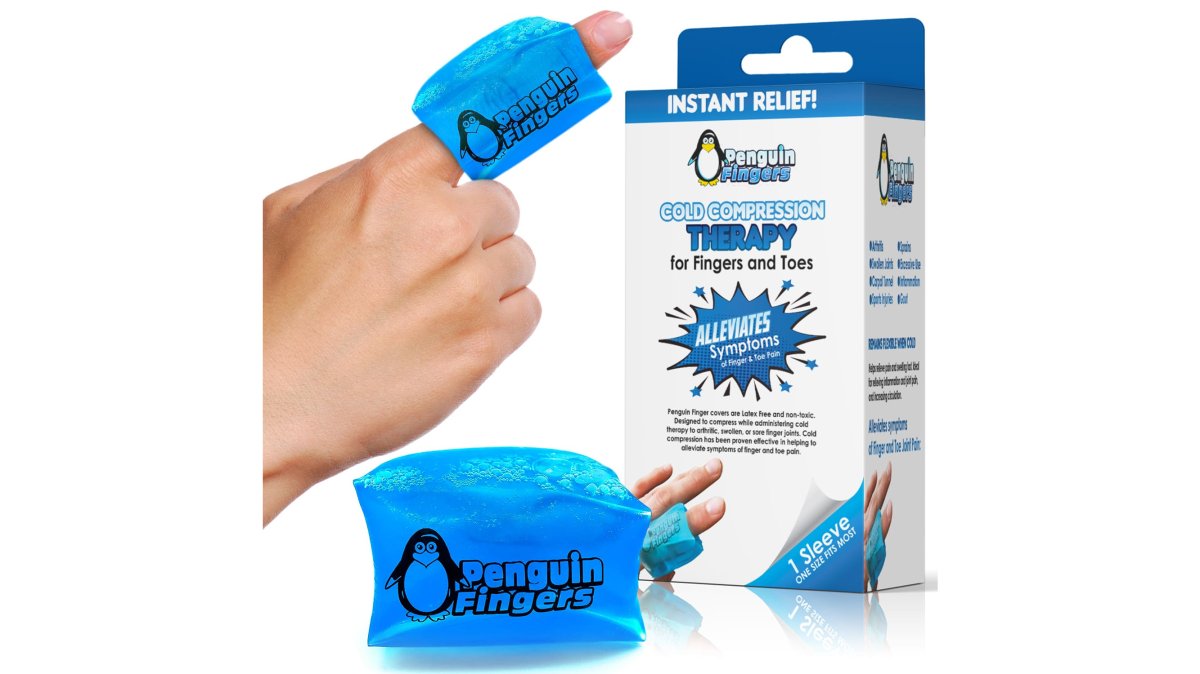
Our top pick for finger arthritis is the Penguin Fingers Cold Compression Gel Pack, a wearable sleeve that wraps the fingers (or toes) in flexible, gel-filled cold compression. It's our most thorough product for arthritis because it delivers both therapeutic cold and gentle compression in one slip-on design.

The gel stays flexible when frozen, so it molds around individual finger joints instead of sitting on top of them. That flexibility matters: rigid ice packs can't conform to the small, curved joints of the hand, which is exactly where arthritis pain concentrates. The pack is reusable, non-toxic, and latex-free, and one size fits most hands.
Pros and Cons
Pros:
- Gel-filled design conforms to individual finger joints
- Reusable and non-toxic, with no PVC, BPA, or phthalates
- One size fits all, so no sizing guesswork
- Works for both fingers and toes
Cons:
- Requires freezer space between uses
- Not designed for all-day continuous wear
2. Penguin Fingers Finger Splint Wrap
The Penguin Fingers Finger Splint Wrap pairs cold compression with light immobilization, which suits trigger finger, post-injury recovery, and joints that need support while they heal. It's a different tool from a pure gel sleeve: the splint keeps the finger straight, while the wrap holds cold therapy against the joint.
This matters for trigger finger and post-operative recovery, where movement can aggravate inflammation. Keeping the joint still while cooling it addresses both the swelling and the mechanical irritation. At $7.95, it's the most affordable way to add targeted cold and support to a single finger.
Pros:
- Combines splinting with cold compression
- Adjustable fit for one finger
- Affordable entry point
- Useful for trigger finger and post-op support
Cons:
- Single-finger coverage only
- Less ideal for widespread hand arthritis
How to Manage Finger Arthritis with Cold Compression
Managing finger arthritis with cold compression comes down to timing and fit: apply cold when joints are swollen or painful, keep sessions short, and make sure the sleeve conforms to your joints rather than pressing unevenly. Here's a practical routine:
- Apply the sleeve when swelling or pain flares, not on a fixed schedule
- Keep each session to 10-15 minutes
- Remove for at least an hour between sessions
- Check skin between applications
- Pair cold with gentle range-of-motion exercises once swelling drops
Sizing and Fit Guide
Fit is where most people get cold compression wrong. A sleeve that's too loose won't deliver compression; one that's too tight restricts circulation. Use this guide by joint:
| Finger Joint | Fit Priority | What to Check |
|---|---|---|
| Fingertip (DIP) | Snug cap | No pinching at the tip |
| Middle joint (PIP) | Flexible wrap | Bends without bunching |
| Base joint (MCP) | Broad coverage | Reaches across the knuckle |
| Thumb | Separate wrap | Allows full thumb motion |
| Wrist | Extended cuff | Doesn't slide during use |
Slip-on designs suit mild, even swelling. For uneven or single-joint swelling, a wrap-style sleeve lets you adjust tension joint by joint.
How Long to Ice Arthritic Fingers
Ice arthritic fingers for 10 to 15 minutes per session, up to three or four times a day during a flare. Longer sessions don't help more and raise the risk of skin damage.
The common mistake is leaving a cold pack on until it stops feeling cold. That's a sign your skin has numbed, not that the therapy has finished working. Set a timer. For chronic arthritis, the Cleveland Clinic's overview of cold therapy recommends short applications with breaks to protect the skin.
Contraindications for Cold Therapy
Cold therapy isn't right for everyone. Skip it, or check with your doctor first, if you have:
- Poor circulation or Raynaud's syndrome
- Nerve damage or reduced sensation in the hands
- Open wounds or active skin infections
- Cold allergy or cold urticaria
If you have diabetes or peripheral vascular disease, cold therapy can mask or worsen tissue damage. Get medical clearance before using any cold compression sleeve.
Choosing the Right Sleeve for Daily Activities
The best sleeve is the one that fits your day. Someone at a keyboard needs a flexible, low-profile design they can wear between tasks; an athlete recovering from a sprain needs stronger, longer cold retention; someone managing gout needs coverage that reaches the affected toe or finger joint.
Most buying guides stop there. The more useful question is what each activity actually demands of a sleeve, because the failure modes are different.
Typing and desk work
A sleeve worn while typing has to survive constant flexion at the PIP joint.
Cooking and kitchen tasks
Driving
Sleeping
Matching sleeve type to activity
| Activity | Best Sleeve Type | Why |
|---|---|---|
| Typing / desk work | Low-profile slip-on, segmented gel | Bends without bunching |
| Cooking | Adjustable wrap, moisture-wicking | Holds position when wet |
| Driving | Finger-only, low-profile | Preserves grip and feel |
| Post-injury recovery | Adjustable wrap, longer cold retention | Stronger compression, stays cold |
| Chronic arthritis | Reusable slip-on, re-freezable | Easy daily reapplication |
| Gout / toe pain | Combo pack sized for toes and fingers | Coverage for both sites |
Conclusion
Frequently Asked Questions
Do compression sleeves help with finger arthritis?
Yes. Cold compression sleeves combine two proven methods: cold therapy reduces joint inflammation and swelling, while gentle compression supports circulation and range of motion. For arthritis, this dual action can ease stiffness and pain, especially after activity.
How long should you wear a cold compression sleeve for arthritis?
Most guidelines recommend 15 to 20 minutes per session, up to three or four times daily. Never apply cold therapy for more than 20 minutes at a time to avoid skin damage or nerve irritation. If your fingers feel numb or turn white, remove the sleeve immediately. For chronic arthritis, a good routine is 20 minutes in the morning to reduce stiffness and another 20 minutes after activities that aggravate your joints. Always check with your doctor if you have circulation problems or neuropathy.
Can cold therapy reduce swelling in arthritic fingers?
Cold therapy constricts blood vessels, which reduces fluid buildup and swelling in arthritic joints. It also numbs nerve endings, providing temporary pain relief.
What is the difference between a compression sleeve and a splint for arthritis?
A compression sleeve provides gentle, flexible pressure and cold therapy to reduce swelling and pain during movement. A splint is a rigid or semi-rigid device that immobilizes the joint to rest it and prevent deformities. Splints are typically used for flare-ups or at night, while compression sleeves are for active relief. Some people use both: a splint for rest and a cold compression sleeve for recovery. Your doctor or hand therapist can recommend which is right for your stage of arthritis.


