

Table of Contents
- What Is Elbow Tendinitis and Why Cold Compression Works
- Quick Comparison: 5 Best Cold Compression Wraps for Elbow Tendinitis
- 1. Penguin Fingers Elbow Cold Compression Sleeve: Best Overall
- 2. Sleeve vs. Strap Designs: Which Type Works Best for Tendon Strain
- 3. Key Features to Look for in an Elbow Wrap for Tendonitis
- How to Treat Tendonitis at Home: A Step-by-Step Protocol
- How Long to Ice Elbow Tendonitis (and How Often)
- Safety First: Preventing Cold Burns and Skin Irritation
- Frequently Asked Questions
Last Updated: September 16, 2026
What Is Elbow Tendinitis and Why Cold Compression Works
Elbow tendinitis is inflammation of the tendons attaching forearm muscles to the elbow, and cold compression is one of the most effective non-invasive ways to manage its pain and swelling. Lateral epicondylitis (tennis elbow) affects the outside of the elbow; medial epicondylitis (golfer's elbow) affects the inside. Both make gripping, typing, or lifting painful.
Quick Comparison: 5 Best Cold Compression Wraps for Elbow Tendinitis
The best cold compression wrap for elbow tendinitis combines adjustable compression, a gel pack that stays flexible when frozen, and an anatomical fit that stays put during movement. No single design wins for everyone, since sleeves and strap-style wraps solve different problems.
Comparison Table: Features, Price, and Best For
| Option | Design | Cold Retention | Best For |
|---|---|---|---|
| Penguin Fingers Elbow Sleeve | Neoprene sleeve + gel pack | Long (gel stays flexible) | Most users, hot + cold |
| Sleeve-style wrap | Full-arm sleeve | Moderate | All-day wear |
| Strap-style wrap | Adjustable strap | Short | Targeted tendon relief |
| Gel-pack wrap | Gel insert + straps | Moderate | Acute injury flare-ups |
| Reusable ice sleeve | Reusable gel + sleeve | Long | Chronic pain management |
1. Penguin Fingers Elbow Cold Compression Sleeve: Best Overall
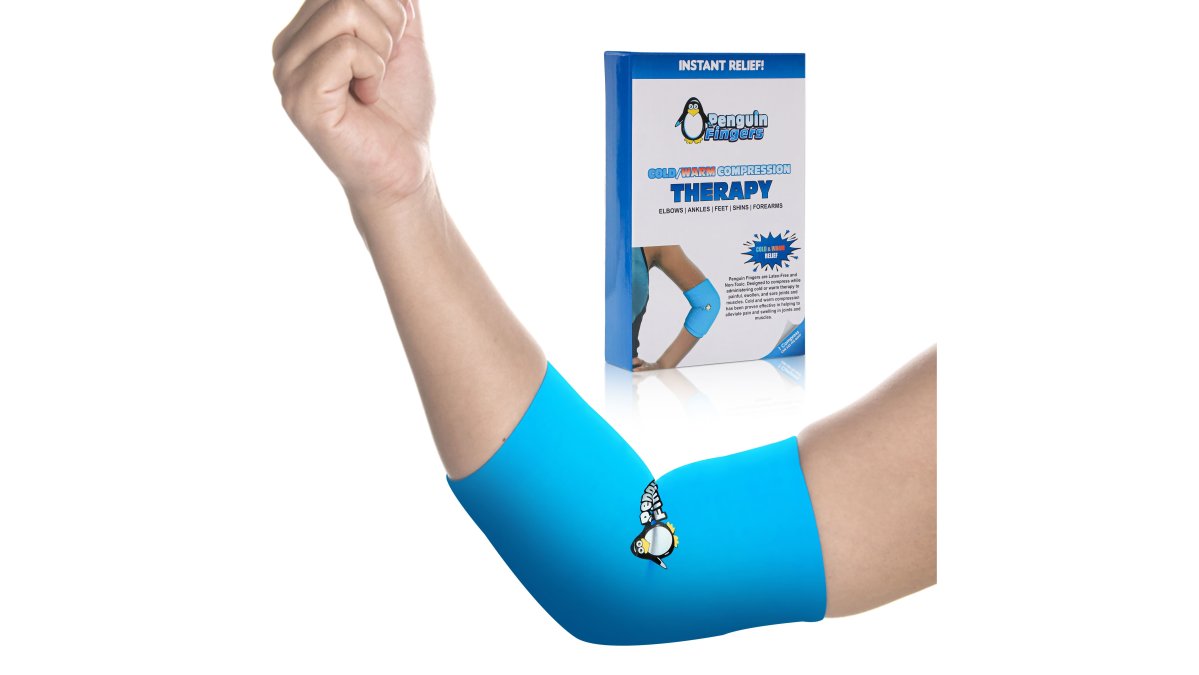
Our top pick is the Penguin Fingers Elbow and Foot Cold Compression Therapy Sleeve because it solves the two problems that trip up most cold wraps: it stays in place, and it works for hot and cold therapy. At $22.95, it's a reusable, wearable design for the elbow, ankle, foot, forearm, or wrist.

Pros and Cons
Pros:
- Dual hot and cold therapy in one sleeve
- Neoprene and gel conform to the joint for even cold penetration
- Reusable and wearable for hands-free relief
- Works on elbows, ankles, feet, forearms, and wrists
Cons:
- One size, so very large or very small arms may need extra adjustment
- Gel packs need freezer time between uses
Why It Stands Out
A cold wrap is only as good as its fit. A wrap that slides off mid-session gives inconsistent therapy and wasted time. The Penguin Fingers sleeve stays wrapped around the joint while you sit, type, or rest, so you complete the recommended icing window instead of giving up after five minutes. For recurring tendinitis alongside arthritis or post-injury recovery, one sleeve that does both hot and cold removes the need for separate products.
2. Sleeve vs. Strap Designs: Which Type Works Best for Tendon Strain
Sleeve designs work best for broad, all-day compression and joint stabilization; strap designs work best for pinpointing a single tender spot. The right choice depends on whether your pain is spread across the joint or concentrated in one small area.
How to Fit-Test Before You Commit
Fit is where most returns happen. Before settling on a design, run this check:
- Bend and flex. Flex your elbow through a full range of motion. If it bunches, pinches, or gaps at the joint, cold penetration drops and the wrap ends up in a drawer.
- Measure the circumference. Use a soft tape around the widest part of your forearm, just below the elbow crease. If you're between sizes, size up for sleeves and size down for straps.
- Check the closure. Hook-and-loop straps lose holding power as lint builds up. A strap needing re-tightening every 10 minutes won't stay put during a workday.
- Test the gel pack cold. Freeze it, then bend it. A gel pack that stays rigid won't conform to the elbow's curve, causing uneven cold delivery.
Durability and Washability: What Actually Wears Out First
Most cold wraps fail in one of three places: gel pack seams, hook-and-loop closure, or the neoprene itself.
-
Gel pack seams are the most common leak point; freeze-thaw cycles stress the weld lines. Hand-wash and air-dry flat, machine drying destroys them fastest.
-
Hook-and-loop closures degrade as fibers pick up lint and pills. Rinse the hook side under cool water and air-dry to restore grip.
-
Neoprene loses elasticity over time, especially with heat exposure. Never microwave a neoprene sleeve unless the manufacturer says it's microwave-safe, and never put it in a dryer.
-
Choose a sleeve for chronic pain, all-day wear, and post-injury recovery
-
Choose a strap for a single painful point and quick, targeted relief
-
Choose a hybrid (sleeve plus gel pack) when you want both coverage and cold therapy in one
3. Key Features to Look for in an Elbow Wrap for Tendonitis
The features that matter most are material, fit, and cold retention, those three determine whether a wrap delivers relief or sits in a drawer.
Material, Fit, and Cold Retention
Material: Neoprene is the standard for compression wraps, stretchy, durable, and shape-holding. Gel-based cold packs stay flexible when frozen, unlike rigid ice. Breathable, moisture-wicking liners reduce skin irritation during longer sessions. High-performance recovery often requires integrating these material benefits with the advanced functionality found in portable cold compression devices to ensure consistent therapeutic pressure during active movement.
How to Treat Tendonitis at Home: A Step-by-Step Protocol
Treating tendonitis at home combines rest, cold compression, and a gradual return to movement, the order matters as much as the steps. This protocol works for acute flare-ups and chronic pain.
Phase 1: Calm the Flare-Up (First 48-72 Hours)
- Rest the tendon. Stop the activity that triggered the pain, for elbow tendinitis, usually repetitive gripping or typing. Complete rest isn't necessary; just avoid the motion that reproduces the pain.
- Apply cold compression early. Use your wrap for 15 to 20 minutes at a time during the first 48 to 72 hours of an acute injury. Always place a thin cloth between the gel pack and your skin.
- Elevate if swollen. Raising the elbow above heart level helps reduce swelling.
- Check your skin after every session. Look for redness that doesn't fade within 30 minutes, numbness, or a waxy appearance. If any appear, stop cold therapy and let the skin warm gradually.
Phase 2: Restore Motion (Days 3-14)
- Add gentle range of motion. Once sharp pain fades, move the joint through slow, pain-free motion to prevent stiffness: wrist flexion and extension, forearm pronation and supination, and slow elbow bends.
- Introduce light isometric holds. Press your palm against a tabletop and hold for 20-30 seconds without moving the joint. Isometrics load the tendon without stretching it, the safest way to reintroduce stress.
Phase 3: Rebuild Tendon Strength (Weeks 2-8)
- Add eccentric wrist extensions. This exercise has the strongest rehab rationale. Hold a light dumbbell (start at 1-2 pounds) with your forearm on a table, palm down. Use your other hand to lift the weight, then slowly lower it over 3-5 seconds using only the injured arm. Aim for 2-3 sets of 10-15 reps, every other day.
- Progress slowly. Add weight only when the exercise is pain-free for two consecutive sessions, increasing by 1 pound at a time. If pain returns, drop back a step rather than pushing through.
- Add forearm stretching after activity. Extend the arm, palm down, and gently pull the fingers toward the floor. Hold 20-30 seconds. Stretch after exercise, not before, cold, stiff tendons don't stretch well.
Phase 4: Manage Chronic Tightness
- Switch to heat for chronic tightness. Once inflammation settles, warm therapy relaxes stiff muscles and improves circulation. Warm the sleeve in the microwave per the manufacturer's instructions, or use a warm damp towel.
- Keep icing after aggravating activity. Even in the chronic phase, a 15-minute cold session after a long day of gripping or typing helps keep inflammation from re-flaring.
How Long to Ice Elbow Tendonitis (and How Often)
Ice elbow tendinitis for 15 to 20 minutes at a time, with at least a one-hour break between sessions, up to three or four times daily during a flare-up. Icing longer than 20 minutes raises the risk of skin and nerve damage without improving results.
Safety First: Preventing Cold Burns and Skin Irritation
Cold burn prevention comes down to three habits: a barrier between pack and skin, a time limit, and a skin check. Watch for numbness, a waxy or white appearance, or a burning sensation that doesn't fade. If any appear, remove the wrap immediately and let the skin warm gradually. People with poor circulation, diabetes, or reduced skin sensation should check with a clinician first.
Frequently Asked Questions
What is the best wrap for elbow tendonitis?
The best wrap depends on your needs, but a sleeve with adjustable straps and a gel pack offers the most versatility. Look for one that combines targeted compression with cold therapy, like the Penguin Fingers Elbow Cold Compression Sleeve. It uses a flexible gel pack and neoprene material to conform to your elbow, providing consistent cold penetration and joint stabilization. A good wrap should stay in place during movement and be comfortable enough for daily use.
Should I wear a compression sleeve for elbow tendonitis?
Yes, a compression sleeve can help manage symptoms of elbow tendinitis, also called lateral epicondylitis. Targeted compression supports the tendon, reduces swelling, and can improve range of motion during recovery. Many people wear a sleeve during activities that aggravate the elbow, like typing or lifting, and remove it for rest. For acute flare-ups, a cold compression wrap adds therapeutic relief by combining cooling with pressure.
How often should you use cold compression on an inflamed elbow?
For acute elbow tendinitis, apply cold compression for 15 to 20 minutes every 2 to 3 hours during the first 48 to 72 hours after injury or flare-up. After that, you can reduce frequency to 3 to 4 times daily as needed for pain management. Always place a thin cloth between the cold pack and your skin to prevent cold burns. If you have poor circulation or nerve damage, consult your doctor before use.
What is the fastest way to heal tendonitis in the elbow?
The fastest recovery combines rest, cold compression, and gradual rehabilitation. Start with the RICE protocol: rest, ice, compression, and elevation. Use a cold compression wrap for 15 to 20 minutes several times a day to reduce inflammation. After the acute phase, begin gentle stretching and strengthening exercises to rebuild tendon resilience. Avoid repetitive motions that strain the elbow, and consider an ergonomic setup if you work at a computer. Most cases improve within 4 to 6 weeks with consistent care.


