

Table of Contents
- What Is Elbow Tendinitis and How Compression Sleeves Help
- How to Treat Tendinitis at Home With Compression Therapy
- Benefits of Cold Compression Therapy for Joint Pain
- Top Compression Sleeves for Elbow Tendinitis
- How Long to Wear a Compression Sleeve for Tendinitis
- Key Features to Look for in an Elbow Compression Sleeve
- Conclusion
Last Updated: August 19, 2026
What Is Elbow Tendinitis and How Compression Sleeves Help
Elbow tendinitis is inflammation of the tendons that attach muscles to the elbow joint, causing pain and limiting your ability to grip, lift, or straighten your arm. Compression sleeves work by applying graduated compression around the joint, which reduces swelling, stabilizes the affected tendons, and improves blood flow to accelerate healing.
Two primary types affect different populations. Lateral epicondylitis (tennis elbow) involves the extensor tendon on the outer elbow and strikes athletes, manual laborers, and desk workers. Medial epicondylitis (golfer's elbow) affects the flexor tendon on the inner elbow and typically impacts people who perform repetitive gripping or throwing motions.

Pain ranges from mild discomfort during specific activities to severe, constant aching that interferes with sleep and daily function. Many experience stiffness that worsens after inactivity, then improves with gentle movement. This cycle of inflammation, stiffness, and re-injury is where compression therapy intervenes by maintaining consistent therapeutic pressure throughout the day and night.
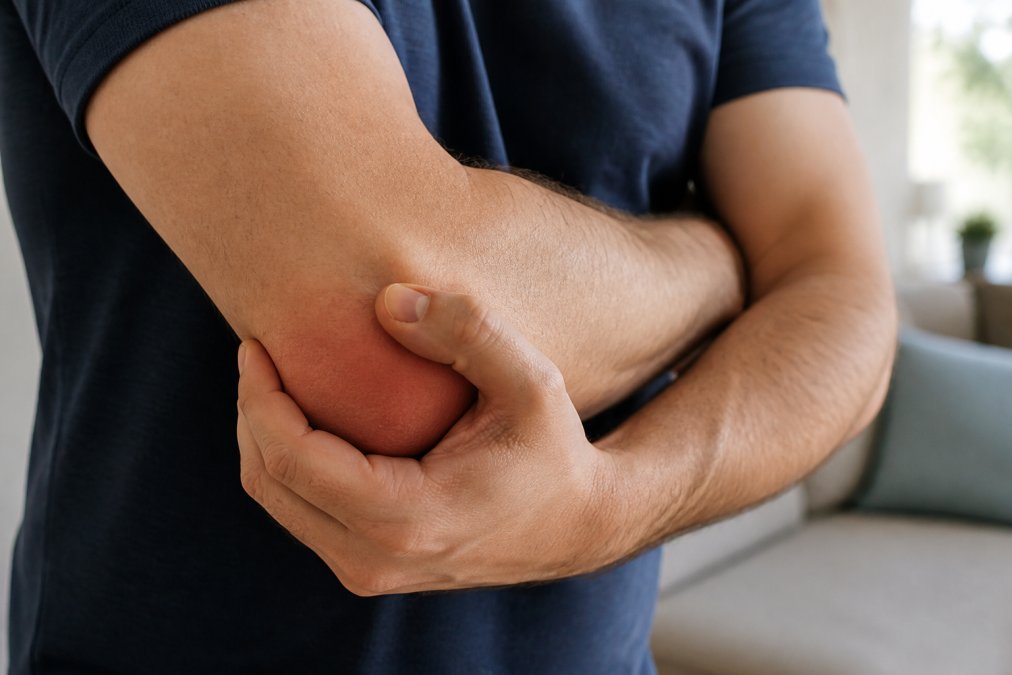
According to research from the American Academy of Orthopaedic Surgeons, compression is among the most recommended non-surgical interventions for tendinitis management. Graduated compression increases proprioception (your body's awareness of joint position), reduces joint inflammation, and supports soft tissue structures actively healing.
Medical-grade compression sleeves use 3D-knit technology with targeted silicone padding positioned directly over tendon attachment points. This anatomical fit ensures pressure is applied precisely where inflammation occurs. The breathable fabric wicks moisture and allows extended wear without skin irritation, critical for people managing chronic pain who need support throughout their workday.
How to Treat Tendinitis at Home With Compression Therapy
Home treatment for tendinitis follows a straightforward protocol: compression, rest from aggravating activities, ice during acute flare-ups, and gradual return to normal function. Compression sleeves provide continuous support without requiring you to remember to apply ice every few hours or take medication on schedule.
During the first 48-72 hours of acute pain, combine your compression sleeve with ice therapy, wear the sleeve during the day and apply ice packs for 15-20 minutes in the evening. After the acute phase passes, the sleeve alone often provides sufficient support for pain management and continued healing.
Physical therapy exercises are essential alongside compression. Gentle stretching of the flexor and extensor tendons, combined with progressive strengthening exercises, prevents the tendinitis from returning once acute pain subsides. The compression sleeve supports these exercises by stabilizing the joint during movement, allowing you to build strength without re-aggravating the injury.
Rest means avoiding the specific movements that caused the injury while maintaining gentle, pain-free motion. A compression sleeve enables this selective rest by allowing comfortable movement while discouraging the repetitive gripping, throwing, or lifting that triggered the problem. Many people find that wearing a compression sleeve during activities that previously caused pain prevents flare-ups entirely.
Benefits of Cold Compression Therapy for Joint Pain
Cold compression therapy combines two mechanisms that work synergistically: cold reduces inflammation and numbs pain, while compression stabilizes the joint and improves circulation. When applied together through a compression sleeve, these benefits compound.
Cold addresses inflammation directly by causing blood vessels to constrict temporarily, reducing swelling and inflammatory chemicals that cause pain. However, ice therapy requires repeated applications and creates inconvenience. Cold compression sleeves deliver sustained cold without the mess.
Graduated compression improves blood flow paradoxically, by applying external pressure, you enhance circulation once blood returns to the area. This increased blood flow brings oxygen and nutrients to the healing tendon while removing inflammatory byproducts, resulting in faster tissue repair and reduced stiffness.
Joint stability is another critical benefit. The silicone padding and snug fit enhance proprioception, your nervous system's awareness of joint position and movement. Improved proprioception means your muscles respond more effectively to support the joint during movement, reducing abnormal stress on the injured tendon.
Chronic swelling creates a cascade of problems: stiffness increases, range of motion decreases, and the joint becomes more vulnerable to re-injury. Compression sleeves designed for long-term wear prevent this chronic swelling from developing. People who wear compression consistently report that their elbows feel more stable and move more freely, even weeks after acute pain resolves.
The anti-slip design found in quality compression sleeves prevents the sleeve from riding up during movement, ensuring consistent pressure throughout the day. Penguin Fingers compression sleeves use silicone gripping technology that maintains position through repetitive arm movements and vigorous activity.
Top Compression Sleeves for Elbow Tendinitis
Penguin Fingers Elbow and Foot Cold Compression Therapy Sleeve
Penguin Fingers delivers a comprehensive solution for elbow tendinitis by combining medical-grade compression with dual hot and cold therapy in a single wearable design. At $22.95, it offers value.
The integrated gel pack technology provides both cold and heat therapy. During acute flare-ups, use the cold setting to reduce inflammation and numb pain. As healing progresses and stiffness becomes the primary issue, switch to heat therapy to improve blood flow and flexibility. This dual-therapy approach eliminates the need to purchase separate products for different recovery phases.
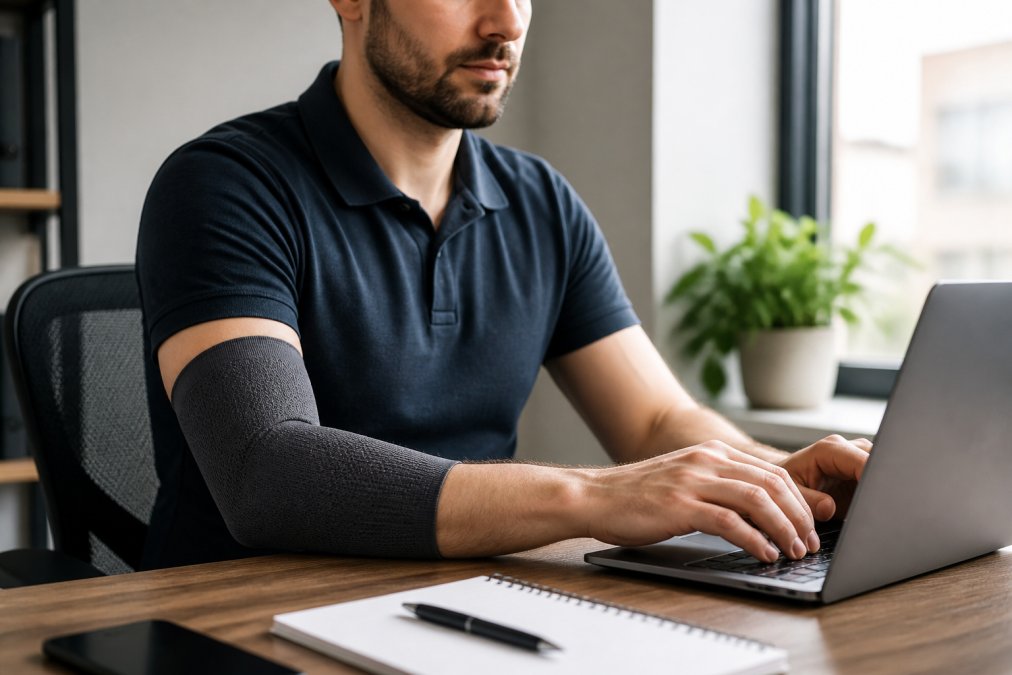
The anatomical fit is engineered specifically for the elbow joint, with targeted silicone padding positioned over the lateral epicondyle (for tennis elbow) and medial epicondyle (for golfer's elbow). The 3D-knit technology provides graduated compression that's firm enough to deliver therapeutic benefit but comfortable enough for all-day wear. The breathable fabric prevents moisture-wicking issues that plague cheaper sleeves.
Penguin Fingers serves adults aged 50+ managing chronic arthritis and joint pain, office workers experiencing repetitive strain, and athletes recovering from sports injuries. The brand already serves thousands of Americans dealing with joint inflammation across fingers, toes, wrists, elbows, feet, knees, and head.
Pros:
- Dual hot and cold therapy in one sleeve eliminates multiple purchases
- Affordable at $22.95
- Anatomical fit targets exact pain points for both tennis elbow and golfer's elbow
- Graduated compression provides therapeutic benefit without cutting off circulation
- Breathable 3D-knit fabric allows comfortable all-day wear
- Anti-slip design maintains position during movement and activity
Cons:
- Gel pack requires refrigeration or heating before use
- Learning curve for switching between hot and cold therapy based on recovery phase
- Not ideal for people who prefer maximum compression without thermal therapy
How Long to Wear a Compression Sleeve for Tendinitis
During acute inflammation (first 2-3 weeks), wear the sleeve continuously except during bathing. This constant support prevents re-injury and maintains therapeutic compression that reduces swelling.
As acute pain subsides into the subacute phase (weeks 3-6), transition to wearing the sleeve during activities that stress the elbow. Office workers should wear it while typing. Athletes should wear it during training. Manual laborers should wear it during work shifts.
Many people find that wearing the sleeve during the day and removing it at night works well once they pass the acute phase. If you experience pain or swelling at night, resume continuous wear until symptoms improve.
Long-term maintenance wear is common for people with chronic tendinitis or high-risk professions. A rock climber might wear the sleeve during climbing sessions indefinitely. An office worker might wear it during work hours and remove it during evenings and weekends.
Acute cases caught early often improve substantially within 4-6 weeks of consistent compression and rest from aggravating activities. Chronic tendinitis that's persisted for months or years may require 8-12 weeks of consistent compression therapy. Post-operative recovery typically requires 6-8 weeks of compression support to manage swelling and protect the surgical repair.
Pay attention to your body's signals. If you remove the sleeve and pain or swelling returns within an hour, you're not ready to stop wearing it yet. Gradually extend the periods without the sleeve as your tendon strengthens and inflammation resolves.
Key Features to Look for in an Elbow Compression Sleeve
Medical-grade compression is non-negotiable. Generic sports sleeves often provide 15-20 mmHg of pressure, which feels supportive but doesn't deliver therapeutic benefit. Medical-grade sleeves provide 20-30 mmHg of graduated compression, enough to reduce swelling and improve circulation without restricting blood flow. The pressure should feel snug but not painful.
Anatomical fit matters more for the elbow than for any other joint. Look for sleeves with targeted silicone padding positioned directly over the epicondyles, which concentrates pressure exactly where inflammation occurs.
Graduated compression means the pressure is strongest at the bottom of the sleeve and gradually decreases toward the top. This gradient improves blood flow by pushing fluid upward toward the heart, preventing the pooling that causes swelling.
Breathable, moisture-wicking fabric is essential for all-day wear. Modern compression sleeves use technical fabrics like nylon-spandex blends with moisture-wicking properties that keep skin dry and comfortable even during physical activity.
Anti-slip design prevents the sleeve from riding up during movement. Silicone gripping on the top and bottom edges keeps the sleeve in place throughout your workday or training session.
Dual therapy capability provides flexibility across different recovery phases. Acute inflammation responds best to cold therapy, which reduces swelling and pain. Chronic stiffness responds better to heat therapy, which improves blood flow and flexibility.
Durability matters for cost-effectiveness. A sleeve that lasts 6-12 months of daily wear is worth the investment. Look for reinforced seams, high-quality elastic that maintains compression after repeated washing, and materials that resist degradation from sweat and moisture.
| Feature | Why It Matters | What to Look For |
|---|---|---|
| Medical-grade compression (20-30 mmHg) | Reduces swelling and improves circulation | Graduated pressure, not uniform |
| Anatomical fit | Targets exact pain points on elbow | Silicone padding over epicondyles |
| Breathable fabric | Enables all-day wear without skin irritation | Moisture-wicking, 4-way stretch material |
| Anti-slip design | Maintains consistent compression during movement | Silicone gripping on edges |
| Dual hot/cold therapy | Addresses different recovery phases | Integrated gel pack system |
| Durability | Maintains effectiveness over time | Reinforced seams, quality elastic |
Elbow tendinitis responds well to consistent compression therapy when combined with rest from aggravating activities and gradual return to normal function. The best compression sleeve provides medical-grade graduated compression, anatomical fit over the pain points, breathable fabric for all-day wear, and anti-slip design to maintain consistent support.
Penguin Fingers Elbow and Foot Cold Compression Therapy Sleeve delivers all these features at an accessible price point, with the added benefit of dual hot and cold therapy that supports you through every recovery phase. Whether you're managing acute tennis elbow, chronic golfer's elbow, or post-operative recovery, this sleeve provides the therapeutic support your tendon needs to heal properly and return to full function.
Frequently Asked Questions
Will a compression sleeve help with elbow tendinitis?
Yes. A compression sleeve for elbow tendinitis reduces swelling, stabilizes the joint, and decreases pain by applying graduated compression around the affected area. The compression improves blood flow circulation to the tendon attachment, supporting faster recovery. Many people experience noticeable relief within the first week of consistent wear, especially when combined with rest and physical therapy exercises.
How long should I wear a compression sleeve for tendinitis recovery?
For acute tendinitis, wear your compression sleeve 4-8 hours daily during activities that aggravate pain. For chronic cases, many people wear sleeves throughout the day or during specific tasks like typing or lifting. Most users see improvement within 2-4 weeks of regular use. Consult a healthcare provider about your specific timeline, as recovery varies based on tendinitis severity and your activity level.
How do cold compression sleeves reduce pain and inflammation?
Cold compression therapy works by narrowing blood vessels around the inflamed tendon, reducing swelling and numbing pain signals. The graduated compression supports the joint, improving proprioception and joint stability while decreasing movement that irritates the extensor tendon. This dual action, cold plus compression, addresses both inflammation and mechanical stress, making it effective for repetitive strain injuries like elbow tendinitis.
What makes a compression sleeve better than a regular ice pack?
Compression sleeves offer sustained, hands-free support you can wear during daily activities, while ice packs require you to sit still for 15-20 minutes. Sleeves provide continuous graduated compression that improves blood flow and joint stability throughout the day. The Penguin Fingers Elbow Cold Compression Sleeve ($22.95) combines both benefits, it's reusable, wearable, and delivers therapeutic pressure without interrupting your routine.
This article was written using GrandRanker


