

Table of Contents
- What You'll Need Before You Start
- Step 1: Cool Down and Move Gently
- Step 2: How to Reduce Joint Inflammation After Working Out
- Step 3: Cold Compression Therapy for Joints
- Step 4: When to Use Ice vs Heat for Joint Pain
- Step 5: Stretch, Roll, and Restore Range of Motion
- Step 6: Strengthen Joints and Support Tissue Repair
- Step 7: Spot the Warning Signs and Adjust Your Plan
- Putting It All Together
- Frequently Asked Questions
Last Updated: September 29, 2026
What You'll Need Before You Start
Sore joints after exercise are a signal, not a setback. They tell you which tissues took the load and need attention. The fix is not rest alone. It is a structured recovery protocol. This guide from Penguin Fingers walks through seven steps for treating sore joints after exercise, built for anyone dealing with stiffness, swelling, or aching fingers, wrists, knees, and toes.
Before you begin, gather a few basics:
- A cold compression sleeve or gel pack that fits the joint
- A foam roller or massage ball
- A timer or phone
- A light resistance band
- Water and a protein-rich snack
One note before we go further. Soreness and injury pain are not the same thing. We will separate them in Step 7.

Step 1: Cool Down and Move Gently
Active recovery starts the moment you finish training. Skip the sudden stop. Walk for five to ten minutes. This keeps blood flow steady and helps clear lactic acid buildup from working muscles and joints.
A common mistake is sitting down immediately after a hard session. That lets stiffness set in fast.
Follow the walk with gentle range of motion work:
- Slow arm circles for shoulders and elbows
- Wrist rolls in both directions
- Ankle pumps while seated
- Knee bends with no added weight
Keep each movement pain-free. You are moving fluid, not building muscle. Two to three minutes per joint is enough.
Step 2: How to Reduce Joint Inflammation After Working Out
Reducing joint inflammation after a workout comes down to three things: cooling the area, keeping it moving, and giving it time. Inflammation is the body's repair response. You are not trying to stop it. You are trying to keep it from running too long.
Here is what helps:
- Apply cold therapy within the first hour
- Elevate the joint above heart level if it swells
- Drink water to support tissue repair
- Avoid heavy load on the same joint for 24 hours
Many people reach for anti-inflammatory pills first. A common approach is to try cold compression and light movement before that step. It is gentler on the stomach and works well for swelling.

Step 3: Cold Compression Therapy for Joints
Cold compression therapy for joints combines two things at once: cooling and pressure. The cold slows blood flow to calm swelling. The compression pushes fluid out of the tissue. Together they ease pain and stiffness faster than ice alone.
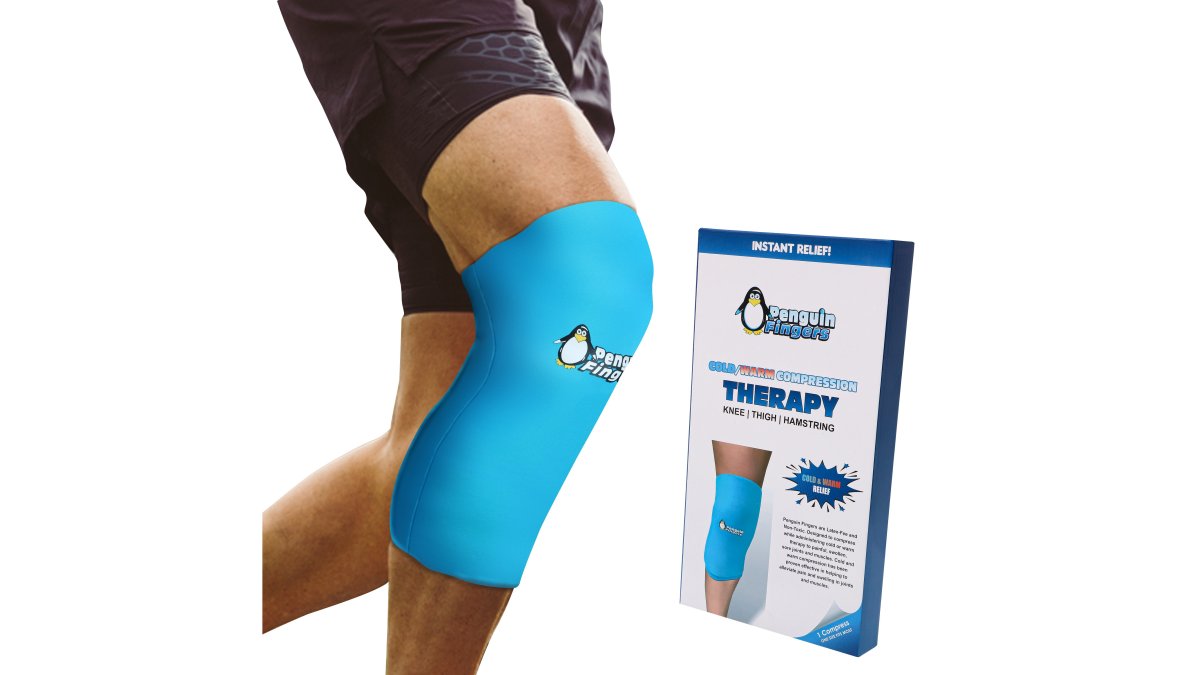
This is where wearable sleeves beat a loose bag of ice. A good sleeve stays put and wraps the joint evenly. Penguin Fingers makes cold compression sleeves for knees, elbows, wrists, and fingers and toes. Each one is shaped for a specific body part, so the fit stays snug while you sit, read, or work.

A few practical tips:
- Keep the sleeve in the freezer so it is ready when you need it
- Wear it for 15 to 20 minutes at a time
- Wait at least an hour before repeating
- Never put a frozen pack directly on bare skin for long stretches
Step 4: When to Use Ice vs Heat for Joint Pain
The ice-or-heat decision is not a coin flip. It comes down to what is happening inside the joint.
That single mechanism explains the whole rule:
Penguin Fingers Knee Cold Compression →
- Use cold when the joint is swollen, hot to the touch, or painful with sharp, fresh pain. Cold is the right call for the first 48 hours after a flare or a hard session.
- Use heat when the joint is stiff, achy, or tight but not swollen. Heat is the right call before activity, when you need the joint to loosen up.
| Situation | Use | Why |
|---|---|---|
| New swelling or hot joint | Cold | Narrows vessels, calms inflammation |
| Morning stiffness | Heat | Loosens tissue, improves blood flow |
| After a hard workout | Cold | Reduces swelling and pain signals |
| Before exercise | Heat | Prepares the joint for load |
| Chronic ache, no swelling | Heat | Improves circulation |
| Joint that locks or gives way | Neither, see a doctor | Mechanical problem, not inflammation |
A few practical rules that most guides skip:
- Cold sessions: 15 to 20 minutes at a time, then wait at least an hour before repeating. Longer is not better, extended cold can numb the skin and reduce blood flow too much.
- Heat sessions: 15 to 20 minutes, and never on a joint that is still swollen or hot.
- Never use heat on a fresh injury. If the joint is puffy or warm, heat will make the swelling worse.
- Never use cold on a stiff, cold joint that has not been moving. It will make the stiffness worse.
If you are managing a chronic condition like arthritis, the pattern is different. Many people with arthritis find that heat before activity and cold after activity works better than picking one. Talk to your doctor about what fits your joint.
Step 5: Stretch, Roll, and Restore Range of Motion
Flexibility training keeps joints moving through their full arc. Tight tissue pulls on the joint and makes soreness worse. A short daily routine fixes that.
Try this order:
- Hold each stretch for 20 to 30 seconds
- Never bounce into a stretch
- Roll the muscles above and below the sore joint
- Stop if you feel a sharp pinch
Step 6: Strengthen Joints and Support Tissue Repair
Strong muscles protect joints. This is the part most people skip. They rest, feel better, then go back to the same load. The joint breaks down again.
Strengthening exercises for joint support are simple:
- Wall sits for knee support
- Wrist curls with a light band
- Finger extensions with a rubber band
- Calf raises for ankle stability
Step 7: Spot the Warning Signs and Adjust Your Plan
Here is the checklist most competitors skip.
Good soreness (DOMS, delayed onset muscle soreness):
- Feels dull, achy, and spread across a muscle or muscle group
- Shows up 12 to 48 hours after training, not during it
- Fades within 72 hours
- Gets better with light movement and warmth
- Feels the same on both sides if the exercise was symmetrical
Injury pain:
- Sharp, shooting, or pinpointed to one small spot
- Shows up during the activity, not a day later
- Gets worse over 24 to 48 hours instead of better
- Comes with swelling, bruising, or a joint that feels hot
- A joint that locks, clicks, catches, or gives way
- Pain that wakes you at night
- Soreness that lasts more than a week
Age changes the plan. Recovery is not the same at 25 as it is at 55. Collagen production and joint lubrication decline with age, and tendons lose some of their elasticity. A common pattern:
- Under 30: DOMS usually clears in 24 to 48 hours. Light movement and hydration are often enough.
- 30s to 40s: Soreness lingers closer to 48 to 72 hours. Warm-ups need to be longer, and back-to-back hard sessions on the same joint start to backfire.
- 50 and over: Recovery can stretch past 72 hours. Joints need more warm-up time, less peak load, and more frequent shorter sessions instead of long, heavy ones. Cold compression after activity tends to help more than it did at 25.
Putting It All Together
Treating sore joints after exercise is a routine, not a one-time fix. Cool down, calm the swelling, choose ice or heat with intent, then stretch and strengthen. Do it every week and your joints will thank you.
Frequently Asked Questions
What vitamin am I lacking if my joints hurt?
Joint pain after exercise is usually caused by mechanical stress, not a single vitamin deficiency. That said, low levels of vitamin D and calcium can weaken bones and contribute to joint discomfort over time. Vitamin C supports connective tissue repair, and omega-3 fatty acids may help reduce joint inflammation. A blood test from your doctor is the only way to know for sure. If you are treating sore joints after exercise, focus first on recovery habits like cold compression therapy, then ask your doctor about testing.
How long does it take for post-workout inflammation to go away?
Most post-exercise joint inflammation settles within 24 to 72 hours. Swelling and stiffness peak around 24 to 48 hours after a hard session. Cold compression therapy for joints during that window can shorten the discomfort. If soreness and swelling last beyond four or five days, or get worse instead of better, that is a sign to see a doctor. Gentle movement and a consistent post-exercise routine help your body clear inflammation faster.
When should I see a doctor for joint pain after exercise?
See a doctor if the pain is sharp rather than dull, if the joint is hot, red, or visibly swollen, or if you cannot bear weight or grip normally. Pain that wakes you at night, lasts more than a week, or keeps returning after every workout also warrants an orthopedic assessment. Normal muscle soreness feels symmetrical and fades with movement. Injury pain tends to stay in one spot and get worse. When in doubt, get it checked.
Is it good to be really sore after a workout?
No. Extreme soreness is not a sign of a good workout. Delayed onset muscle soreness, or DOMS, is normal after new or intense activity, but it should feel like a dull ache in the muscle, not a sharp pain in the joint. Joint pain after exercise usually means the load was too heavy, the warm-up too short, or the movement pattern off. Scale back, use cold compression therapy for joints, and rebuild gradually.


