

Table of Contents
- Why Buy a Reusable Cold Compression Wrap Instead of Disposable Ice
- Quick Comparison: Penguin Fingers Reusable Cold Compression Wraps
- Penguin Fingers Finger and Toe Gel Pack: Best for Arthritis and Small Joints
- Penguin Fingers Wrist Cold Compression Pack: Best for Carpal Tunnel and Typing Pain
- Penguin Fingers Elbow and Foot Sleeve: Best Hot and Cold Option for Larger Joints
- Cold Pack Versus Cold Compress: What You're Actually Buying
- How to Store Reusable Ice Packs So They Last
- Which Reusable Ice Pack Wrap Should You Pick?
- Frequently Asked Questions
Last Updated: October 6, 2026
Why Buy a Reusable Cold Compression Wrap Instead of Disposable Ice
If you want to buy a reusable cold compression wrap, the payoff is simple: one purchase replaces a cabinet full of melting bags, and it delivers steady cold and gentle pressure at the same time.

Disposable ice has three problems. It sweats, it slips off the moment you move, and it stops working the second it melts.
Below, we break down our three reusable wraps, explain what you're actually buying, and show you how to store them so they last for years.
Quick Comparison: Penguin Fingers Reusable Cold Compression Wraps
Our three wraps cover different body areas at three price points. Here's how they line up.
| Product | Price | Body Area | Hot & Cold | Best For |
|---|---|---|---|---|
| Finger and Toe Gel Pack | $14.95 | Fingers, toes | Cold | Arthritis, small joints |
| Wrist Cold Compression Pack | $16.95 | Wrist | Cold | Carpal tunnel, typing pain |
| Elbow and Foot Sleeve | $22.95 | Elbow, ankle, foot | Yes | Larger joints, sprains |
Each one is latex-free and made without PVC, BPA, phthalates, or formaldehyde, so daily wear won't irritate sensitive skin.

Penguin Fingers Finger and Toe Gel Pack: Best for Arthritis and Small Joints
Small joints are the hardest to ice. A standard cold pack is bigger than the joint itself, so you end up numbing your whole hand to treat one knuckle.
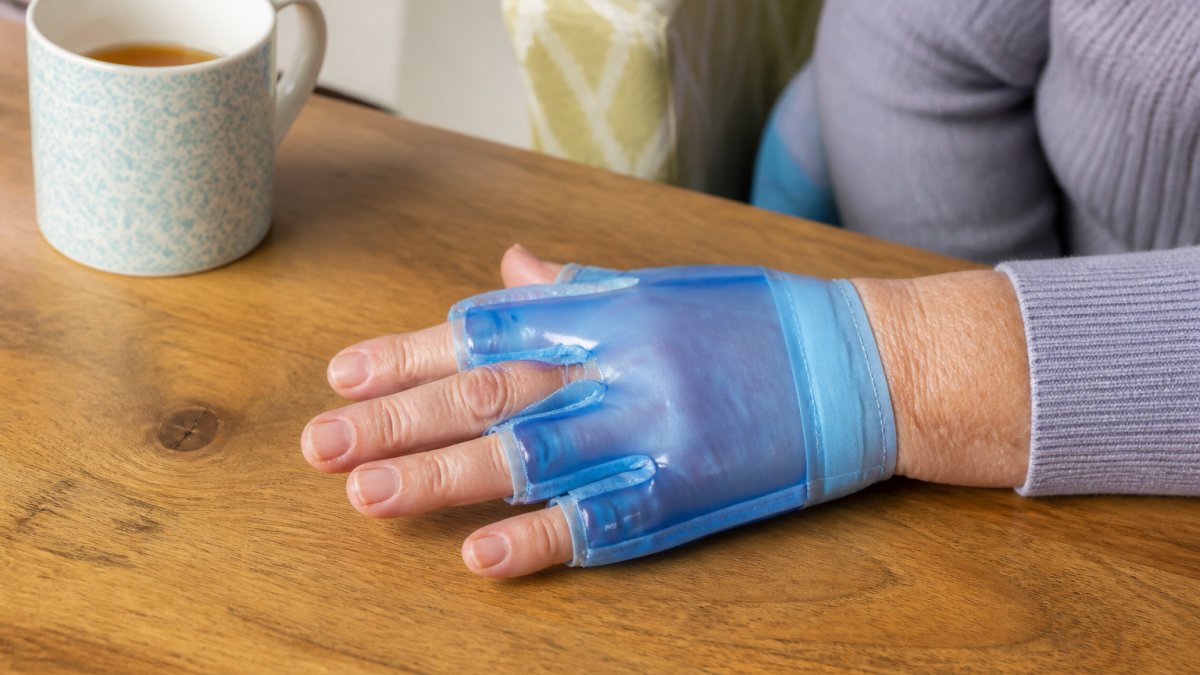
The patent-pending material is one size fits all, so you're not measuring knuckles to pick a size. It's designed to compress only where you need it, which means you can keep reading, cooking, or working while it's on.
At $14.95, it's the cheapest way to test whether wearable cold therapy works for your hands. The honest limitation: it's a cold-only design.
Penguin Fingers Wrist Cold Compression Pack: Best for Carpal Tunnel and Typing Pain
Wrist pain is rarely constant. It flares after a long typing day, a heavy lifting session, or both. That's why the Wrist Cold Compression Pack is built to roll on when you need it and come off when you don't.
Like the finger sleeve, it's free from PVC, BPA, phthalates, PFC, and dioxins, so you can wear it daily without itchy or irritated skin.
At $16.95, it's our pick for anyone whose wrist pain comes and goes with their workload. Wear it during a flare, not all day. The one drawback: it's a cold-only pack.
Penguin Fingers Elbow and Foot Sleeve: Best Hot and Cold Option for Larger Joints
If you want one wrap that does both jobs, this is it. The Elbow and Foot Cold Compression Therapy Sleeve is filled with a fast-freezing gel and wrapped in soft, stretchy neoprene, so it conforms to elbows, ankles, feet, forearms, and wrists instead of sitting on top of them like a hard block.

Keep it in the freezer for ice-cold relief, or warm it in the microwave for relaxing heat. That flexibility matters because the right choice changes with the injury: cold in the first days after a sprain to reduce swelling, heat later for stiffness.
At $22.95, it's the most versatile wrap we make. The tradeoff is size: this sleeve is built for larger joints, so it's overkill for a single knuckle or a stubbed toe.
Cold Pack Versus Cold Compress: What You're Actually Buying
These two terms get used interchangeably, but they describe different products. A cold pack is a frozen object you place on an injury, like a bag of ice or a basic gel pack.
That difference isn't cosmetic. Compression helps limit swelling and keeps the pack from sliding off, which is why a wearable sleeve beats a loose bag for anything on a hand, wrist, or foot. When you buy a reusable cold compression wrap, you're paying for the fit, not just the cold.
Sizing a Wrap to the Body Area You're Treating
Most product listings say "one size fits all" and stop there. That claim is usually true for the sleeve itself, but it says nothing about whether the wrap will actually cover the joint you injured. Coverage is the spec that matters, and it varies by body area:
- Fingers and toes: You want a sleeve that isolates one or two digits, not the whole hand. A wrap wider than about an inch per digit will numb the knuckles on either side of the one you're treating.
- Wrist: Look for a wrap that circles the joint completely, roughly 6 to 7 inches of circumference for most adults, so the compression is even rather than pinching on one side.
- Elbow: The wrap needs to span the joint itself, not just sit above or below it. A sleeve shorter than about 4 inches will slide toward the forearm the moment you bend your arm.
- Ankle and foot: This is the hardest area to fit because the ankle narrows sharply above the heel. A wrap that fits the calf will gap at the ankle, and one that fits the ankle will bind at the calf. Stretch material matters more here than anywhere else.
How to Measure Before You Buy
You don't need a sizing chart if you take two measurements with a soft tape measure:
- Circumference around the widest part of the joint, snug but not tight.
- Length of the area you want covered, from one healthy edge of the joint to the other.
Compare those numbers to the wrap's stated coverage. If a listing gives you circumference but not length, assume the sleeve is designed for a single joint and check the return policy before ordering.
Penguin Fingers Cold Compression Gel Packs for Fingers and Toes →
The Safety Side of Fit
The FDA guidance on cold therapy and ice pack safety advises limiting cold application to protect the skin and using a barrier between the pack and bare skin. A fitted sleeve naturally covers less surface area than a giant pack, which makes it easier to ice one joint without chilling your whole limb, but a wrap that's too tight creates its own risk by restricting circulation.
A wrap that does both, like a gel sleeve you can freeze or warm, saves you from buying two products for one injury.
How to Store Reusable Ice Packs So They Last
Storage is where cheap packs fail. A gel pack that freezes into a rigid brick can crack along its seams, and one stuffed under frozen food can take on odors. The fix is simple: give your pack its own flat space.
- Lay the wrap flat in the freezer, not folded or crumpled
- Keep it in a zip bag if your freezer holds strong-smelling food
- Let it thaw at room temperature before refreezing, never in hot water
- Wipe the surface with mild soap and water after each use, then air dry
- Check seams monthly for leaks and retire any pack that's seeping
For a refillable ice bag, empty and dry it fully before storing so mold doesn't grow inside. For gel sleeves, the flat-freeze habit is the single biggest thing you can do to extend their life.
What Actually Determines How Long a Wrap Lasts
Storage habits matter, but the materials decide the ceiling. When you compare reusable wraps, these are the specs worth checking:
- Shell material. PVC-free and phthalate-free construction matters if the wrap sits against bare skin daily.
- Seam construction.
- Gel versus refillable. Gel packs freeze into a consistent, moldable consistency and are ready in a couple of hours. Refillable ice bags let you control how much ice and water you add, which means you can make them softer or firmer, but they require drying between uses or they grow mold.
- Freezer durability. Repeated freeze-thaw cycles are what kill gel packs. A wrap that stays flexible at freezer temperatures, rather than freezing solid, handles those cycles far better than a rigid block.
Cleaning Without Ruining the Wrap
The safe routine is a damp cloth with mild soap, a wipe-down of the skin-contact side after every session, and air drying flat.
When to Retire a Wrap
A reusable wrap is done when any of these show up:
- Visible gel seeping at a seam
- Persistent odor that survives cleaning
- Cracking or flaking on the skin-contact surface
None of those are worth working around. A leaking gel pack can irritate skin, and a cracked shell can harbor bacteria. Replacing a $15 to $23 wrap is cheaper than treating a skin reaction.
A reusable cold compression wrap earns its keep through fit and repeat use. Freeze it flat, clean it after every session, check the seams monthly, and one $15 to $23 purchase can replace years of disposable ice.
Which Reusable Ice Pack Wrap Should You Pick?
Match the wrap to the joint, and you'll get more relief from less effort. Here's how we'd choose.
- Fingers or toes, arthritis, or small-joint pain: the Finger and Toe Gel Pack at $14.95
- Wrist pain from typing, carpal tunnel, or lifting: the Wrist Cold Compression Pack at $16.95
- Elbow, ankle, foot, or a joint you want to treat with both heat and cold: the Elbow and Foot Sleeve at $22.95
If you're managing pain in more than one area, the sleeve covers the most ground for the money. If your hands are the problem, start small and specific.
One last note on fit: all three are one size fits all by design, so there's no sizing chart to wrestle with. That's a real advantage over compression gear that only comes in fixed sizes.
Frequently Asked Questions
What is the difference between a cold compress and a cold pack?
A cold pack is the frozen element itself, such as a gel pack or refillable ice bag. A cold compress is the full wrap you wear, combining that cold element with compression and a strap or sleeve that holds it against the skin. When you buy a reusable cold compression wrap, you get both functions in one piece, which is why it stays in place while you move instead of sliding off like a loose ice bag.
How long should you wear a cold compression wrap at a time?
Most guidance suggests 15 to 20 minutes per session, with at least an hour between sessions to let the skin return to normal temperature. Check your skin every few minutes for the first few uses, and always keep a thin layer of fabric between the wrap and bare skin if the pack feels too intense. If you have reduced sensation or circulation problems, talk to your doctor before regular use.
Can reusable cold compression wraps be used for hot therapy too?
Some can. The Penguin Fingers Elbow and Foot Cold Compression Therapy Sleeve is designed for both: keep it in the freezer for cold relief or warm it in the microwave for heat therapy. The finger and toe gel packs and the wrist pack are built for cold compression. Always follow the product's heating instructions, since overheating a gel pack can damage it or cause burns.
How do I store reusable ice packs so they stay ready to use?
Keep gel packs flat in the freezer so the gel freezes evenly and the wrap stays flexible. A dedicated freezer bag or bin prevents the pack from picking up food odors and keeps it clean between uses. After each session, wipe the surface with a damp cloth and let it dry fully before returning it to the freezer. Avoid stacking heavy items on top, which can crack the gel cells over time.
Will a finger cold compression sleeve work for arthritis, or is it only for sports injuries?
The Penguin Fingers finger and toe gel packs list arthritis, carpal tunnel, tendonitis, trigger finger, and jammed or stubbed fingers among their uses, alongside sports injuries from climbing, martial arts, and ball sports. The one-size-fits-all stretchy design is made to fit fingers of different sizes, so it suits daily arthritis management as well as acute injury recovery.
Chronic joint pain doesn't pause for your schedule, and neither should your relief. Penguin Fingers makes wearable cold compression sleeves for fingers, toes, wrists, elbows, and feet, with dual hot and cold options and latex-free materials you can wear every day. Skip the melting bags and the makeshift ice towels. Get started with Penguin Fingers and put targeted, hands-free cold compression on the joints that need it most.


