

Table of Contents
- Why Cold Therapy for Hand Surgery Speeds Recovery
- How Long to Ice Hand After Surgery
- Post-Operative Hand Swelling Management
- Best Cold Compression Wraps for Wrist Surgery
- How to Use Cold Therapy for Hand Surgery Safely
- Risks and Precautions of Cold Therapy After Hand Surgery
- When to Call Your Doctor About Cold Therapy
- Frequently Asked Questions
Last Updated: September 30, 2026
Why Cold Therapy for Hand Surgery Speeds Recovery
Cold therapy for hand surgery works by narrowing blood vessels and slowing nerve conduction, which reduces swelling and dulls pain at the surgical site. This guide from Penguin Fingers explains how to apply it correctly during recovery.
Every hand surgery, whether it's a carpal tunnel release, tendon repair, or fracture fixation, triggers an inflammatory response. That response is necessary for healing, but it also produces the swelling and throbbing that make the first week so uncomfortable. Cold therapy interrupts that cycle without medication.
The mechanism is straightforward. Cold reduces blood flow to the treated area, which limits fluid buildup in the tissue. It also temporarily reduces the speed at which pain signals travel along nerves, so the hand feels calmer for a period after each session.
Many surgeons now build cold therapy into their standard post-operative instructions rather than treating it as optional. The American Society for Surgery of the Hand patient resources outlines cold application as a first-line measure for managing post-surgical swelling and discomfort.
How Long to Ice Hand After Surgery
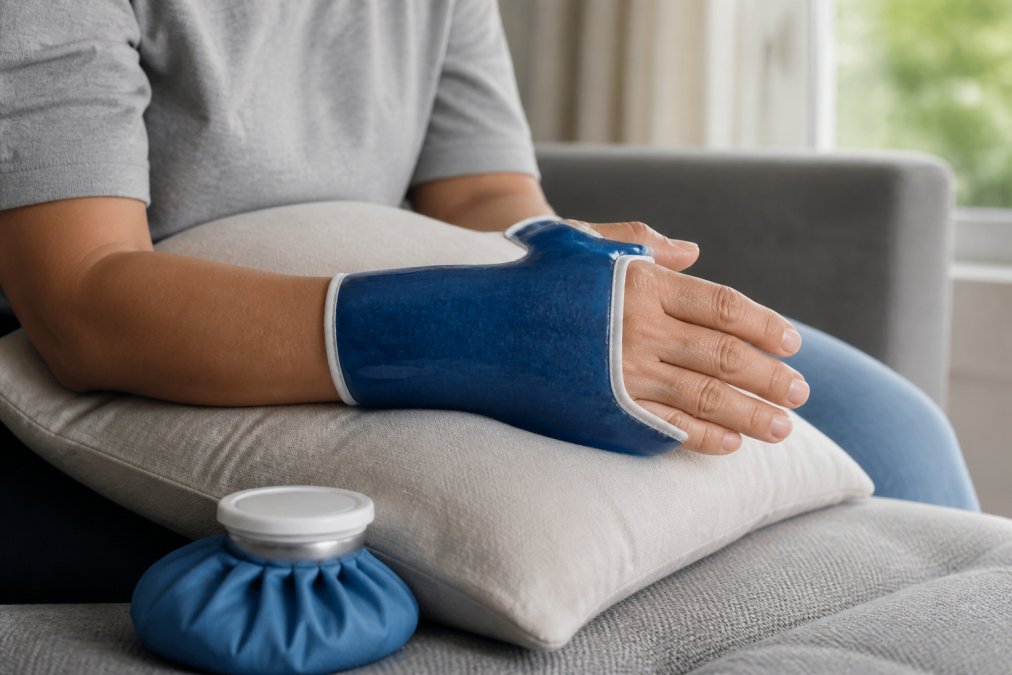
The standard guideline is 15 to 20 minutes of cold application at a time, with at least a 20-minute break between sessions, repeated several times per day during the first few days after surgery. Exceeding 20 minutes risks tissue damage rather than faster healing.
That "20 minutes on, 20 minutes off" rhythm exists for a reason. Beyond roughly 20 minutes, the body responds to prolonged cold by reflexively opening blood vessels again, which can work against the goal of reducing swelling. Shorter, more frequent sessions consistently outperform one long session.
A practical daily pattern for the first three days:
- Morning: one 15-minute session after waking
- Midday: two sessions spaced an hour apart
- Evening: one session before bed
- Overnight: skip cold therapy unless your surgeon directs otherwise
Always keep a thin cloth or the sleeve's own fabric layer between the cold source and bare skin. Never apply a gel pack straight from the freezer directly to the incision.
Post-Operative Hand Swelling Management
Swelling after hand surgery peaks in the first 48 to 72 hours, then gradually subsides over one to two weeks. Cold therapy is the most direct tool for managing that peak, but it works best alongside elevation.
The combination matters more than either measure alone. Cold limits how much fluid accumulates; elevation helps existing fluid drain away from the hand. Together they reduce the tight, throbbing sensation that makes early recovery so frustrating.
What most guides miss is that the hand should sit above heart level, not just "propped up." Resting the hand on a pillow at chest height does very little. Stack pillows so the hand sits above the elbow and, ideally, above the shoulder while you're reclined.
Signs that swelling management is working:
- The hand feels less tight each day
- You can see knuckle definition returning
- Finger movement becomes easier, not harder
- The skin color normalizes toward your baseline
If swelling increases after day three, or the hand becomes shiny, hot, and dramatically more painful, that is not a normal swelling pattern. Contact your surgeon's office rather than trying to manage it at home.
Best Cold Compression Wraps for Wrist Surgery
For wrist surgery recovery, the best cold compression wraps combine sustained cold with gentle, even pressure, and they stay in place while you use your hand for light daily tasks. Wearable sleeves outperform loose gel packs for this reason. Beyond managing inflammation, thoughtful surgery recovery gifts can further improve your daily comfort and help maintain a positive mindset throughout the healing process.
Penguin Fingers Cold Compression Gel →
Traditional ice packs have two problems after wrist surgery: they're bulky, and they require you to sit still while holding them in position. A wrap that stays on the wrist frees you to move around the house, answer emails, or eat a meal while you ice.
A comparison of common options:
| Option | Cold Duration | Stays In Place | Best For |
|---|---|---|---|
| Loose gel pack | 10-15 min | No | Short sessions while seated |
| Frozen peas | 10-15 min | No | Emergency use only |
| Reusable gel wrap | 15-20 min | Yes | Daily recovery sessions |
| Wearable compression sleeve | 15-20 min | Yes | Hands-free icing, workdays |
Penguin Fingers makes a Wrist Cold Compression Pack designed for exactly this scenario. It delivers 360 degrees of cooling and compression in as little as one to two minutes, and it's free from PVC, BPA, phthalates, and other irritants that can aggravate healing skin. For fingers and toes specifically, the Finger and Toe Ice Pack lets you insert a single finger for targeted relief without freezing your whole hand.


The thing nobody tells you about wrist recovery is that the incision site and the swollen area are often not the same place. A wrap that compresses the whole wrist evenly tends to work better than one that concentrates pressure on the incision.
How to Use Cold Therapy for Hand Surgery Safely
Safe cold therapy follows four rules: protect the skin, respect the time limit, check the skin after every session, and stop at the first sign of numbness that doesn't fade quickly.
- Keep a thin cloth or sleeve layer between the cold source and skin
- Set a timer for 15 to 20 minutes, every time
- Wait at least 20 minutes before the next session
- Inspect the skin after each session for excessive redness or blanching
- Never apply cold to an area with reduced sensation unless cleared by your surgeon
- Skip cold therapy if the skin near the incision is broken or weeping
Risks and Precautions of Cold Therapy After Hand Surgery
The main risks of cold therapy are skin damage from overexposure, nerve irritation from prolonged cold, and masking a more serious complication such as infection or a circulation problem. Each is preventable with basic precautions.
- Skin that turns white, gray, or waxy and doesn't return to normal within minutes
- Persistent numbness or tingling that outlasts the session by more than 30 minutes
- A burning sensation during application
- Blistering or a rash at the application site
When to Call Your Doctor About Cold Therapy
Contact your surgeon if cold therapy causes pain rather than relief, if skin changes persist, or if swelling and pain worsen after the first three days instead of improving.
Call your doctor promptly if you notice:
- Increasing pain, swelling, or redness after day three
- Fever, chills, or a general feeling of being unwell
- Drainage, odor, or opening at the incision
- Fingers that feel cold, blue, or unusually pale even when you're not icing
- Numbness that spreads or doesn't resolve
Frequently Asked Questions
How long should I use cold therapy after hand surgery?
Most surgeons recommend icing for 15 to 20 minutes at a time, with at least 45 minutes to an hour between sessions, during the first 48 to 72 hours after surgery. After that initial window, you can continue as needed for swelling and pain, often 3 to 4 times a day. Always follow your own surgeon's specific instructions, since the right schedule depends on the type of procedure you had.
Can cold therapy help reduce swelling after hand surgery?
Yes. Cold therapy constricts blood vessels, which limits fluid buildup in the treated area and can ease post-operative hand swelling management. Pairing cold with gentle compression, like a wearable sleeve, adds another layer of swelling control. Keep the hand elevated above heart level when possible, and use cold therapy consistently in the first few days when swelling tends to peak.
What are the best cold compression tools for hand surgery recovery?
The most practical options are wearable gel sleeves and wraps that stay put without you holding them. Look for flexible, non-toxic gel packs sized for fingers, hands, or wrists. Penguin Fingers makes a Finger and Toe Gel Pack Compression Therapy Sleeve ($14.95) and a Wrist Cold Compression Pack ($16.95) that deliver cooling and compression together. Reusable gel packs you can chill in the freezer also work well.
Is it safe to apply ice directly to the skin after hand surgery?
Never place ice or a frozen gel pack directly against bare skin. Always use a cloth barrier or a sleeve designed for cold therapy. Direct ice contact can cause frostbite or skin damage, especially since sensation may be reduced after surgery. Check your skin every few minutes during use, and stop immediately if you notice numbness, excessive redness, or pain that gets worse instead of better.
How often should I ice my hand after surgery?
A common schedule is every 2 to 3 hours while you are awake during the first few days, then tapering to 3 or 4 times a day as swelling and pain improve. Each session should last about 15 to 20 minutes. If your hand feels cold, numb, or uncomfortable, end the session early. Your surgeon may adjust this based on your procedure and healing progress.
How is a wearable cold compression sleeve different from a regular ice pack?
A wearable sleeve wraps around your fingers, hand, or wrist and stays in place while you rest, read, or work. A regular ice pack needs to be held or balanced, which is awkward after surgery. Sleeves also combine cooling with gentle compression, targeting the treated area more evenly. That combination can be more comfortable and easier to use consistently during recovery.


