

Table of Contents
- How TheraICE and Freeze Sleeve Compare: At a Glance
- How Cold Compression Therapy Works for Joint Inflammation
- Design and Coverage: 360-Degree vs. Targeted Fit
- How Long to Wear an Ice Compression Sleeve
- Cold Retention and Material Durability Over Time
- Best Cold Compression for Sports Recovery and Daily Pain
- Safety, Contraindications, and Sizing for Your Body
- Which Cold Compression Sleeve Should You Choose?
- Frequently Asked Questions
Last Updated: September 28, 2026
How TheraICE and Freeze Sleeve Compare: At a Glance
Cold compression applies therapeutic cold and steady pressure to an injured joint at once, a common way to manage swelling, stiffness, and joint pain at home. This comparison from Penguin Fingers looks at how TheraICE and Freeze Sleeve differ in coverage, cooling duration, materials, and price. Both are reusable slip-on sleeves; the differences that matter most come down to fit and how long the cold lasts.

| Feature | TheraICE | Freeze Sleeve |
|---|---|---|
| Coverage style | 360-degree wrap | Compression sleeve |
| Best for | Head, knee, and general joint relief | Limb compression recovery |
| Hot and cold use | Cold therapy focus | Cold therapy focus |
| Reusable | Yes | Yes |
| Form factor | Slip-on sleeve | Slip-on sleeve |
How Cold Compression Therapy Works for Joint Inflammation
Cold compression therapy combines low temperature and mechanical pressure to reduce joint inflammation and ease pain. Cold narrows blood vessels, limiting fluid buildup, while compression moves that fluid away from the joint, calming swelling and quieting the nerve signals that make a joint feel hot and throbbing.

The Science of Cold and Compression
The two effects do different jobs, which is why pairing them beats either alone. Cold slows local circulation and reduces the inflammatory response after an acute injury; compression adds gentle pressure that supports the joint and limits the pooling that causes puffiness.
Design and Coverage: 360-Degree vs. Targeted Fit
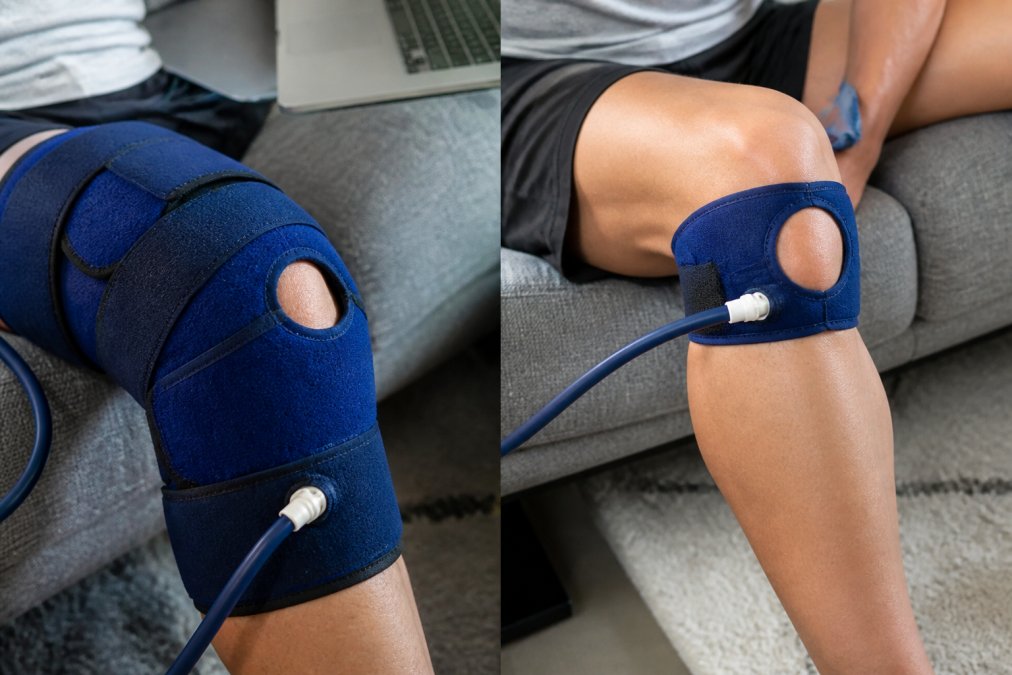
The biggest practical difference is how much of the joint each sleeve covers. A 360-degree design wraps the entire circumference so cold reaches every side at once, while a targeted fit concentrates cooling on one area and relies on fabric stretch to hold it in place.
How Long to Wear an Ice Compression Sleeve
Most people should wear an ice compression sleeve for 15 to 20 minutes at a time, with at least an hour of skin rest between sessions, long enough for the cooling benefit without risking irritation or numbness. If the area still feels numb or looks unusually red after removal, you left it on too long.
A few practical rules keep sessions safe and effective:
- Check your skin every few minutes during the first session with a new sleeve.
- Never apply a frozen sleeve directly to bare skin if it feels painfully cold; a thin layer helps.
- Space sessions out rather than stacking them back to back.
- Stop immediately if you feel burning, tingling, or a loss of sensation.
Cold Retention and Material Durability Over Time
How long a sleeve stays cold depends on three things: the thermal mass of the cooling agent, the insulation value of the outer layer, and how tightly the sleeve contacts the skin. Gel holds a steadier temperature than plain fabric because it stores more cold and releases it slowly, but the outer layer decides how fast that cold escapes. Neoprene and similar closed-cell stretch fabrics slow the loss; thin, open-weave fabrics do not, which is why two sleeves with identical gel can feel completely different after ten minutes.
Why Gel Outperforms Plain Fabric (and Where Gel Still Fails)
A gel pack works because water and a gelling agent hold a large amount of thermal energy per unit of volume, releasing it gradually as the sleeve warms toward skin temperature. A fabric-only wrap has almost no thermal mass, so it feels cold for a minute or two and then equilibrates. Gel quality matters more than gel quantity: uneven gel blobs freeze into hard lumps, contact the skin at only a few points, and deliver patchy cooling, while evenly distributed, flexible gel conforms to the joint and cools the whole contact area at once.

The Freeze-Thaw Cycle Is What Actually Kills a Sleeve
Most reviews judge a sleeve on its first week, but the real test is months of daily freezing and thawing. Every freeze-thaw cycle stresses the seams, gel pouch walls, and elastic fibers. Long-term users commonly report a sleeve performing well for two to three months, then showing one of three failure modes:
- Gel migration. The gel settles to one end of the pouch, leaving the other end with almost no cooling. You notice it as a sleeve that used to chill the whole knee and now only chills the top.
- Seam fatigue. The welded or stitched seams around the gel pouch weaken. Early warning signs are a faint bulge or a soft spot you can feel through the fabric.
- Elastic loss. The stretch fabric relaxes. The sleeve still slides on, but it no longer presses against the joint, so the compression half of cold compression quietly disappears.
How to Test a Sleeve Before and After You Buy It
You can screen for durability in the store or in the first week at home:
- Feel the gel through the fabric. It should feel like a smooth, continuous layer, not a series of lumps. Lumpy gel freezes unevenly and fails sooner.
- Check the seam construction. Welded seams with a visible edge tend to outlast thin glued seams. Run a thumb along the seam and look for any place where the two layers separate.
- Do the stretch-and-recover test. Pull the sleeve gently and let go. It should snap back to its original shape. Fabric that stays stretched has already begun to lose its elastic memory.
- Time the first freeze and the tenth. Note how long the sleeve stays cold on day one. Repeat the same test after ten freeze-thaw cycles. A meaningful drop in cold duration is your early signal that the gel or the insulation is degrading.
What This Means for Choosing Between the Two
Neither TheraICE nor Freeze Sleeve publishes a freeze-thaw rating, so durability depends on how you use the sleeve. One frozen once a day and worn for 15 to 20 minutes lasts far longer than one frozen, worn, refrozen, and worn again the same afternoon. Rotating two sleeves so each fully refreezes and rests is the easiest way to extend either product's life.
Best Cold Compression for Sports Recovery and Daily Pain
For sports recovery, the priority is a sleeve that stays cold through a full session and stays put during movement. Athletes dealing with muscle soreness, sprains, and soft tissue injury want cold compression they can wear while cooling down, stretching, or sitting through a film review, a sleeve that slides off when you stand up is useless.
Penguin Fingers Knee Cold Compression →
Safety, Contraindications, and Sizing for Your Body
Cold compression is not right for everyone, and most comparisons skip this. Cold narrows blood vessels and dampens nerve signaling, which reduces swelling and pain in a healthy joint but can mask or worsen a problem where circulation or sensation is impaired. If you cannot feel cold building up, you cannot tell when to stop.
Who Should Talk to a Doctor First
Most practitioners advise checking with a clinician before using cold compression if you have any of the following:
- Peripheral neuropathy, including diabetes-related nerve damage in the hands or feet. Reduced sensation means you may not feel a cold injury developing.
- Raynaud's phenomenon or other cold-sensitive circulatory conditions. Cold can trigger vasospasm and turn fingers or toes white, blue, or numb.
- Peripheral artery disease or other conditions that limit blood flow to the limbs. Adding cold on top of already restricted circulation can worsen tissue oxygenation.
- Cold urticaria (an allergy to cold). Even brief cold contact can cause hives or, in rare cases, a systemic reaction.
- Open wounds, fresh surgical incisions, or broken skin at the treatment site. Never apply a cold compression sleeve over these.
- Sickle cell disease. Cold can trigger vaso-occlusive episodes in some patients.
The Mechanism Behind Cold Injuries
A cold injury from a compression sleeve is almost always prolonged contact plus impaired feedback. Cold slows blood flow to the skin and compression reduces it further. In a healthy person, the sting of cold signals removal; with reduced sensation that signal may be muted or absent, and skin can be damaged before any pain is felt. That is why the session-length rule matters more, not less, for anyone in the risk groups above, and why checking the skin every few minutes during the first sessions is not optional.
Sizing by Joint Circumference, Not by Guesswork
Sizing is the other safety issue, and it cuts both ways: too tight restricts circulation before the cold even works, while too loose delivers no real compression. The fix is to measure, not guess.
- Knee: measure around the center of the kneecap with the leg straight.
- Elbow: measure around the tip of the elbow with the arm straight.
- Wrist: measure around the wrist bone, just below the hand.
- Ankle: measure around the ankle bone, above the heel.
- Finger or toe: measure around the base of the digit, where it meets the hand or foot.
A Quick Fit Check Before Every Session
Once the sleeve is on, do a ten-second check:
- Slide one finger under the edge. If it goes in easily, the sleeve is too loose for real compression.
- Look for pinching, red lines, or numbness at the edges. Any of these means it is too tight.
- Confirm the sleeve covers the joint on all sides, not just the top.
- Set a timer for 15 to 20 minutes. Do not rely on how it feels to tell you when to stop.
Which Cold Compression Sleeve Should You Choose?
The right choice comes down to the joint and the job. TheraICE and Freeze Sleeve both offer reusable, wearable cold compression that works well for general limb recovery; they differ in coverage and how the fit holds up over time. Extending this logic to the lower body requires a similar focus on how compression gear for recovery balances targeted support with the freedom of movement necessary for active healing.
Frequently Asked Questions
How do TheraICE and Freeze Sleeve compare in cold retention?
Cold retention depends on the gel type and insulation. Freeze Sleeve uses a gel that stays cold for about 20-30 minutes, while TheraICE typically lasts 15-20 minutes. For longer sessions, you may need to re-freeze. Penguin Fingers sleeves use a fast-freezing gel that conforms to your body and provides consistent cold therapy. Always follow the manufacturer's instructions for freezing times to avoid damaging the gel.
How long should you wear a cold compression sleeve for maximum benefit?
Most guidelines recommend wearing a cold compression sleeve for 15-20 minutes at a time, with at least 1-2 hours between sessions. This helps reduce swelling and numbing pain without risking skin damage. If you have circulation issues or diabetes, consult your doctor first. Penguin Fingers sleeves are designed for comfortable wear during these short sessions, so you can move around while you recover.
Are compression ice sleeves effective for post-surgery recovery?
Yes, cold compression sleeves are often recommended after surgery to reduce swelling and pain. They provide consistent cooling and gentle pressure, which can help with joint inflammation. However, always follow your surgeon's advice on when to start and how long to use them. Penguin Fingers offers sleeves for knees, elbows, wrists, and fingers, giving you targeted relief for specific post-operative needs.
What are the main differences between TheraICE and Freeze Sleeve designs?
TheraICE uses a slip-on design with 360-degree coverage, often for the head or knee. Freeze Sleeve also offers 360-degree coverage but focuses on extremities like knees and elbows with a neoprene wrap. Both are reusable, but Freeze Sleeve tends to have a tighter compression fit. Penguin Fingers sleeves are designed for specific body parts, including fingers and toes, with a flexible, non-toxic gel that stays soft when frozen.
Which ice knee sleeve is the best for chronic pain?
For chronic pain, look for a sleeve that balances cold therapy with comfortable compression. TheraICE and Freeze Sleeve both work, but the best choice depends on your knee size and how long you need relief. Penguin Fingers Knee Cold Compression Therapy Sleeve ($28.95) is designed for knee joints and can be used hot or cold. It conforms to your body and provides 360-degree coverage, making it a practical option for daily pain management.
Joint pain rarely follows a schedule, and the wrong sleeve will sit in a drawer while your joint keeps aching. Penguin Fingers builds wearable cold compression sleeves shaped for fingers, toes, wrists, elbows, feet, and knees, with dual hot and cold therapy in one reusable design. If you want targeted relief that stays put and works on your schedule, get started with Penguin Fingers and put the right sleeve on the right joint.


