

Table of Contents
- What You'll Need to Treat Finger Swelling
- Step 1: Apply Cold Therapy Within the First 48 Hours
- Step 2: The Best Compression for Finger Swelling
- Step 3: Elevate and Rest the Injured Finger
- How Long Does a Jammed Finger Stay Swollen?
- Step 4: Gentle Movement and Anti-Inflammatory Support
- When to See a Doctor for Finger Sprain
- Returning to Sport Safely
- Frequently Asked Questions
Last Updated: September 7, 2026
What You'll Need to Treat Finger Swelling
Finger swelling from sports injuries is a soft tissue injury that typically involves the ligament and joint capsule, not the bone. Whether you jammed it on a ball or caught it in a jersey, the immediate goal is managing inflammation before stiffness sets in.
Before starting, gather a few essentials: a cold pack or cold compression sleeve, an elastic compression bandage, a splint or buddy tape, and anti-inflammatory medication if approved by your doctor. A common mistake is waiting until the next day to treat a jammed finger. The first 48 hours after an acute injury determine how much swelling management you will need later, so acting quickly matters more than most people realize.

Step 1: Apply Cold Therapy Within the First 48 Hours
Cold therapy is the single most effective way to reduce finger swelling when applied within the first 48 hours. The cold constricts blood vessels, which limits fluid leaking into the tissue and slows the inflammatory response. Apply a cold pack for 15 to 20 minutes at a time, several times per day.
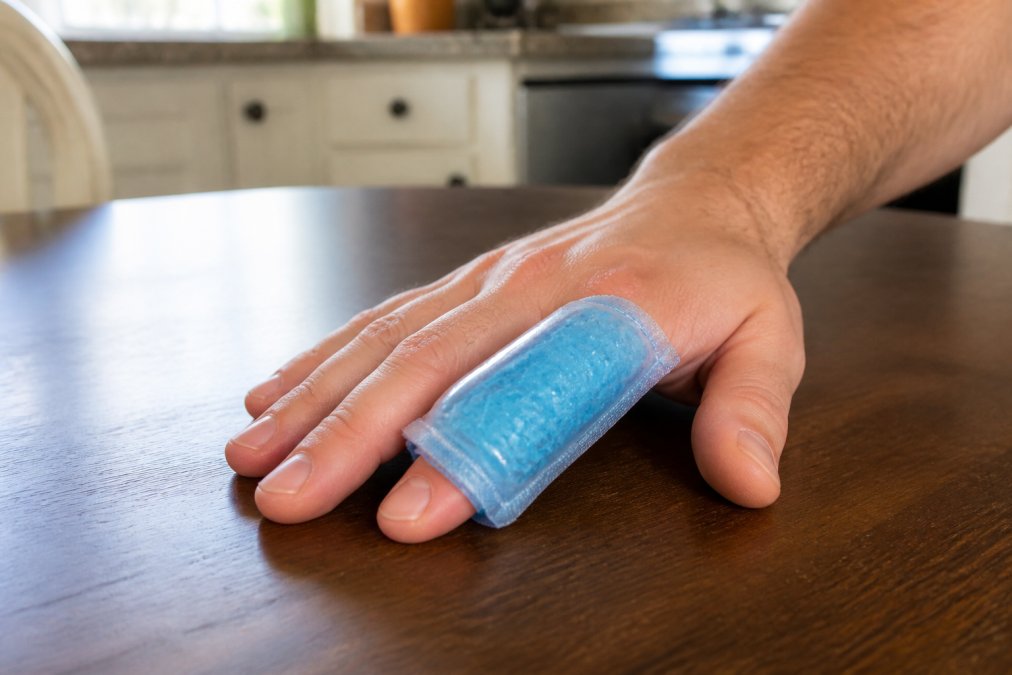
For active people, a wearable cold compression sleeve beats holding a bag of frozen peas because it combines cold therapy with light compression in one step. The Penguin Fingers Cold Compression Gel Pack for Fingers and Toes wraps around the digit and stays in place.

Sport-Specific Cold Therapy Protocols
The timing and method of cold therapy should adapt to your sport and the demands of your season. A basketball player who jams a finger during a game faces a different situation than a climber who tweaks a pulley on a weekend route.
- In-season athletes: If you need to return to practice or competition within days, prioritize frequent, short cold sessions, every 2 to 3 hours for 10 to 15 minutes, during the first 48 hours. This aggressive schedule keeps inflammation down while allowing you to test the finger between sessions.
- Off-season or recreational athletes: You have the luxury of longer rest. Extend cold sessions to 20 minutes, 4 to 5 times daily, and combine them with elevation to accelerate fluid clearance.
- Climbers and gymnasts: These sports load the finger in extension, which stresses different structures than a ball impact. For these athletes, cold therapy should be paired with gentle passive extension stretches after the ice session to prevent stiffness in the flexor tendons.
Cold vs. Heat: Why Timing Matters
A common mistake is switching to heat too early. Heat increases blood flow and can worsen swelling during the acute phase. Reserve heat for the repair phase, after day 4 or 5, when you need to increase circulation to promote tissue healing. If you are unsure which phase you are in, stick with cold until the swelling has visibly plateaued.
What the Research Shows
Most sports medicine practitioners agree that cold therapy is most effective when started within 15 minutes of injury. Athletes who delay cold therapy by even a few hours require significantly longer recovery periods.
For a finger injury, the small joint surface area means that even a modest reduction in swelling translates to meaningful improvements in range of motion. A finger that swells just 2 millimeters more can lose 10 to 15 degrees of flexion, which is the difference between making a full fist and struggling to grip a ball (peer-reviewed research).
Practical Cold Therapy Schedule
| Time After Injury | Cold Session Duration | Frequency |
|---|---|---|
| 0-24 hours | 15-20 minutes | Every 2-3 hours |
| 24-48 hours | 15-20 minutes | Every 3-4 hours |
| 48-72 hours | 10-15 minutes | 3-4 times daily |
| After day 3 | As needed | After activity or if swelling returns |
This schedule balances the anti-inflammatory benefits of cold with the need to allow the tissue to begin its natural healing process. Over-icing beyond day 3 can actually delay healing by suppressing the inflammatory response that triggers tissue repair.
The Penguin Fingers Advantage
The Penguin Fingers Cold Compression Gel Pack for Fingers and Toes is designed specifically for the unique anatomy of a finger. Unlike generic ice packs that wrap awkwardly around the hand, this sleeve contours to the digit and maintains consistent contact with the injured joint.
For athletes who need to ice on the go, the sleeve stays in place during light movement.
Step 2: The Best Compression for Finger Swelling
The best compression for finger swelling is gentle, even pressure applied through buddy taping or a compression sleeve, not a tight wrap that cuts off circulation. Compression physically limits the space available for fluid to accumulate.
Buddy taping works well for a jammed finger: tape the injured digit to the healthy neighbor next to it using sports tape. This provides joint stability without immobilizing the whole hand. A purpose-built compression sleeve distributes pressure evenly across the digit.
Sport-Specific Buddy Taping Techniques
Buddy taping is not a one-size-fits-all solution. The sport you play determines which finger you tape to and how much mobility you preserve.
Basketball and Volleyball
For ball-handling sports, tape the injured finger to the adjacent finger on the side away from the ball. This protects the injured collateral ligament while keeping the palmar surface of the finger free to contact the ball. Use 1/2-inch sports tape and apply two strips: one just below the proximal interphalangeal (PIP) joint and one just above it. Do not tape across the joint itself, as this restricts flexion.
Climbing and Gymnastics
These sports require maximum finger strength in flexed positions. Tape the injured finger to the finger on the thumb side (radial side) to preserve the ability to crimp. Use a figure-eight pattern that crosses over the PIP joint to provide additional support without limiting flexion. This technique, commonly used by climbers, allows you to maintain grip strength while protecting the injured pulley or ligament. heal cracked fingertips.
Football and Contact Sports
When you need maximum protection against re-injury, tape the injured finger to both adjacent fingers if possible. This creates a rigid splint effect that prevents lateral bending. Use a wider tape (1 inch) and apply three strips: one at the base, one at the middle, and one just below the fingertip. This configuration is more restrictive but appropriate for positions where the hand is constantly exposed to impact.
Compression Sleeves vs. Buddy Taping
| Feature | Buddy Taping | Compression Sleeve |
|---|---|---|
| Joint stability | High | Moderate |
| Swelling control | Moderate | High |
| Range of motion | Preserved | Fully preserved |
| Reusability | Single use | Multiple uses |
| Ease of application | Requires practice | Slip on |
| Sport suitability | Contact sports, climbing | All sports, daily wear |
A compression sleeve like the Penguin Fingers Finger Splint Wrap offers a middle ground. It provides even, circumferential pressure, while the integrated splint prevents unwanted bending. For the first 48 hours, a sleeve can be a good option; after day 3, buddy taping can be used to allow controlled flexion.
How Compression Actually Works
Compression reduces swelling through two mechanisms: it physically limits the space for fluid to accumulate, and it improves the efficiency of the lymphatic system, which drains excess fluid away. The lymphatic system relies on muscle movement and external pressure, which is why compression is most effective when combined with gentle movement or elevation.
Common Compression Mistakes
- Applying tape too tightly: The fingertip should remain pink and have normal sensation. If you feel tingling or see blanching, remove the tape immediately and reapply with less tension.
- Leaving tape on too long: Change buddy tape every 24 hours to check the skin for irritation and to clean the area. Prolonged taping can cause maceration and skin breakdown.
- Taping across the joint: Tape that crosses the PIP joint restricts flexion and can lead to joint stiffness. Place tape above and below the joint, not over it.
- Using compression during sleep: Unless directed by a physician, remove compression sleeves or tape at night. Unconscious movement can cause the tape to twist and create pressure points.
When to Upgrade Compression
If swelling persists beyond 5 days despite consistent compression, consider upgrading to a rigid splint or a compression sleeve with a built-in splint. Persistent swelling often indicates the ligament is not receiving enough support to heal properly.
The Penguin Fingers Finger Splint Wrap is designed for this transition phase, combining the even pressure of a compression sleeve with the immobilization of a splint.
Step 3: Elevate and Rest the Injured Finger
Elevation reduces finger swelling by letting gravity drain fluid away from the injury site. Keep the hand raised above heart level whenever you are sitting or lying down. Rest the finger by avoiding gripping, catching, or any activity that loads the joint for the first few days.
An orthopedic assessment is rarely needed for a minor jammed finger, but resting it properly in the first week prevents chronic swelling and joint stiffness later.
How Long Does a Jammed Finger Stay Swollen?
A jammed finger typically stays swollen for 1 to 3 weeks, depending on the severity of the ligament tear and how aggressively you treat the inflammation early on. Mild sprains often look nearly normal within a week, while a moderate sprain can remain puffy and stiff for several weeks.
The timeline shortens considerably when you combine cold therapy, compression, and elevation in the first 48 hours. Finger swelling that persists beyond three weeks warrants a closer look.
| Recovery Phase | Duration | Key Action |
|---|---|---|
| Acute inflammation | Days 1-3 | Cold therapy, compression, elevation |
| Repair | Days 4-14 | Gentle range of motion, buddy taping |
| Remodeling | Weeks 3-6 | Grip strength work, sport-specific training |
Step 4: Gentle Movement and Anti-Inflammatory Support
Gentle range of motion exercises should begin after the first 48 to 72 hours, once the sharp pain has subsided. Moving the finger prevents joint stiffness and helps re-train the ligament as it heals. Start with slow flexion and extension, stopping at mild tension rather than pain.
Anti-inflammatory medication, such as ibuprofen, can support recovery when taken as directed and approved by a physician. It reduces the chemical signals that drive inflammation, complementing cold therapy and compression.
When to See a Doctor for Finger Sprain
You should see a doctor for a finger sprain if the digit looks crooked, you cannot straighten it, or the swelling and pain are severe enough that you cannot touch the finger. These signs point to a fracture or dislocation requiring imaging to confirm. Numbness or tingling beyond the first few minutes also warrants prompt evaluation.
A fracture and a sprain can feel identical in the first hours, which is why persistent pain on the bone rather than the joint is a red flag. According to guidance from the American Academy of Orthopaedic Surgeons, any finger that remains swollen and painful after a few days of home care should be professionally assessed. Delaying treatment on a fracture can lead to permanent joint deformity, so err on the side of caution.
Returning to Sport Safely
Returning to sport safely requires meeting clear criteria, not just waiting until the pain fades. You should be able to make a full fist, grip a ball without discomfort, and tolerate light contact without swelling returning.
Buddy taping during the first few weeks back protects the healing ligament from re-injury. Many players rush back because the finger feels fine at rest, only to re-jam it in the first game. Build confidence gradually with progressive loading exercises before full competition.
Research on return-to-play protocols from the National Athletic Trainers' Association emphasizes that functional testing, not time elapsed, should dictate when an athlete resumes play. For ongoing swelling during recovery, a cold compression sleeve remains useful after workouts to calm the joint and prevent chronic swelling from building up.
Frequently Asked Questions
Is ice or heat better for a swollen finger from a sports injury?
Ice is better during the first 48 hours after a sports injury. Cold therapy constricts blood vessels, which limits inflammation and numbs pain. Apply a cold pack for 15-20 minutes at a time, several times daily. Heat is more useful after the acute swelling phase has passed, typically after 48-72 hours, to promote blood flow and ease joint stiffness during recovery.
How long until finger swelling goes down with proper treatment?
With consistent RICE protocol, most finger swelling peaks within the first 24-48 hours and starts visibly decreasing by day three. A mild jammed finger may feel normal within 1-2 weeks. More significant sprains can keep the finger swollen for 3-4 weeks. If swelling has not improved after 5-7 days of home treatment, get an orthopedic assessment to rule out a fracture or ligament tear.
What happens if you don't let a sprained finger heal?
Returning to sport or heavy hand use too soon can turn a minor sprain into chronic joint instability. Without proper healing time, the ligament stays stretched, which can lead to ongoing pain, recurrent swelling, and early arthritis. You also risk compensatory injuries, since you will unconsciously grip differently. Follow a structured recovery timeline and protect the finger with buddy taping during your first weeks back.
When should you see a doctor for a swollen finger?
See a doctor right away if your finger looks crooked or deformed, if you cannot straighten it, or if the pain is severe and unmanageable. Numbness, tingling, or a finger that turns pale or blue also require urgent care. If swelling and pain have not improved after 5 days of home treatment, get an X-ray to rule out a fracture. Delayed treatment of a dislocation or tendon injury can lead to permanent stiffness.
Reducing finger swelling from sports injuries comes down to acting fast, staying consistent with cold therapy and compression, and resisting the urge to rush back. Penguin Fingers supports that recovery with wearable cold compression sleeves and splints designed for the specific shape of fingers and toes, offering targeted relief that stays put while you heal. Get started with Penguin Fingers and return to your sport with confidence and full mobility.


