

Table of Contents
- Why Cold Compression for Gout Pain Works
- Cold Compress for Gout: What You'll Need
- Step-by-Step: How to Apply a Cold Compress to a Gout Flare
- How Long to Ice a Gout Flare
- Ice or Heat for Gout: Which Should You Use?
- Compression for Gout Swelling: Pairing Cold With Gentle Pressure
- Cold Therapy Safety: When to Stop and When to Call a Doctor
- Frequently Asked Questions
Last Updated: October 20, 2026
Why Cold Compression for Gout Pain Works
Cold compression for gout is a home-care method that applies controlled cold to a painful, swollen joint to ease discomfort during a flare. At Penguin Fingers, we build wearable cold therapy sleeves for exactly this kind of targeted relief. A gout attack often hits the big toe first, and the joint can turn red, hot, and tender within hours.

Cold helps in two ways. It narrows blood vessels near the skin, which can calm swelling. It also dulls nerve signals, so the joint feels less sharp.
How Cold Reduces Swelling and Numbing Pain
Cold therapy works on the surface, not the root cause. It constricts blood vessels, which limits blood flow to the inflamed area and can reduce swelling. That same cold slows pain signals traveling through the nerves, which numbs the area.
The effect is temporary. Cold will not dissolve uric acid crystals or end a flare. What it does is make the waiting period more bearable while your gout treatment does its job.
Cold Compress for Gout: What You'll Need
A cold compress for gout needs three things: a cold source, a barrier for your skin, and a way to rest and elevate the joint. Keep the setup simple and within arm's reach before you start.
Here is what to gather:
- A gel ice pack, a bag of frozen peas, or crushed ice in a sealed bag
- A thin cloth, dish cloth, or towel to wrap the cold source
- A cushion or pillow to prop up the joint
- A timer so you do not lose track of minutes
- Water to drink and a phone nearby
Skip anything that puts ice directly on bare skin.
Step-by-Step: How to Apply a Cold Compress to a Gout Flare
A cold compress for a gout flare is only as good as its setup. The goal is steady, even cold with a full cloth barrier, no direct pressure on the tender joint, and a clear stop point. The sequence below takes about 15 minutes from prep to finish and works for the big toe, ankle, knee, or wrist.
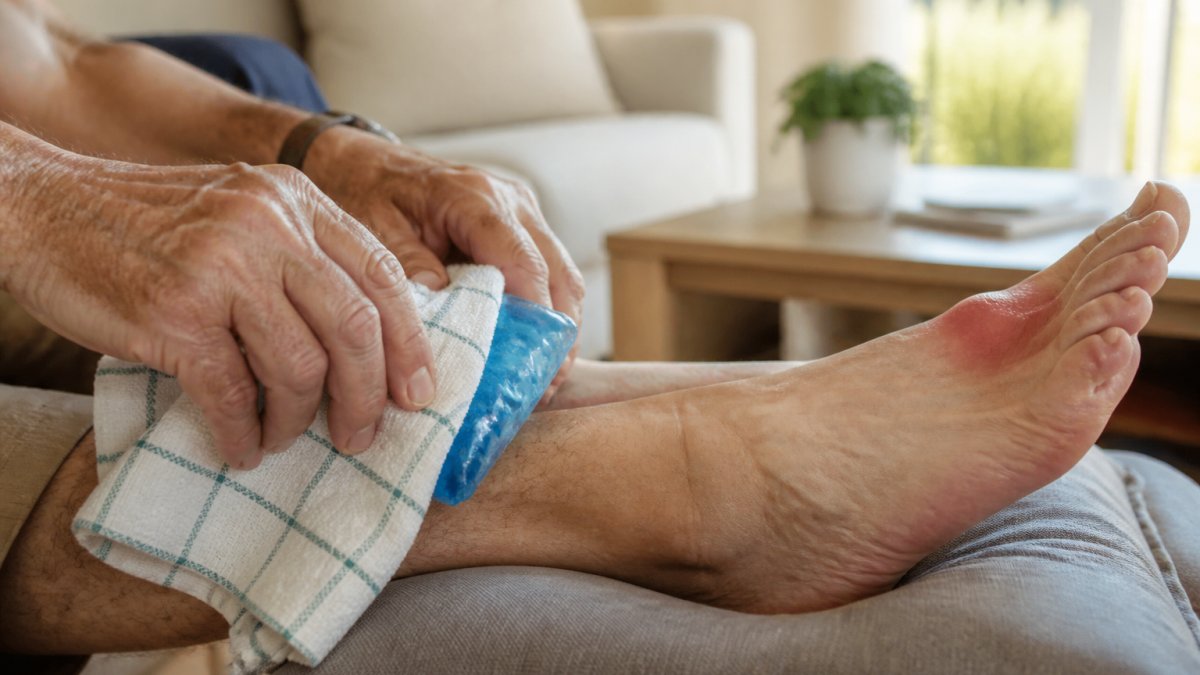
Step 1: Prepare the Cold Source and Protect the Skin
Wrap the cold source in a thin cloth before it touches you. A single layer of dish cloth or towel is usually enough, but the cloth must cover the whole pack so no frozen surface shows. A flexible gel pack conforms to the joint better than a rigid block of ice; if you use frozen peas, break up any clumps first so the pack sits flat.
Keep the pack dry. Moisture against the skin can make cold feel sharper and irritate skin that is already sensitive during a flare.
Step 2: Position the Pack for the Joint
Place the wrapped pack on the swollen joint and settle it gently. Do not press hard, and do not wrap it tightly. The pack should rest on the joint, not squeeze it.
- Big toe: rest the foot on a cushion and lay the pack over the top and sides of the joint. Avoid resting the pack on the tip of the toe, where skin is thin.
- Ankle: mold the pack around the front and sides of the ankle, leaving the heel free so the pack does not press into the tender back of the joint.
- Knee: lay the pack across the front of the knee and let it drape to the sides. Do not strap it on.
Elevate the joint above heart level if you can, using a cushion or pillow. Elevation helps fluid drain away from the area, which supports the swelling reduction cold starts. Stay off the foot or hand while the pack is on.
Step 3: Time the Session and Check the Skin
Leave the pack in place for 10 to 20 minutes. Set a timer before you sit down; most people who over-ice a gout flare simply lose track of time while resting.
Take the pack off after 10 to 20 minutes and check the skin. Normal coolness and mild pink color are fine. Stop if the skin looks white, gray, or blistered, or if you feel sharp burning rather than cooling. Let the skin warm up slowly at room temperature; do not rub the area or apply heat right away.
Step 4: Repeat Safely
Wait at least an hour before you apply cold again. During a flare, three or four short sessions across the day is a common routine. Do not leave a pack on for 30 minutes or more, and do not fall asleep with it on.
How Long to Ice a Gout Flare
The safe window for icing a gout flare is 10 to 20 minutes per session, with at least an hour of rest between sessions. Many people find 15 minutes is the sweet spot: long enough to numb the joint, short enough to protect the skin. Consistent application of these thermal intervals remains a cornerstone of relieving joint pain, a principle that extends to managing discomfort in other areas such as lower back pain at home.
Do not leave a pack on for 30 minutes or more, and do not fall asleep with it on. Cold that runs too long can damage skin and tissue. During a bad flare, three or four short sessions across the day is a common routine.
Ice or Heat for Gout: Which Should You Use?
Ice is the better choice during an acute gout attack. Heat can feel good on a stiff, aching joint between flares, but during a hot, swollen flare it may increase blood flow and add to the throbbing. The practical rule is simple: hot and angry means cold; stiff and quiet means warmth is reasonable.
Why Cold Fits an Active Flare
A gout flare is an inflammatory event. The joint is red, hot, and swollen because blood flow and immune activity are concentrated there. Cold narrows blood vessels near the skin, which can calm swelling, and it dulls nerve signals so the joint feels less sharp. That is why cold is the default during the first day or two of a flare, when the joint is at its most reactive.
When Heat Can Help
Heat is for the between-flare phase, when the joint is stiff or achy but not hot and swollen. Gentle warmth can loosen a stiff joint and make movement easier. It is not a treatment for the flare itself, and it should not be applied to a joint that is red and throbbing.
A Simple Decision Path
| Phase | Best Choice | Why |
|---|---|---|
| Active flare (hot, red, swollen) | Cold compress | Calms swelling and numbs pain |
| Between flares (stiff, achy) | Gentle heat | Loosens a stiff joint |
| Unsure | Cold first | Safer default during a flare |
If you are weighing ice versus heat for gout, let the joint tell you. If the skin is hot to the touch and the joint looks puffy, use cold. If the joint is stiff but not inflamed, gentle heat is reasonable. When in doubt, start with cold and keep sessions short.
Compression for Gout Swelling: Pairing Cold With Gentle Pressure
Compression for gout swelling works best when it is light and even. A wrap that hugs the joint without pinching can support the cold and help limit swelling. The key word is gentle: a tight band can restrict blood flow and make things worse.
This is where wearable cold compression sleeves earn their place. A sleeve holds the cold against the joint and adds mild, even pressure at the same time, so you are not balancing a loose pack with one hand. Our Penguin Fingers Cold Compression Gel Packs for Fingers and Toes are built for this: you insert the finger or toe, and the stretchy material cools and compresses only where you need it. They are one size fits all, latex free, and non-toxic.
For a gout flare in the big toe, a finger-and-toe sleeve keeps the cold locked on the joint while you rest. That beats a slippery bag of peas sliding off every few minutes.
Cold Therapy Safety: When to Stop and When to Call a Doctor
Stop cold therapy if the skin turns white, gray, or blistered, or if you feel sharp burning rather than cooling. These are signs the cold is too intense or has been on too long. Remove the pack and let the skin warm up slowly.
Cold compression is home care for symptom management. It does not replace medical advice or gout treatment. Talk to a doctor if:
- The flare is your first one, or you have not been diagnosed with gout
- Pain and swelling do not ease after a few days
- You have diabetes, poor circulation, or nerve damage in the feet
- The skin over the joint is broken or infected
- You get a fever along with the joint pain
For general guidance on gout and flare care, the American College of Rheumatology's gout resources and the CDC's arthritis information are solid starting points. If cold does not help or symptoms are unusual, call your doctor rather than pushing through.
Frequently Asked Questions
Can I put a cold compress on gout?
Yes. A cold compress is a safe home-care option for easing gout pain and swelling during a flare. Wrap the cold source in a thin cloth or towel first so it never touches bare skin, then apply it to the affected joint for 10 to 20 minutes at a time. Cold narrows blood vessels, which reduces blood flow to the joint and helps calm inflammation. Take the pack off for at least 20 minutes between sessions, and stop if your skin turns bright red, white, or numb.
How long should I ice a gout flare?
Apply cold for 10 to 20 minutes per session, then leave the joint alone for at least 20 minutes before repeating. Most people find three to four sessions spread across the day manageable during the worst of a flare. If cold compression for gout pain feels uncomfortable after the first few minutes, shorten the session rather than pushing through. Never leave a pack on while you sleep, and check your skin each time you remove it.
Is ice or heat better for gout pain?
Ice is the better choice during an acute gout attack. The joint is hot, swollen, and inflamed, and cold therapy constricts blood vessels to reduce swelling and numb the area. Heat therapy can feel soothing for stiff, achy joints between flares, but applying heat to a hot, swollen joint may worsen throbbing. If you are unsure which stage you are in, start with cold and keep sessions short.
Does compression help gout swelling?
Gentle compression can support cold therapy for gout swelling by holding the pack against the joint and limiting fluid buildup. The key word is gentle: wrap loosely enough that you can slide a finger underneath, and never compress so tightly that toes or fingers turn pale or tingle. Wearable cold compression sleeves, like the Penguin Fingers finger and toe gel pack, combine both steps in one product so you can elevate and rest the joint hands-free.
A gout flare is frustrating, and managing it at home takes the right tools and a little patience. At Penguin Fingers, we make wearable cold compression sleeves designed to hold steady, even cold on sore joints, with dual hot and cold options and targeted designs for fingers, toes, and other body parts. If you want relief you can wear while you rest, get started with Penguin Fingers and put targeted cold therapy to work on your next flare.


