

Table of Contents
- Quick Comparison: Wearable Pain Management Sleeves
- Benefits of Cold Compression Therapy for Physical Therapy
- Penguin Fingers Knee Cold Compression Therapy Sleeve
- Penguin Fingers Elbow and Foot Cold Compression Therapy Sleeve
- Penguin Fingers Wrist Cold Compression Pack
- Penguin Fingers Cold Compression Gel Packs for Fingers and Toes
- How Long to Wear Compression Sleeves for Joint Pain
- How to Store Reusable Ice Packs Properly
- Frequently Asked Questions
Last Updated: September 18, 2026
Quick Comparison: Wearable Pain Management Sleeves
Wearable pain management for physical therapy has moved beyond the drugstore ice bag. Today's sleeves combine sustained cold or heat with gentle compression and stay on your body while you move. This review from Penguin Fingers covers four cold compression options built for specific joints.
| Product | Price | Body Area | Hot & Cold | Best For |
|---|---|---|---|---|
| Knee Cold Compression Sleeve | $28.95 | Knee, thigh, calf | Yes | Post-injury and arthritis knee pain |
| Elbow and Foot Cold Compression Sleeve | $22.95 | Elbow, ankle, foot, forearm | Yes | Multi-joint recovery |
| Wrist Cold Compression Pack | $16.95 | Wrist | Cold only | Typing and lifting strain |
| Cold Compression Gel Packs for Fingers and Toes | $14.95 | Fingers, toes | Cold only | Arthritis and jammed digits |
Benefits of Cold Compression Therapy for Physical Therapy
Cold compression therapy for physical therapy constricts blood vessels at the joint to limit swelling and slows the nerve signals that carry pain to the brain. That is why a therapist reaches for a sleeve after an injury, a hard training session, or an arthritis flare-up, and why timing matters as much as the device.


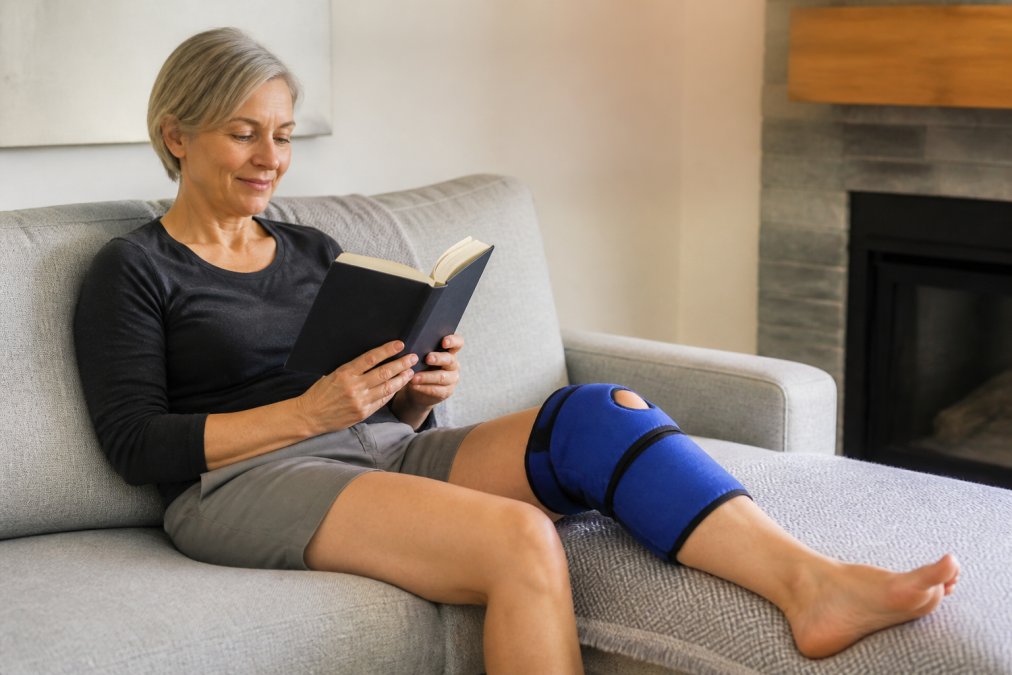
What is actually happening under the sleeve
Cold slows local metabolism and reduces fluid leakage into surrounding tissue, which drives post-injury swelling. Compression resists that fluid buildup and keeps the joint supported. Together they let you start gentle range-of-motion work sooner, the real goal of any physical therapy program.
The practical advantages
- Drug-free relief. No pills, no waiting on an oral painkiller to kick in. The FDA guidance on cold therapy devices treats these wraps as non-invasive tools, which suits anyone wary of daily medication.
- Targeted compression. A sleeve presses evenly on the joint, more comfortable than a loose ice bag that shifts when you move.
- Hands-free wear. Keep the sleeve on while you answer email, cook, or read, instead of holding an ice pack for 15 minutes.
- Repeatable and predictable. Reusable gel packs go back in the freezer ready again, so the routine does not depend on restocking disposables.
- Pairs with movement. Because the sleeve stays put, you can do your therapist's gentle exercises while the joint is cooled, rather than icing and moving separately.
How to match the device to the pain
The right sleeve depends on what kind of pain you have, not just which joint hurts.
- Muscular or overuse pain (sore quads after leg day, tight forearm from gripping) responds to cold plus compression after activity and heat before it. A dual hot-and-cold sleeve earns its keep here.
- Joint swelling after a sprain or strain calls for cold first, in short frequent sessions, with compression to limit fluid buildup. A dedicated single-joint sleeve fits better than a multi-joint wrap.
- Nerve-related pain (tingling, burning, numbness) is different. Cold can calm it temporarily but is no substitute for clinical evaluation, and prolonged cold on reduced sensation carries real risk.
- Arthritis stiffness often responds better to heat before movement and cold after, so a dual sleeve beats a cold-only pack.
Penguin Fingers Knee Cold Compression Therapy Sleeve
The Knee Cold Compression Therapy Sleeve is the largest option at $28.95, built for the joint that carries the most load. It fits knees, thighs, calves, and biceps, covering more ground than a standard knee wrap.

Freeze the gel pack flat in the freezer, not folded. A flat pack conforms to the knee faster and cools more evenly than a crumpled one.
Penguin Fingers Elbow and Foot Cold Compression Therapy Sleeve
At $22.95, the Elbow and Foot Cold Compression Therapy Sleeve is the most versatile pick. It wraps elbows, ankles, feet, forearms, and wrists, the sleeve to reach for when the sore joint changes week to week.
Penguin Fingers Wrist Cold Compression Pack
The Wrist Cold Compression Pack is the budget entry at $16.95, and it solves a very specific problem: a wrist that aches after a long day of typing or lifting. It delivers cooling and compression at the same time, with 360 degrees of contact in as little as one to two minutes.
Penguin Fingers Cold Compression Gel Packs for Fingers and Toes
The Cold Compression Gel Packs for Fingers and Toes are the smallest and cheapest option at $14.95, and they target the joints most sleeves ignore. You slide a finger or toe into the pack and get cooling and compression exactly where the joint is swollen.
How Long to Wear Compression Sleeves for Joint Pain
The general rule for cold compression is 15 to 20 minutes at a time, with at least an hour of rest between sessions. That window calms inflammation without risking skin or nerve irritation from prolonged cold. But it is a starting point, not a universal prescription, the right duration depends on your skin, your circulation, and what your care team has told you.
Penguin Fingers Knee Cold Compression →
A few practical guidelines:
- Cold therapy: 15-20 minutes per session, several times a day during a flare-up.
- Heat therapy: 15-20 minutes, best used before activity to loosen a stiff joint.
- Never sleep in a cold sleeve. Prolonged cooling can damage skin and underlying tissue.
- Check your skin after each session. Redness that fades within 20 minutes is normal; numbness, tingling, or blanching is not, stop and let the area rewarm.
- Alternate cold and heat if your therapist recommends it, but let the joint return to normal temperature between sessions.
- Cool, do not freeze. A pack straight from a deep freezer is colder than it needs to be. Wrap a thin cloth between the pack and your skin.
Who should not use cold compression without medical clearance
This is the part most guides skip, and it matters most. Cold therapy is not appropriate for everyone, and the risks are not theoretical.
- Poor circulation or peripheral vascular disease. Cold further reduces blood flow, which can worsen the underlying problem.
- Diabetes with reduced sensation in the feet or hands. You may not feel a pack that is too cold, which raises the risk of a cold burn.
- Raynaud's phenomenon. Cold can trigger a painful vasospasm in the fingers and toes.
- Cold hypersensitivity or a known cold allergy (cold urticaria). Even brief exposure can cause a reaction.
- Open wounds, active infection, or recent skin grafts over the treatment area.
- Areas with impaired sensation from nerve damage or neuropathy.
- Right after surgery, unless your surgeon or physical therapist has cleared cold therapy and told you how long to apply it.
Skin sensitivity and material considerations
If you wear a sleeve daily, the fabric matters as much as the temperature. Look for wraps free of PVC, BPA, phthalates, formaldehyde, and latex, with non-toxic gel. Wash or wipe the fabric between uses, and stop using any sleeve that causes a rash, itching, or irritation, a sign the material or fit is wrong for your skin.
How to Store Reusable Ice Packs Properly
Storing reusable ice packs properly keeps them flexible, clean, and ready to use. The goal is a flat, dry, sealed pack that freezes evenly and does not pick up freezer odors.
Do this:
- Freeze flat. Lay the pack on a flat shelf so the gel spreads evenly. A flat pack wraps a joint better than a lumpy one.
- Keep it sealed. Store the sleeve in a zip bag or its own pouch to keep freezer smells out.
- Wash the fabric. Wipe or hand-wash the sleeve between uses, then dry it fully before refreezing.
- Check for wear. If the gel pack leaks or the seams split, replace it. A leaking pack cannot deliver even cooling.
- Do not microwave a frozen pack straight from the freezer without checking the instructions. Heat it in short bursts and test the temperature before it touches skin.
Frequently Asked Questions
Can you use wearable pain relief devices during physical therapy exercises?
Wearable pain management sleeves are typically used before or after physical therapy sessions, not during exercises. Cold compression therapy reduces inflammation and numbs sore joints to prepare them for movement, or helps calm swelling afterward. Wearing a sleeve during active exercise can restrict range of motion and may not stay in place. For best results, apply the sleeve for 15 to 20 minutes before your session to ease stiffness, then again afterward to manage post-exercise soreness and support recovery.
How does wearable technology improve physical therapy outcomes?
Wearable cold compression sleeves support physical therapy by managing pain and swelling between sessions, which helps patients stay consistent with their rehabilitation program. These sleeves also provide drug-free relief that does not interfere with other treatments. For chronic conditions like arthritis or tendinitis, regular use of a wearable pain management program can support mobility and reduce discomfort.
Are wearable cold compression wraps effective for chronic pain?
Cold compression wraps are effective for managing chronic pain flare-ups by reducing inflammation and numbing sore joints. They work best as part of a broader pain management program that includes physical therapy, gentle movement, and other treatments your doctor recommends. For arthritis, tendinitis, or post-surgery recovery, consistent use of a wearable sleeve can help control swelling and provide drug-free relief.
What features should you look for in a wearable pain management sleeve?
Look for a sleeve that fits the specific body part you need to treat, offers both hot and cold therapy options, and uses non-toxic materials free from PVC, BPA, and phthalates. Reusable gel packs that freeze quickly and warm in the microwave add versatility.
Is it safe to use wearable pain management devices daily?
Daily use of cold compression sleeves is generally safe when you follow time limits, typically 15 to 20 minutes per session with breaks in between. Always place a thin cloth between the gel pack and your skin to prevent frostbite or irritation. Check your skin after each use for redness or numbness that does not fade. If you have diabetes, poor circulation, or nerve damage, talk to your doctor before using cold therapy. Stop use and consult a healthcare provider if pain worsens or new symptoms appear.


