

Table of Contents
- Why Cold Compression Beats Taping for Swelling
- Cold Compression Therapy Benefits for Joint Inflammation
- Top KT Tape Alternatives for Swelling: Wearable Cold Compression Sleeves
- How Long to Wear Compression Sleeves for Swelling
- How to Store Reusable Ice Packs Properly
- Safety and Contraindications for Cold Compression Therapy
- Conclusion: Choosing the Right KT Tape Alternative
- Frequently Asked Questions
Last Updated: September 25, 2026
Why Cold Compression Beats Taping for Swelling
Cold compression therapy applies controlled cold and gentle pressure to a swollen area at the same time. It outperforms elastic taping for swelling because it addresses the root cause: taping supports a joint, while cold compression reduces the fluid buildup itself.

How Kinesiology Tape Falls Short for Edema
Kinesiology tape was designed for proprioception and biomechanical support, not swelling management, a distinction most product pages skip.
Cold Compression Therapy Benefits for Joint Inflammation
Cold compression therapy benefits extend beyond pain relief, and the reason it works is mechanical. Understanding the mechanism tells you when it will help and when it won't.

What that means in practice:
- Edema reduction: Sustained pressure plus cold limits new fluid leakage and helps existing fluid drain. This is the benefit most relevant to swelling.
- Pain interruption: Cold slows nerve conduction velocity, which dulls the ache without medication. This effect is temporary and reverses as the tissue warms.
- Muscle spasm reduction: Cold reduces the reflex muscle guarding that follows a sprain, which in turn reduces the compression of local blood vessels.
- Circulatory support during recovery: Once the acute phase passes, alternating cold and warmth encourages vasodilation and vasoconstriction cycles that support blood flow to the healing tissue.
- Reusability and cost-per-use: A gel sleeve can be frozen and refrozen for years. Disposable tape is a recurring cost with no reuse.
Top KT Tape Alternatives for Swelling: Wearable Cold Compression Sleeves
The best KT Tape alternative for swelling is a wearable cold compression sleeve that freezes into a form-fitting gel and applies 360-degree pressure to the joint. Unlike flat tape, these sleeves deliver cold and compression simultaneously, for as long as you keep them on.
| Product | Price | Best For | Hot & Cold |
|---|---|---|---|
| Knee Cold Compression Sleeve | $28.95 | Knees, thighs, calves, biceps | Yes |
| Elbow and Foot Cold Compression Sleeve | $22.95 | Elbows, ankles, feet, wrists | Yes |
| Wrist Cold Compression Pack | $16.95 | Wrists, carpal tunnel, sprains | Cold |
| Cold Compression Gel Packs for Fingers and Toes | $14.95 | Fingers, toes, arthritis, jammed digits | Cold |
Penguin Fingers Knee Cold Compression Therapy Sleeve
The largest of the group, designed for knee joints, thighs, calves, and biceps. Its high-density, lightweight material stretches and conforms to the body, staying put during movement instead of sliding off.

Penguin Fingers Elbow and Foot Cold Compression Therapy Sleeve
The most versatile sleeve in the lineup wraps elbows, ankles, feet, forearms, and wrists. Its stretchy neoprene shell holds a fast-freezing gel that conforms to the joint rather than sitting on top like a hard ice pack.
Penguin Fingers Wrist Cold Compression Pack
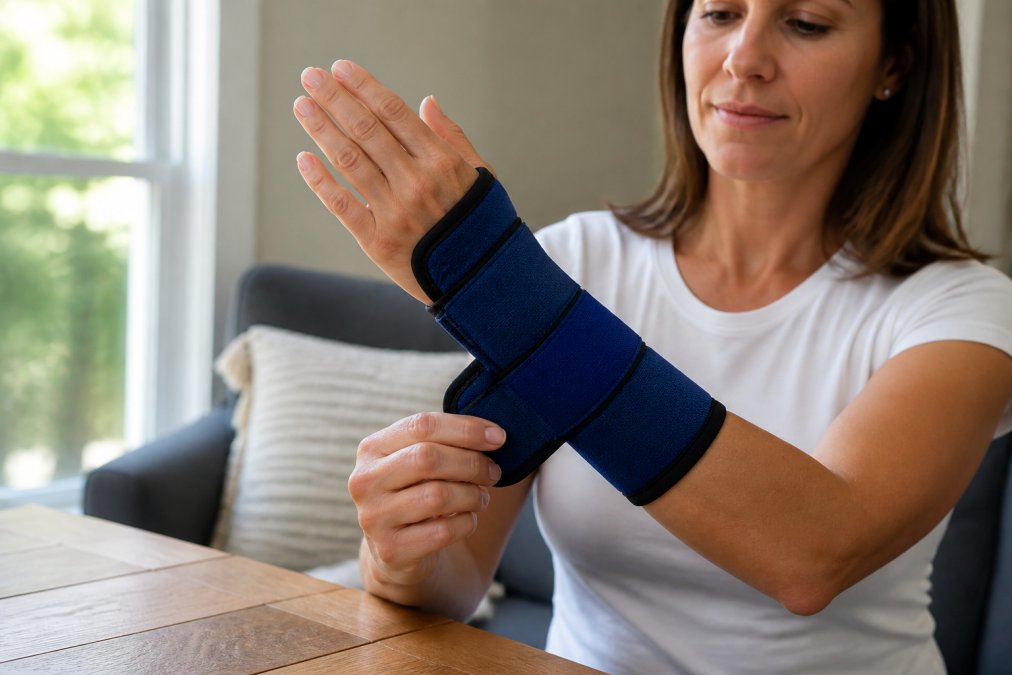
For wrist pain that flares with typing, lifting, or climbing, this pack delivers 360 degrees of cooling and compression in as fast as 1 to 2 minutes. It rolls on and stays on, so you keep working instead of holding an ice pack.
Penguin Fingers Cold Compression Gel Packs for Fingers and Toes
Built for the smallest, most stubborn joints: fingers and toes. The patent-pending, ultra-flexible material is one size fits all, latex free, and free of PVC, BPA/BPS, phthalates, formaldehyde, PFCs, and dioxins.
How Long to Wear Compression Sleeves for Swelling
The standard answer is 15 to 20 minutes at a time, with at least an hour of rest between sessions, long enough to cool the tissue and reduce swelling without risking skin or nerve damage from prolonged cold exposure.
A few practical rules:
- Never sleep in a cold compression sleeve
- Always place a thin layer of cloth between the gel and bare skin if the sleeve feels too cold
- Stop immediately if the area turns numb, white, or blotchy
- Alternate cold and heat once the acute swelling phase passes to support circulation
How to Store Reusable Ice Packs Properly
How to store reusable ice packs properly comes down to three things: keep them flat, clean, and in a consistent freezer spot. A gel pack that freezes in a lump won't conform to your joint, and one stored against raw food can pick up odors and bacteria.
- Wipe the sleeve with a damp cloth after each use, then dry it fully
- Lay it flat in the freezer so the gel freezes in an even layer
- Store it in a sealed bag to keep it clean and odor-free
- Keep it away from sharp edges that can puncture the gel
- Check for leaks or cracks before each use and replace if damaged
- Never microwave a pack that's still frozen solid; thaw slightly first
Safety and Contraindications for Cold Compression Therapy
Cold compression is safe for most people, but not everyone. Knowing the contraindications protects you from turning a helpful therapy into a harmful one.
Absolute contraindications, do not use cold compression:
- Deep vein thrombosis (DVT) or suspected DVT: Compression can dislodge a clot. Sudden swelling in one leg, especially with pain, warmth, or redness, is a medical emergency, not a self-care situation.
- Peripheral artery disease or severe vascular disease: Cold further reduces blood flow to tissue that is already underperfused.
- Raynaud's phenomenon: Cold can trigger painful vasospasms in the fingers and toes.
- Cold hypersensitivity or cold urticaria: Rare, but a genuine allergy to cold exists and can cause hives or worse.
- Over an open wound, incision, or active skin infection: Cold and compression can delay healing and trap bacteria against the skin.
Relative contraindications, check with a clinician first:
- Diabetes with peripheral neuropathy: Reduced sensation means you may not feel a cold injury developing. If you have neuropathy, use shorter sessions and check the skin before and after.
- Impaired circulation from any cause: Cold slows blood flow further.
- Compromised skin integrity or fragile skin: Friction and pressure can cause breakdown.
- Sickle cell disease: Cold can trigger vaso-occlusive crises in some patients.
- Hypertension or heart conditions: Cold can cause a temporary rise in blood pressure; discuss with your doctor if you use cold therapy frequently.
Signs to stop immediately:
- Numbness, tingling, or a pins-and-needles sensation
- Skin turning white, blue, gray, or blotchy
- Pain that worsens rather than improves
- A burning sensation under the sleeve
Conclusion: Choosing the Right KT Tape Alternative
The right KT Tape alternative for swelling matches the joint you're treating. Tape supports a joint but does little for fluid. A wearable cold compression sleeve applies the cold and pressure that actually reduce edema, hands-free.
Frequently Asked Questions
What can be used instead of KT Tape for swelling?
Wearable cold compression therapy sleeves are an effective alternative. Unlike KT Tape, which provides structural support, these sleeves deliver targeted cold and compression to reduce edema. The Penguin Fingers Wrist Cold Compression Pack, for example, offers simultaneous cooling and compression for aching wrists. For fingers and toes, the Cold Compression Gel Packs provide immediate relief. These options are reusable and can be more comfortable for prolonged use.
Do compression sleeves work better than kinesiology tape for edema?
Compression sleeves often work better for edema because they apply consistent, gentle pressure and cold therapy simultaneously. KT Tape is designed for muscle support and proprioception, not fluid drainage. A cold compression sleeve directly targets swelling by constricting blood vessels and reducing inflammation. The Penguin Fingers Elbow and Foot Sleeve, for instance, is designed to wrap around joints to minimize swelling from sprains and strains, offering a more direct approach to managing edema.
Is cold compression therapy more effective than taping for joint inflammation?
For joint inflammation, cold compression therapy is frequently more effective. Cold reduces blood flow to the area, which decreases swelling and numbs pain. Compression helps limit fluid buildup. KT Tape may offer mild support but does not actively reduce inflammation. A product like the Penguin Fingers Knee Cold Compression Therapy Sleeve can be frozen and worn to help relieve pain and inflammation while improving blood flow for faster recovery.
How long should I wear a compression sleeve for swelling?
The duration depends on the severity of swelling and your healthcare provider's advice. Many practitioners suggest wearing a cold compression sleeve for 15 to 20 minutes at a time, several times a day. The Penguin Fingers Wrist Cold Compression Pack is designed for quick relief, providing 360 degrees of cooling in 1 to 2 minutes. Always follow the product instructions and monitor your skin for any irritation.
What is the best way to store reusable ice packs properly?
Store reusable ice packs in the freezer, ideally in a flat position so the gel freezes evenly. Keep them in a plastic bag or container to prevent them from picking up odors. Before use, check for any leaks or damage. The Penguin Fingers cold compression sleeves can be kept in the freezer for instant cold therapy or warmed in the microwave for heat therapy. Proper storage ensures they are ready when you need them.
If recurring swelling has you cycling through disposable tape and melting ice packs, Penguin Fingers offers a more practical path. Our cold compression sleeves deliver targeted cooling and gentle pressure to knees, elbows, wrists, fingers, and toes, with dual hot and cold options so one product covers both phases of recovery. Get started with Penguin Fingers and give your joints the consistent, wearable relief they've been missing.


