

Table of Contents
- What You'll Need to Manage Gout Pain at Home
- Step 1: Act Fast When a Gout Flare-Up Starts
- Step 2: Ease the Pain With Medication and Topical Relief
- Step 3: Adjust Your Gout Diet Plan to Lower Uric Acid
- Step 4: Understand Gout Flare-Up Duration and What to Expect
- Step 5: Sleep and Work Adjustments for Gout Pain
- Step 6: When to See a Doctor for Gout Pain
- Frequently Asked Questions
Last Updated: September 26, 2026
What You'll Need to Manage Gout Pain at Home
Gout pain hits fast: one morning your big toe feels fine, by night it's red, hot, and too sore to touch a bedsheet. Learning how to manage gout pain starts with having the right tools ready before the next flare.
- A cold compression sleeve or gel pack that fits the joint
- A towel to protect your skin from direct cold
- Over-the-counter anti-inflammatory medicine, if your doctor approves
- Water, and plenty of it
- A pillow to prop up the sore limb
Step 1: Act Fast When a Gout Flare-Up Starts
Speed matters more than anything else. The sooner you cool the joint and start treatment, the shorter and milder the attack tends to be. Most people wait a day to see if it passes, the biggest mistake. Act at the first sign: a dull ache, warmth, or that familiar tingle in the toe.
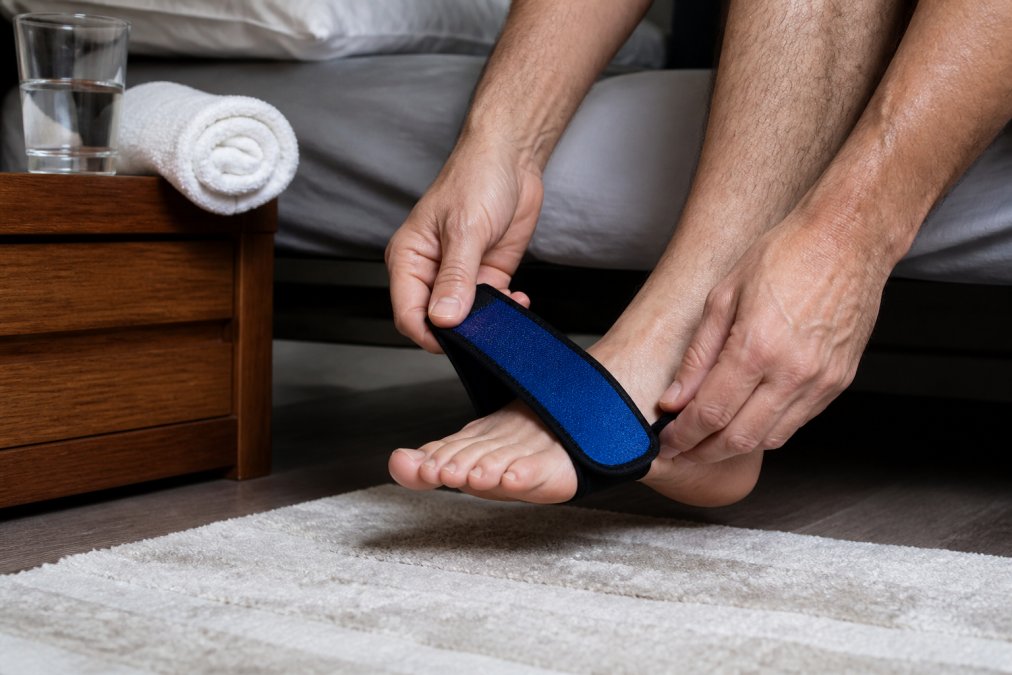
Your First 24 Hours: A Step-by-Step Flare Plan
Here is what the first day should actually look like, hour by hour.
Hydration: More Than 'Drink Water'
Uric acid leaves the body mainly through the kidneys. When you are dehydrated, urine is more concentrated and the kidneys clear uric acid less efficiently. During a flare, the goal is steady, spread-out intake, not chugging a gallon at once.
A practical approach:
- Aim for roughly 8 to 16 cups (about 2 to 4 liters) of fluid per day during a flare, unless your doctor has told you to limit fluids because of heart or kidney disease.
- Spread it across the day. A glass every hour you are awake beats three large glasses at night.
- Water is the default. Low-fat milk and coffee in moderation are fine. Sugary sodas and fruit juice are not, fructose raises uric acid.
- Watch your urine color. Pale yellow suggests good hydration; dark amber means drink more.
- If you sweat heavily or are recovering from illness, replace some water with an electrolyte drink. Plain water is fine for most people.
Ergonomic Adjustments for Sleep and Daily Tasks
A sore joint changes how you sit, sleep, and move. Small setup changes protect the joint and speed recovery.
For sleep:
- Keep the sore foot or hand outside the blanket, or use only a light sheet. Friction from bedding is a common trigger for nighttime pain.
- Prop the limb on a pillow so it sits above heart level. This reduces swelling overnight.
- Keep a cold sleeve, water, and your medication within arm's reach so a 3 a.m. flare does not require getting up.
For walking and footwear:
- If your big toe or ankle is affected, avoid tight shoes. A stiff-soled shoe or open sandal reduces bending at the inflamed joint.
- Use a cane or crutch on the opposite side to take weight off the affected foot.
- Do not push through the pain to 'walk it off.' That prolongs the flare.
For hands and wrists:
- Take breaks from typing or gripping every 30 minutes.
- Use a wrist rest and keep your hands relaxed rather than clenched.
- Switch to larger-grip tools and pens if your fingers are swollen.
What to Skip During a Flare
- Alcohol, especially beer, it raises uric acid and slows clearance.
- Sugary drinks and high-fructose foods.
- Crash diets or fasting, both can spike uric acid and worsen a flare.
- Vigorous exercise or stretching of the affected joint.
- Heat on the acutely swollen joint during the peak.
Step 2: Ease the Pain With Medication and Topical Relief
Medicine does the heavy lifting during a flare. Cold therapy calms the surface, but anti-inflammatory drugs tackle the swelling underneath. The key is matching the right drug to the right moment, and starting fast.
Over-the-Counter NSAIDs: The First Line
Nonsteroidal anti-inflammatory drugs (NSAIDs) block the enzymes (COX-1 and COX-2) that produce prostaglandins, the chemicals driving pain and swelling. That is why they work on both symptoms at once, unlike acetaminophen, which mainly dulls pain.
-
Ibuprofen (Advil, Motrin): Often taken at 400-600 mg every 6 to 8 hours with food. Do not exceed 3,200 mg per day without a doctor's direction.
-
Naproxen sodium (Aleve): Often taken at 440-550 mg to start, then 220-275 mg every 8 to 12 hours. Its longer half-life means fewer doses per day.
-
Aspirin: Generally avoided during a gout flare because it can raise uric acid levels at typical pain-relief doses.
-
Ask your doctor before starting any NSAID, especially if you have heart, kidney, or stomach issues, or take blood thinners.
-
Take NSAIDs with food or milk to protect your stomach lining.
-
Follow the label dose exactly. More is not faster.
-
Do not stack two NSAIDs (for example, ibuprofen plus naproxen). That raises side-effect risk without adding relief.
Prescription Options When OTC Isn't Enough
If over-the-counter options aren't enough, doctors reach for stronger, gout-specific tools. Each works differently, and timing changes the outcome.
- Colchicine (Colcrys, Mitigare): Works by calming the immune cells that react to urate crystals. It is most effective when started within the first 12 to 24 hours of a flare. Common flare regimens use a low dose, often 1.2 mg to start, then 0.6 mg about an hour later, because higher doses cause more diarrhea and nausea without working better. Tell your doctor about any kidney or liver problems, since dosing changes.
- Corticosteroids (prednisone, or a joint injection): Bring down inflammation fast when NSAIDs and colchicine are not an option, such as with kidney disease. Oral prednisone is usually tapered over several days rather than stopped abruptly. A doctor may also inject a steroid directly into the joint for rapid, targeted relief.
- IL-1 inhibitors (such as anakinra): Reserved for people who cannot take standard drugs. These are specialty medications, not first-line.
A First-24-Hours Medication Checklist
Flares treated in the first day are shorter and milder. Here is a simple sequence to discuss with your doctor in advance so you are not deciding mid-flare:
- Hour 0-2: At the first tingle or ache, take your agreed-on NSAID or colchicine dose with food.
- Hour 2-6: Add cold compression (see Step 1) and rest the joint.
- Hour 6-12: Stay ahead of the pain, do not wait for it to peak before the next dose.
- Hour 12-24: Keep fluids up, avoid alcohol, and note what helped so you can repeat it next time.
Topical Relief and What to Avoid
Topical products can add comfort between doses. Cooling gels and menthol rubs numb the surface. Some people find topical capsaicin helpful once the worst swelling has passed, though it can sting at first.

Two cautions:
- Do not rub a sore joint hard. Gentle pressure only, friction can worsen inflammation.
- Skip topical heat on an acutely swollen joint. Heat can increase blood flow and swelling during the peak of a flare. Save warm compresses for the stiff, achy phase between attacks.
Step 3: Adjust Your Gout Diet Plan to Lower Uric Acid
A gout diet plan won't stop a flare overnight, but it lowers the uric acid that fuels them over time. The goal: eat fewer purines and help your kidneys flush uric acid out.
- Red meat and organ meats
- Shellfish and some seafood
- Sugary drinks and fructose
- Alcohol, especially beer
Add more of:
- Water, as your main drink
- Low-fat dairy
- Vegetables and whole grains
- Coffee, in moderation
Step 4: Understand Gout Flare-Up Duration and What to Expect
Gout flare-up duration usually runs from a few days to about two weeks. Treated early, most attacks ease within a week. Untreated, they drag on longer and hurt more.
Here's the timeline most people see:
| Phase | Typical Timing | What Happens |
|---|---|---|
| First twinge | Hours before | Dull ache, warmth, tingling |
| Peak pain | 12-24 hours in | Severe pain, redness, swelling |
| Easing | 3-10 days | Pain fades, swelling drops |
| Between flares | Weeks to years | No symptoms at all |
Step 5: Sleep and Work Adjustments for Gout Pain
A sore joint wrecks your sleep, and poor sleep makes pain feel worse. Small setup changes protect the joint and help you rest.
For sleep:
- Keep the sore foot or hand outside the blanket, or use a light sheet
- Prop the limb on a pillow to reduce swelling
- Keep a cold sleeve and water by the bed for night flares
For work:
- Take breaks from typing or gripping every 30 minutes
- Use a wrist rest and keep your hands relaxed
- Elevate a foot on a stool if your toe or ankle is affected
- Keep a cold compression sleeve at your desk for quick relief
Step 6: When to See a Doctor for Gout Pain
Call your doctor if this is your first attack, if pain is severe, or if you have a fever. A fever with a hot, swollen joint can signal an infection, which needs urgent care.

See a doctor or rheumatologist if:
- Flares keep coming back
- Over-the-counter medicine doesn't help
- You have kidney problems or take diuretics
- Joints stay stiff or swollen between attacks
Frequently Asked Questions
What is the fastest way to relieve gout pain at home?
Start with cold compression therapy and an over-the-counter anti-inflammatory like ibuprofen or naproxen. Cold compression therapy for gout reduces swelling and numbs the joint. Wrap a cold compression sleeve around the affected toe or finger for 15-20 minutes several times a day. Elevate the joint and drink plenty of water. If pain doesn't improve within 48 hours, call your doctor.
How long does a gout flare-up usually last?
Gout flare-up duration varies, but most attacks peak within 24 hours and gradually improve over 3 to 10 days. Without treatment, some flares can last weeks. Early intervention with cold compression therapy, rest, and medication can shorten the duration and reduce intensity. If flares last longer than two weeks, see a rheumatologist to discuss uric acid-lowering therapy.
Can cold compression therapy help during a gout attack?
Yes. Cold compression therapy for gout can reduce swelling, numb pain, and calm joint inflammation. Use a wearable cold compression sleeve designed for fingers or toes, like Penguin Fingers' gel packs, for 15-20 minutes at a time. Avoid placing ice directly on the skin. Cold therapy is especially helpful in the first 48 hours of a flare.
What foods should I avoid on a gout diet plan?
A gout diet plan should limit purine-rich foods such as red meat, organ meats, shellfish, and sugary drinks. Alcohol, especially beer, can raise uric acid levels. Instead, eat vegetables, low-fat dairy, whole grains, and cherries. Staying hydrated with water helps flush uric acid. Work with your doctor or a dietitian to tailor a plan that fits your health needs.
Gout pain is brutal, but it doesn't have to run your life. Act fast at the first sign, cool the joint, treat the inflammation, and lower your uric acid for the long haul. For the cold-therapy step, Penguin Fingers makes wearable hot and cold compression sleeves for fingers, toes, elbows, and knees. They stay put, fit snugly, and go from freezer to joint in seconds. Get started with Penguin Fingers and keep relief within reach before the next flare.


