

Table of Contents
- What's Actually Causing Your Thumb Pain
- Compression Sleeve vs Splint for Thumb Pain: Key Differences
- Thumb Spica Splint Uses: When Immobilization Is the Right Call
- Choosing the Right Thumb Pain Support: Sleeves vs Splints by Situation
- How Long to Wear a Thumb Brace for Arthritis
- When to See a Doctor for Thumb Pain
- Conclusion
Last Updated: August 10, 2026
What's Actually Causing Your Thumb Pain
Most people treating thumb pain are treating the wrong thing. A compression sleeve on an unstable joint won't help. A rigid splint on a mildly inflamed tendon may slow your recovery. Getting the diagnosis right is the first step toward picking the right support device.
A compression sleeve vs splint decision cannot be made intelligently without knowing whether your pain comes from joint degradation, tendon inflammation, or acute ligament injury. Each condition responds differently to immobilization and compression.
CMC Arthritis and Basal Joint Pain
CMC arthritis is osteoarthritis of the carpometacarpal joint at the base of your thumb. This is one of the most common joints affected by arthritis in adults over 50. The cartilage wears down over time, causing chronic inflammation, swelling, and deep aching pain that worsens during pinching and gripping.
The key characteristic is instability. The joint loses structural integrity, making thumb abduction and opposition movements painful and weak. Patients often describe a grinding sensation. This is why support devices that provide CMC joint stability are specifically designed around this anatomy.
According to American Academy of Orthopaedic Surgeons patient resources, basal joint arthritis is more common in women and typically presents after age 40, progressing gradually with repetitive hand use.
De Quervain's Tenosynovitis and Tendonitis
De Quervain's tenosynovitis is inflammation of the tendons on the thumb side of the wrist. It is a repetitive strain injury that develops from overuse rather than structural joint damage. The pain is sharp, located near the base of the thumb and lower wrist, and flares with specific movements like pinching or turning a key.
The joint itself is structurally intact. The problem is tendon inflammation and swelling within the tendon sheath. For tendonitis and De Quervain's, the goal is rest and swelling reduction. Immobilization limits aggravating movement, while cold compression therapy directly addresses edema management.

Compression Sleeve vs Splint for Thumb Pain: Key Differences
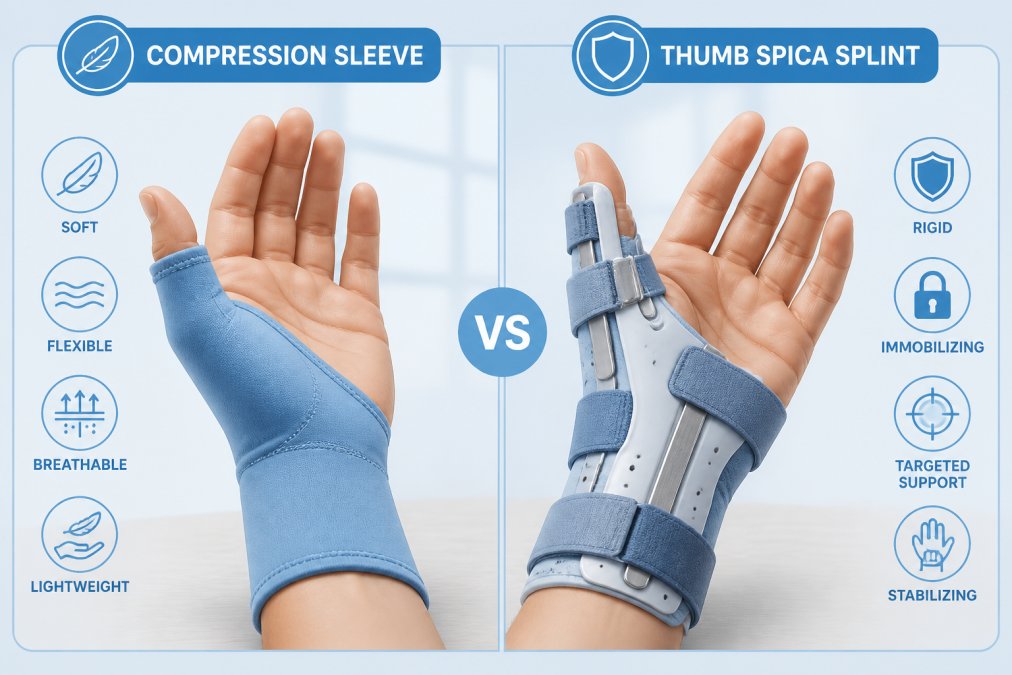
The core distinction between a compression sleeve and a splint comes down to mechanism. A compression sleeve provides mild compression, proprioception feedback, and warmth to promote circulation. A splint provides rigid support and immobilization, physically limiting joint range of motion.
| Feature | Compression Sleeve | Thumb Splint |
|---|---|---|
| Primary function | Mild compression, warmth, proprioception | Immobilization, rigid support |
| Mobility allowed | Near-full range of motion | Restricted thumb movement |
| Best for | Mild arthritis, tendonitis, activity support | Acute injury, post-surgical, severe instability |
| Material | Neoprene, spandex, breathable fabric | Flexible metal stays, rigid plastic, foam lining |
| Daytime use | Yes, during activity | Yes, but limits function |
| Nighttime use | Comfortable, less restrictive | Recommended for moderate-severe cases |
| Typical wear duration | Hours to all-day | Weeks to months |
How Compression Sleeves Work
A compression sleeve applies circumferential pressure to the thumb and surrounding wrist area. This mild compression reduces swelling by discouraging fluid accumulation, enhances proprioception by giving the nervous system better feedback about joint position, and provides warmth that improves tissue elasticity.
Many people with chronic inflammation develop subtle joint instability because their sensory feedback degrades over time. A compression sleeve helps recalibrate that feedback loop, which is why many arthritis patients report feeling more confident during hand-intensive tasks.
Compression sleeves work best for mild to moderate conditions. They are not appropriate when the joint needs actual mechanical stabilization. Neoprene and breathable fabric sleeves are most common, with ergonomic designs allowing full finger movement while maintaining consistent pressure at the thumb base.
How Thumb Splints Work
A thumb splint restricts movement through a rigid structural element, typically flexible metal stays, a molded plastic shell, or both. The goal is immobilization of the affected joint, allowing inflamed tissue to rest and heal without repeated aggravation.
The thumb spica splint immobilizes the thumb at the CMC and MCP joints while leaving the fingers and wrist free. Adjustable straps allow customizable fit, and breathable mesh materials have improved all-day comfort considerably.
Splints do restrict functional hand use. Pinching and gripping are significantly limited, which is why splinting protocol typically involves strategic wear time rather than continuous use throughout the day.
Thumb Spica Splint Uses: When Immobilization Is the Right Call
The thumb spica splint is the clinical standard for conditions requiring genuine joint immobilization. Uses include acute thumb sprains, gamekeeper's thumb, moderate to severe CMC arthritis flare-ups, De Quervain's tenosynovitis, and post-operative recovery following thumb or wrist surgery.
The defining feature is that it immobilizes the thumb through both the CMC and MCP joints while keeping the wrist and fingers mobile. This targeted approach allows patients to maintain some hand function while protecting injured structures.
A useful rule: if your pain is sharp, constant, and worsens with any thumb movement, you need immobilization. If your pain is dull, activity-dependent, and improves with rest, compression and cold therapy may be sufficient.
According to guidance from the American Society for Surgery of the Hand, immobilization is typically the first-line conservative treatment for De Quervain's tenosynovitis and acute thumb ligament injuries, with duration varying by severity and patient response.
Choosing the Right Thumb Pain Support: Sleeves vs Splints by Situation
Choosing between a sleeve and a splint is not a permanent decision. Many people with chronic thumb conditions use both at different times, switching based on activity demands and symptom severity.
Daytime vs Nighttime Usage Protocols
Daytime protocol: For most active adults, a compression sleeve is the practical daytime choice. It allows functional hand use while providing swelling reduction and joint fatigue management. A rigid splint during the day is appropriate when pain is severe, during high-risk activities, or in the acute phase of a new injury.
Nighttime protocol: Nighttime splinting is where splints earn their place for many arthritis and tendonitis patients. During sleep, the thumb can fall into awkward positions that maintain tension on inflamed tendons. A thumb spica splint worn at night keeps the thumb in a neutral, protected position, allowing tissue to rest fully. Many patients report significant morning pain reduction after consistent nighttime splinting.
The combination approach is often most effective: a compression sleeve during the day for activity support, a splint at night for rest and recovery.
Skin Health, Material Sensitivity, and Comfort
Prolonged wear of any orthopedic device creates skin health considerations. Neoprene retains heat well, which is beneficial for chronic inflammation but uncomfortable in warm environments. Breathable fabric blends, typically nylon and spandex combinations, reduce heat retention and are better suited for all-day wear.
Rigid splints with foam or fabric linings are generally more skin-friendly for long-term use, but metal stay edges can cause pressure points if fit is imprecise. Adjustable straps allow tension adjustment, which matters significantly over a full day of wear.
For users with latex sensitivity, verify material composition before purchasing. Modern breathable fabric sleeves typically use synthetic alternatives.
How Long to Wear a Thumb Brace for Arthritis
How long to wear a thumb brace for arthritis depends on severity, the type of support being used, and whether wear is daytime, nighttime, or both.
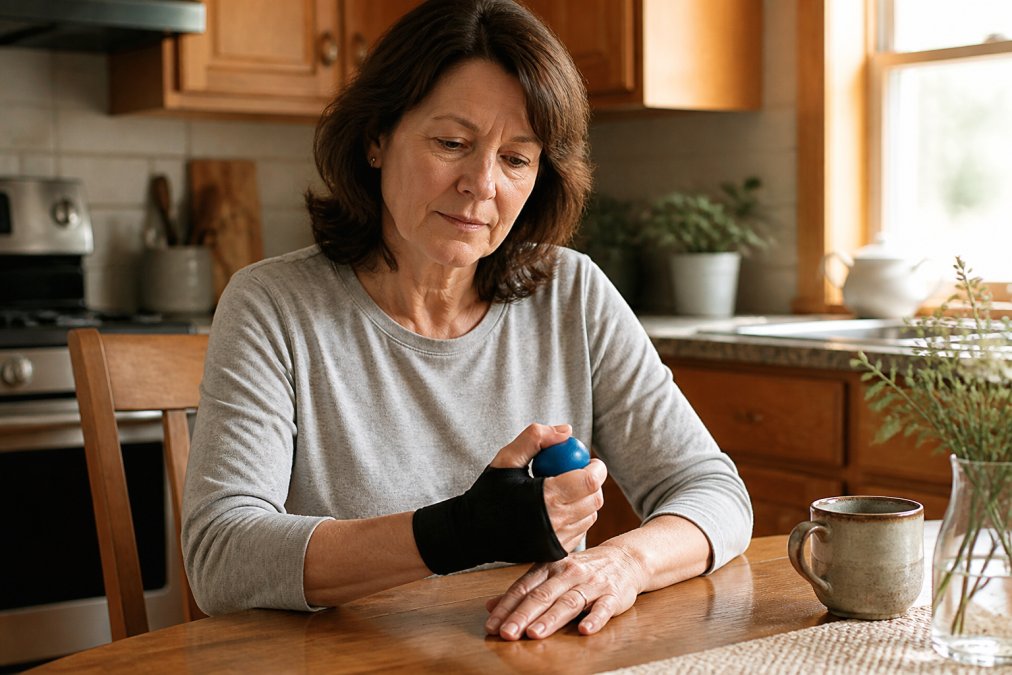
For mild CMC arthritis, many patients wear a compression sleeve during activities that aggravate symptoms and remove it during rest. For moderate arthritis, consistent daytime wear combined with nighttime splinting is common.
For De Quervain's tenosynovitis, the standard conservative approach involves continuous splinting during the acute phase, typically two to six weeks, followed by gradual return to activity with compression support during higher-demand tasks.
The goal is to manage symptoms long enough to preserve joint mobility and muscle strength. Getting this balance right usually requires professional guidance.
| Condition | Recommended Wear Type | Typical Duration |
|---|---|---|
| Mild CMC arthritis | Compression sleeve during activity | As needed, ongoing |
| Moderate CMC arthritis | Sleeve (day) + splint (night) | Weeks to months |
| De Quervain's acute phase | Rigid splint, near-continuous | 2-6 weeks |
| Thumb sprain recovery | Splint during activity | 4-8 weeks |
| Post-surgical recovery | Per provider protocol | 6-12 weeks |
Functional Testing: Knowing When to Reduce Wear Time
The goal of any support device is to reduce dependence on it over time. Functional testing gives you objective checkpoints to assess progress and decide when to step down from a splint to a sleeve.
Three simple tests to assess readiness:
- Pinch test: Can you pinch a small object between thumb and index finger without sharp pain?
- Opposition test: Can you touch your thumb tip to each fingertip in sequence without catching or sharp discomfort?
- Sustained grip: Can you hold a cup or grip a doorknob for 30 seconds without pain flaring?
Passing all three consistently across two to three days suggests you are ready to reduce support wear time.
Integration with Physical Therapy
Support devices work best as part of a broader recovery plan. Physical therapy for thumb arthritis and tendonitis focuses on strengthening intrinsic hand muscles, restoring range of motion, and teaching activity modification to reduce aggravating forces on the joint.
A common mistake is using a splint as a substitute for therapy rather than a complement. Immobilization reduces pain short-term but does nothing to address muscular weakness and movement patterns that contributed to the problem. Physical therapists often use a progressive protocol: full immobilization initially, then transition to a compression sleeve during therapy exercises, then weaning off support as strength improves.
According to clinical guidelines from the American Occupational Therapy Association, hand therapy combined with orthotic splinting produces better functional outcomes for CMC arthritis than either intervention alone.
The Penguin Fingers Cold Compression Gel Packs for Fingers and Toes pair naturally with a therapy program. Cold compression therapy applied after exercise sessions reduces post-activity inflammation and supports the recovery window between therapy appointments.

When to See a Doctor for Thumb Pain
Knowing when to see a doctor for thumb pain is as important as knowing which device to use. Self-managed support is appropriate for mild, chronic conditions that respond predictably to rest and compression.
See a doctor or hand specialist if:
- Pain is sudden, severe, and followed a specific injury or impact
- The thumb appears visibly deformed, swollen disproportionately, or bruised
- You have numbness or tingling extending into the fingers or wrist
- Pain does not improve after two to three weeks of consistent conservative management
- You have already tried a splinting protocol and symptoms are worsening
- You are post-operative and experiencing unexpected pain, swelling, or limited movement
A hand surgeon or occupational therapist can confirm the diagnosis, rule out fractures or ligament tears, and provide a formal splinting protocol. For CMC arthritis specifically, imaging can confirm the degree of joint space narrowing and guide decisions about whether conservative management is sufficient.
The Penguin Fingers Finger Splint Wrap is designed for mild to moderate conditions where the diagnosis is already established. For anyone uncertain about what is causing their thumb pain, professional assessment should come first.
Many people delay seeing a doctor because their pain feels manageable. The risk is that undertreated instability and chronic inflammation accelerate joint damage over time.
Thumb pain is one of those conditions where the wrong support can feel like progress while the underlying problem worsens. Penguin Fingers offers targeted cold compression therapy through the Cold Compression Gel Packs for Fingers and Toes, which address the inflammation component that fabric sleeves and rigid splints alone cannot manage. For mild to moderate conditions, the Penguin Fingers Finger Splint Wrap provides wearable support designed for everyday use. Start with the right diagnosis, match the support to the condition, and use cold compression therapy to stay ahead of inflammation between activity sessions.
Frequently Asked Questions
Is a splint better than a sleeve for CMC arthritis?
For CMC arthritis, the right choice depends on your symptom severity. A compression sleeve works well for mild to moderate pain during daily activities, it reduces swelling, improves proprioception, and maintains some range of motion. A thumb spica splint is the better option when joint instability or sharp pain during pinching makes a sleeve insufficient. Many people with CMC arthritis use both: a splint during flare-ups or at night, and a compression sleeve for daytime activity support.
Can compression sleeves help with thumb tendonitis?
Yes. For tendonitis conditions like De Quervain's tenosynovitis, a compression sleeve reduces swelling and provides mild joint support during low-impact tasks such as typing or light gripping. It won't fully immobilize the thumb, which is sometimes necessary in acute cases, but it does ease repetitive strain injury symptoms and supports functional recovery. If pain is severe or worsens with activity, a thumb spica splint offers more rigid support and is often recommended by occupational therapists.
When should you avoid wearing a compression sleeve?
Avoid wearing a compression sleeve if you have open wounds, active skin infections, or significant circulatory problems in your hand. People with severe neuropathy should also check with a physician first, since reduced sensation makes it harder to detect if the sleeve is too tight. If your thumb pain follows a fracture, ligament tear, or recent surgery, a rigid splint or medical-grade brace is more appropriate. A sleeve that causes numbness, increased swelling, or skin irritation should be removed immediately.
How do I know if I need a rigid thumb splint?
You likely need a rigid thumb splint if your pain is severe during basic tasks like opening jars or turning keys, if a soft sleeve provides no noticeable relief, or if a doctor has diagnosed significant joint instability, a ligament injury, or moderate-to-severe CMC arthritis. Thumb spica splints with flexible metal stays or a contoured insert are designed for these situations. If you're unsure, an occupational therapist can assess your joint stability and recommend the right level of immobilization for your specific condition.
What type of brace is best for thumb pain from typing or computer use?
Office workers and computer users typically do best with a low-profile compression sleeve that allows enough range of motion for typing while reducing joint fatigue and swelling. Look for breathable fabric like neoprene or a nylon-spandex blend that stays comfortable during extended wear. If your pain is concentrated at the base of the thumb, common with repetitive strain injury, a sleeve with added wrist stabilization can help. Cold compression therapy after long work sessions also helps manage chronic inflammation effectively.
This article was written using GrandRanker


