

Table of Contents
- Why Rock Climbers Get Wrist Pain After Rock Climbing
- Cold Therapy for Rock Climber Wrists: The Step-by-Step Protocol
- Ice or Heat for Wrist Tendonitis: Which One to Use
- Cold Compression for Wrist Pain: Why Compression Matters
- Cold Therapy vs. Palm Cooling: Two Different Jobs
- Rest, Splinting, and Other Recovery Options for Climbers
- When to Stop Icing and See a Medical Professional
- Frequently Asked Questions
Last Updated: October 17, 2026
Why Rock Climbers Get Wrist Pain After Rock Climbing
Cold therapy for rock climber wrists works best when you understand why the pain shows up in the first place.
The wrist is a small joint doing an outsized job. Every crimp, pinch, and sloper loads the wrist through the tendons and ligaments that connect your hand to your forearm.
Three things drive most wrist pain after rock climbing:
- Volume without ramp-up. You climb hard after a rest week and the tissue isn't ready.
- Grip-heavy sessions. Crimps and pinches load the wrist far more than open-hand holds.
- Repetition. Overuse injuries build slowly, then show up all at once.
A common mistake is treating wrist pain as a grip problem. It's usually a load-management problem.
Overuse, Grip, and the Wrist Joint
Overuse injuries happen when load exceeds recovery. The tendons and ligaments around the wrist adapt to stress, but only if you give them time.
Grip position matters too. A full crimp forces the wrist into extreme extension.
Many climbers find that a simple fix helps: rotate hold types within a session. Mix open-hand and half-crimp work instead of maxing out on crimps.
TFCC Injury in Climbers: What It Is and Why It Happens
The TFCC, or triangular fibrocartilage complex, is a small cushion of cartilage and ligament on the pinky side of the wrist. It stabilizes the joint and absorbs load during gripping and rotation.
Climbers load the TFCC hard during slopers and underclings. A TFCC injury in climbers usually shows up as pain on the ulnar side, worse with rotation or weight-bearing.
Cold Therapy for Rock Climber Wrists: The Step-by-Step Protocol
Cold therapy is the use of cold application to reduce pain, swelling, and inflammation in an injured area.
Here's the protocol we recommend. It takes about 20 minutes and needs no special training.
Step 1: Decide Whether Cold Is Appropriate
Cold is best for a wrist that is swollen, hot, or newly irritated after climbing. It is not the right tool for every wrist ache. Skip cold and seek clinical advice if you have any of the following:
- Numbness, tingling, or weakness in the hand or fingers
- A cold, pale, or bluish hand after icing, which can signal poor circulation
- Known circulation problems such as Raynaud's phenomenon, which cold can aggravate
Cold therapy is a symptom-management tool. It does not diagnose or heal a TFCC tear, a ligament sprain, or a tendon injury. If the wrist is not improving after a few days of rest and cold, the next step is an assessment, not more ice.
Step 2: Prep the Wrist and Protect the Skin
Check the skin first. Dry it, and look for cuts, numbness, or areas that feel raw. Never apply cold directly to broken skin.
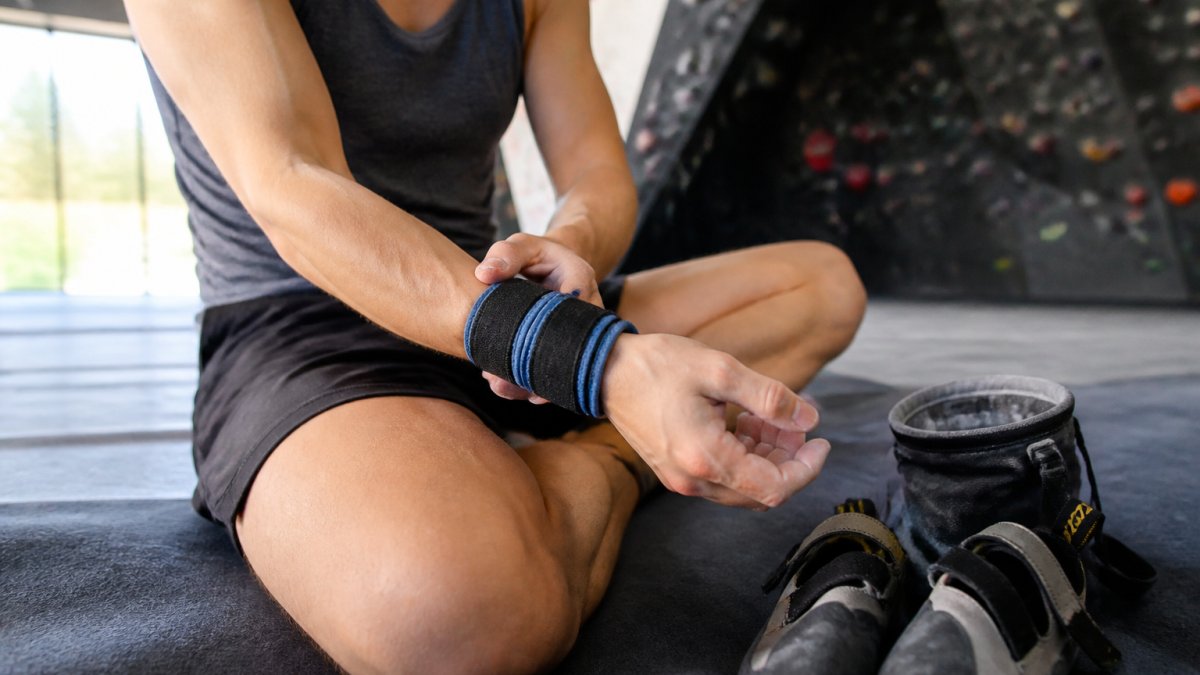
Wrap a thin layer of cloth between the cold pack and your wrist if you're using a bare gel pack. Our Penguin Fingers Wrist Cold Compression Pack delivers simultaneous cooling and compression effects to the affected area.

Keep the cold source off bony prominences like the ulnar styloid (the bump on the pinky side) and the back of the wrist where the skin is thin. Those spots are the first to suffer cold injury.
Step 3: Apply Cold for 15-20 Minutes
Set a timer. Fifteen to 20 minutes is the standard window for cold therapy. Longer doesn't help and can irritate the skin.
You should feel cold, then aching, then numbness. General guidance from the Cleveland Clinic on cold therapy safety advises keeping sessions short and never applying ice to numb skin.
For a fresh sprain or a hot, swollen flare-up, apply cold within the first 24 to 48 hours. For routine post-session recovery, one session after climbing is usually enough.
Step 4: Re-Warm and Repeat Safely
Take the pack off and let the wrist return to normal temperature before you do anything else. Wait at least an hour before the next session. Check the skin between sessions for redness that does not fade, blistering, or numbness that lingers.
Repeat two to three times a day during a flare-up. For daily training recovery, once after a session is usually enough. Do not stack cold sessions back-to-back to "catch up" on recovery.
Cold Therapy vs. Palm Cooling: Keep the Two Separate
Climbers increasingly hear about palm cooling for performance. That is a different tool with a different job. Palm cooling targets heat exchange through the palm to manage core temperature and fatigue during hard effort. Cold therapy on the wrist is a recovery treatment for irritated tissue after the session. Do not substitute one for the other: icing your palm during a project will not treat a sore wrist, and palm cooling after climbing will not calm an inflamed TFCC.
What Cold Can and Cannot Do
Cold can reduce pain and limit swelling in the early phase of an injury. It cannot repair a torn ligament, rebuild tendon capacity, or correct the load-management problem that caused the pain. Feeling better after icing does not mean the wrist is healed. Use pain relief as a window to rest and modify load, not as permission to climb hard again.
Ice or Heat for Wrist Tendonitis: Which One to Use
Use ice for wrist tendonitis when the wrist is swollen, hot, or newly irritated. Use heat when the wrist is stiff and achy but not inflamed, typically before activity.
The rule is simpler than most guides make it:
| Situation | Use | Why |
|---|---|---|
| Swelling or sharp pain after climbing | Cold therapy | Calms inflammation and numbs pain |
| Stiff, achy wrist before a session | Heat | Loosens tissue and improves mobility |
| Chronic tendonitis with no swelling | Heat before, cold after | Warm up to move, cool down to recover |
| Fresh sprain or strain | Cold only | Heat can worsen swelling early on |
A common mistake is reaching for heat on a hot, swollen wrist. That can make the inflammation worse.
Penguin Fingers Wrist Cold Compression Pack →
Cold Compression for Wrist Pain: Why Compression Matters
Cold compression for wrist pain combines two effects at once. Cold reduces pain and swelling. Compression limits fluid buildup and holds the pack steady against the joint.
The combination matters because ice alone doesn't address swelling the way compression does. Together, they do more than either one on its own.
The Penguin Fingers wrist pack is built for this. It provides 360 degrees of cooling and compression effects in as fast as one to two minutes, and it's free from PVC, BPA, phthalates, PFC, DEGE, EGBE, DEHP, or dioxins.
Cold Therapy vs. Palm Cooling: Two Different Jobs
Cold therapy and palm cooling are not the same thing. Cold therapy treats an injured wrist.
Palm cooling works through special surfaces on the palm that help dump heat during hard effort.
Cold therapy is a recovery tool. It goes on the sore wrist after the session, not on the palm during it.
If your goal is pain relief and swelling control, use cold therapy.
Rest, Splinting, and Other Recovery Options for Climbers
Rest and activity modification come first. Cut your climbing volume and avoid the hold types that hurt.
Splinting or a wrist brace can help during flare-ups. Wear it for daily tasks, not for climbing.
Anti-inflammatory medication can ease pain and swelling short term. Follow the label and talk to a pharmacist or doctor before regular use.
Physical therapy is the step most climbers skip.
When to Stop Icing and See a Medical Professional
Stop icing and see a doctor if pain doesn't improve after a few days of rest and cold therapy. Also get checked if you have:
- Numbness, tingling, or weakness in the hand
- Swelling that gets worse instead of better
- Pain that wakes you at night
Recovery timelines vary. Minor strains often settle in one to two weeks. Tendon and ligament injuries can take four to six weeks or longer, and TFCC problems sometimes need imaging and specialist care.
The American Academy of Orthopaedic Surgeons on wrist sprains notes that persistent wrist pain after injury deserves a proper evaluation rather than continued self-treatment.
Return-to-Climbing Decision Criteria
Cold therapy is only one part of recovery. The bigger question is when and how to climb again. Use symptoms, not the calendar, to guide the decision.
You can begin light, modified climbing when:
- Pain at rest is gone or minimal
- Daily tasks like typing, opening jars, and carrying groceries are pain-free
- The wrist does not swell after normal use
Modify the session when:
- Pain appears during climbing but settles within an hour
- The wrist feels stiff rather than sharp
- Only certain hold types provoke symptoms
In that case, cut volume by roughly half, avoid the hold types that hurt (often full crimps and slopers), and keep sessions short. Use open-hand and half-crimp holds where possible, and stop the session if pain climbs above a mild ache.
Stop climbing and get assessed when:
- Pain worsens during a session and does not settle
- Swelling returns after every session
- You feel catching, clicking, or giving-way
Injury-Specific Nuance
Different wrist problems behave differently, and cold therapy is not equally useful for all of them.
- TFCC irritation often shows up as ulnar-sided pain worse with rotation and weight-bearing. It tends to linger and may need bracing and a longer de-load. Cold helps calm flare-ups but will not fix the underlying load problem.
- Tendon pain (for example, on the thumb side) often responds to gradual loading rather than rest alone. Cold can manage post-session soreness, but complete rest can make tendons more sensitive over time.
- A fresh sprain or strain benefits most from early cold, compression, and relative rest before progressive loading.
Cold Therapy in Context
Cold therapy sits alongside rest, bracing, movement, rehabilitation, and professional care, not above them. A short de-load week, a wrist brace for daily tasks, and a structured rehab plan from a physical therapist often do more for a recurring wrist issue than any single recovery tool. Use cold to manage symptoms while the real work, load management and tissue adaptation, happens.
Frequently Asked Questions
How long should you ice a climber's wrist?
Apply cold for 15-20 minutes at a time, then let the skin return to normal temperature before reapplying. A wearable cold compression pack like the Penguin Fingers Wrist Cold Compression Pack delivers 360 degrees of cooling effects in as fast as 1-2 minutes. Never ice directly on bare skin, and never leave a cold pack on while you sleep. If the wrist feels numb or the skin turns bright red or white, stop and let it warm up.
Is ice or heat better for wrist tendonitis from climbing?
Use ice in the first 48-72 hours after a flare-up or a hard session, when swelling and sharp pain are the main problem. Heat is better for stiff, achy wrists before you climb or during a warm-up, because it loosens tissue. For chronic tendonitis, many climbers alternate the two. Ice after climbing, heat before. If the wrist is hot, swollen, or painful to touch, stay with cold therapy only.
Can cold therapy help a TFCC injury in climbers?
Cold therapy can ease pain and swelling after a TFCC (triangular fibrocartilage complex) strain, but it does not repair the tissue. Use it for 15-20 minutes after climbing or when the wrist flares, pair it with a wrist brace and rest, and avoid heavy crimping and slopers while it heals. TFCC injuries often take 4-6 weeks or longer to settle. If you feel a sharp pain on the pinky side of the wrist with clicking or weakness, get it checked before you keep climbing.
Can I keep climbing with wrist pain?
Mild soreness that fades within a day is usually fine to climb through with a warm-up and a brace. Stop and rest if the pain is sharp, wakes you at night, or gets worse each session. Cut back to easier grades, skip crimps and slopers, and take a de-load week. If pain lasts more than 4-6 weeks or you lose grip strength, see a medical professional before returning to hard climbing.
Wrist pain after climbing is frustrating, and guessing at recovery wastes weeks. Penguin Fingers makes wearable cold compression packs built for joints like yours, so you can ice the wrist properly without balancing a bag of frozen peas. Our wrist pack combines 360-degree cooling with steady compression, uses safe materials for daily use, and works as part of a simple rest-and-recovery routine. Get started with Penguin Fingers and give your wrists the recovery they've earned.


