

Quick Summary
For most acute gout flares, cold therapy is the better first choice than heat, because cold can help ease pain and swelling in the affected joint. Apply a cloth-wrapped cold pack for 10 to 15 minutes at a time, and use it alongside your prescribed gout medication rather than in place of it. Cold helps with gout pain relief symptoms but does not treat the underlying cause.
- Cold is usually the better first choice during an acute flare, while heat may feel worse for some people.
- Apply a cold pack wrapped in a thin, dry cloth for 10 to 15 minutes, and never place ice directly on skin.
- Check the skin at minute 5 for redness, pale patches or numbness, and remove the pack if any appear.
- Let the skin return to normal before reapplying, and repeat every 2 to 3 hours during the worst of the flare.
- Keep taking prescribed medication as directed, and contact your doctor for severe pain, fever or no improvement within a few days.
Table of Contents
- Hot or Cold Compress for Gout: Which Works Better During a Flare?
- How Cold Therapy Eases Gout Pain and Swelling
- Step-by-Step: How to Apply a Cold Compress to a Gouty Joint
- Does Ice Help Gout in the Foot? Application for Toes and Ankles
- How to Stop Gout Pain at Night Without Disturbing Sleep
- Immediate Gout Pain Relief: Cold Therapy Alongside Your Medication
- Scheduling Your Next Cold Compress Session and When to Call Your Doctor
- Frequently Asked Questions
Hot or Cold Compress for Gout: Which Works Better During a Flare?
Last Updated: November 18, 2026
If you are searching for cold therapy for gout pain relief, the short answer is that cold is usually the better first choice during an acute flare. Cold application can help ease pain and swelling in the affected joint, while heat may make inflammation feel worse for some people. A 2025 study report found that cold fomentation reduced pain intensity on a visual analog scale by 68% by day 5 compared with hot fomentation, although the supplied summary did not include the sample size (Rheum-Live report on cold therapy during gout flares).
At Penguin Fingers, we offer wearable cold compression sleeves and wraps for joints such as toes, feet and ankles. This guide walks through how cold therapy works, how to apply it safely, and where it fits alongside your medication.
A more recent PubMed Central study on local heat and massage in gouty arthritis also described cold fomentation as more effective than hot fomentation for managing acute gouty arthritis (PubMed Central study on local heat and massage in gouty arthritis). Even so, the evidence is still limited, and cold should support your treatment plan rather than replace it.
Heat can feel soothing on stiff joints between flares, so some people reach for it first. During an active attack, though, the joint is already inflamed and tender. Many people find cold more comfortable in that stage.
Cold is the better first choice for most acute flares. Heat may suit some people once the worst pain has eased, but check with your doctor if you are unsure. To compare the two approaches in more depth, see Cold vs Hot Therapy for Arthritis: Which One Helps?.
How Cold Therapy Eases Gout Pain and Swelling
Cold therapy works by lowering the temperature of the joint, which can numb the area and slow the swelling that makes a flare so painful. Less swelling usually means less pressure on sensitive tissue.
A cold-water immersion study focused on gout arthritis reported that the therapy reduced inflammation and pain, though the supplied summary did not include numerical results (PubMed study on cold-water immersion for gout arthritis).
Cold does not dissolve uric acid crystals or treat the cause of gout. It only addresses the symptoms of the flare while your medication does its work.
A 2021 systematic review concluded that cryotherapy may reduce pain in people with gout, but it also noted that evidence is limited and more studies are needed (Systematic review of cryotherapy for gout pain).
Step-by-Step: How to Apply a Cold Compress to a Gouty Joint
Use this protocol during an acute flare, and adjust only after checking with your clinician.
- Prep the joint. Rest the affected joint on a pillow or folded towel so it sits slightly elevated. Elevation above heart level is not always practical for a big toe, but even a small lift can reduce swelling.
- Build a barrier. Wrap the cold pack in a thin, dry cloth or towel. Never place ice or a frozen gel pack directly on skin. A single layer of cotton is usually enough; a thick towel dulls the cold too much.
- Apply for 10 to 15 minutes. Start at the lower end, especially on thin skin over the big toe or ankle.
- Check the skin at minute 5. Look for redness, pale patches, or numbness. If any appear, remove the pack immediately.
- Remove and wait. Let the skin return to normal color and temperature before reapplying. A common pattern is 20 to 30 minutes off between sessions.
- Repeat every 2 to 3 hours during the worst of the flare, then taper as pain eases.
- Log each session. Note the time, duration, and pain level on a simple scale. This helps you and your doctor see whether cold is helping or whether the flare needs different treatment.
Adapting for different joints:
- Big toe: A small gel pack or a frozen pea bag wrapped in cloth conforms to the joint. Keep the wrap loose enough that it does not press the toe sideways.
- Ankle: A reusable cold compression sleeve stays in place better than a loose pack. Keep the foot neutral and elevated.
- Knee: A larger wrap or sleeve works, but avoid wrapping so tightly that it restricts circulation. You should be able to slide a finger under the edge.
Watch out: Cold numbs the skin, so you may not feel a pack that is too cold or left on too long. Set a timer rather than relying on comfort.
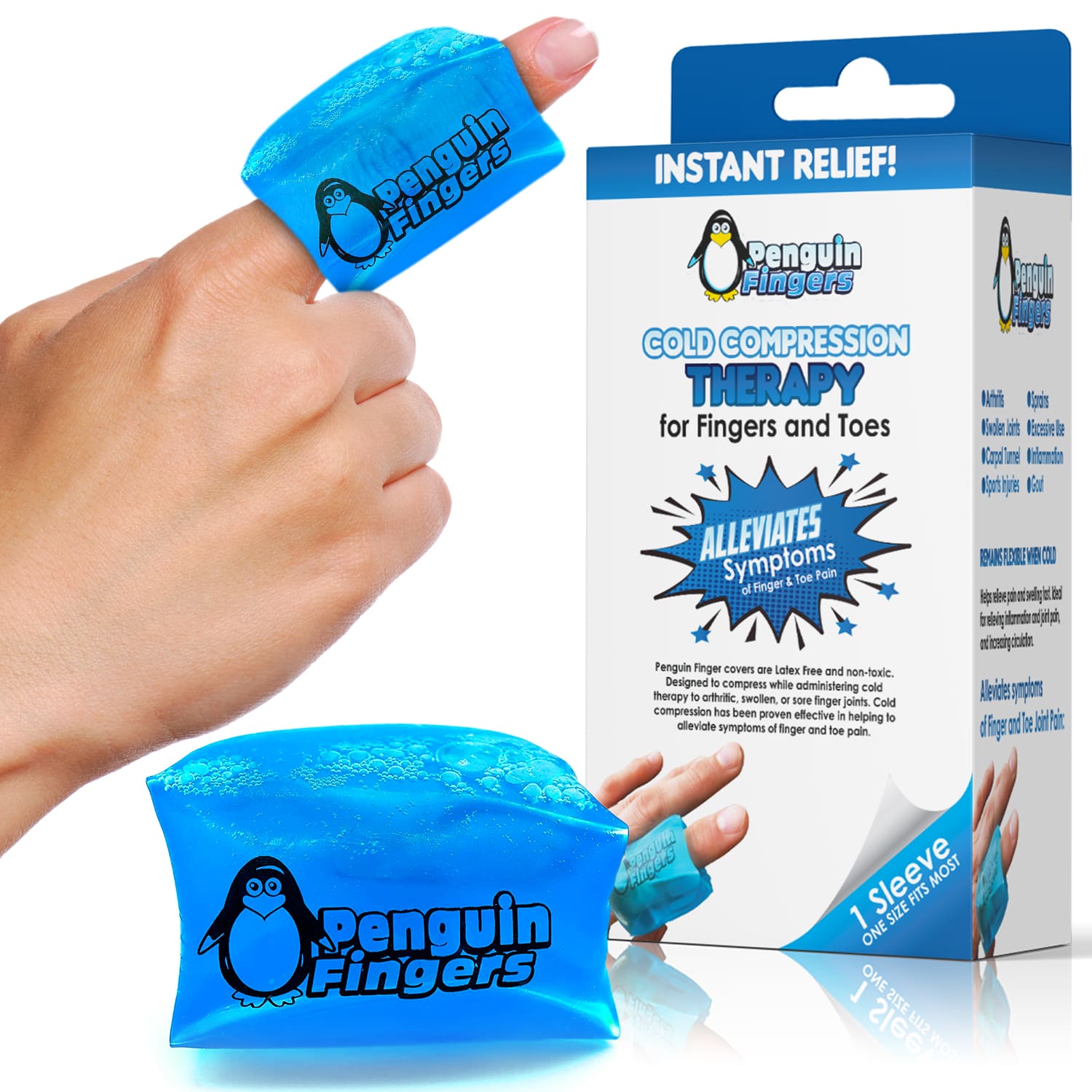
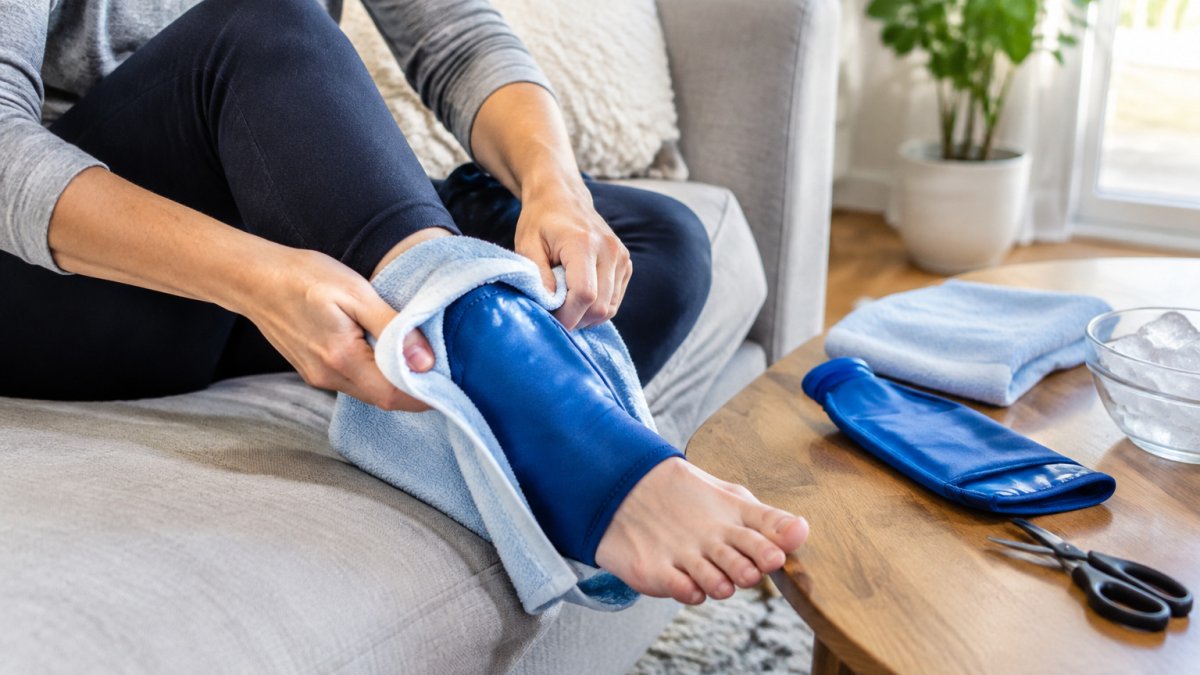
Our Penguin Fingers Cold Compression Gel Packs for Fingers and Toes are designed to insert fingers or toes for targeted cooling and compression. They are priced at $14.95.
Protecting Your Skin: Cloth Barriers and Skin Checks
Always keep a cloth between the cold pack and your skin. Check the skin after each session for redness, numbness, or pale patches. If the skin looks damaged or the area stays numb after the pack is removed, stop using cold and contact your doctor. People with diabetes, peripheral artery disease, or neuropathy should talk to a clinician before using cold therapy, because reduced sensation can hide skin injury. For more detail on safe cold application, read Cold Compression for Gout Pain: Step-by-Step Relief.
The steps below summarise the cold compress protocol for a gouty joint during a flare.
| Step | What to do | Time or frequency |
|---|---|---|
| Prep the joint | Rest it on a pillow or towel, slightly elevated | Before application |
| Build a barrier | Wrap the cold pack in a thin, dry cloth | Never apply directly to skin |
| Apply cold | Hold the wrapped pack on the joint | 10 to 15 minutes |
| Check the skin | Look for redness, pale patches or numbness | At minute 5 |
| Remove and wait | Let skin return to normal colour and temperature | 20 to 30 minutes off |
| Repeat | Reapply during the worst of the flare | Every 2 to 3 hours |
| Log each session | Note time, duration and pain level | Every session |
Does Ice Help Gout in the Foot? Application for Toes and Ankles
Many people find that cold can help with foot and toe pain during a flare.
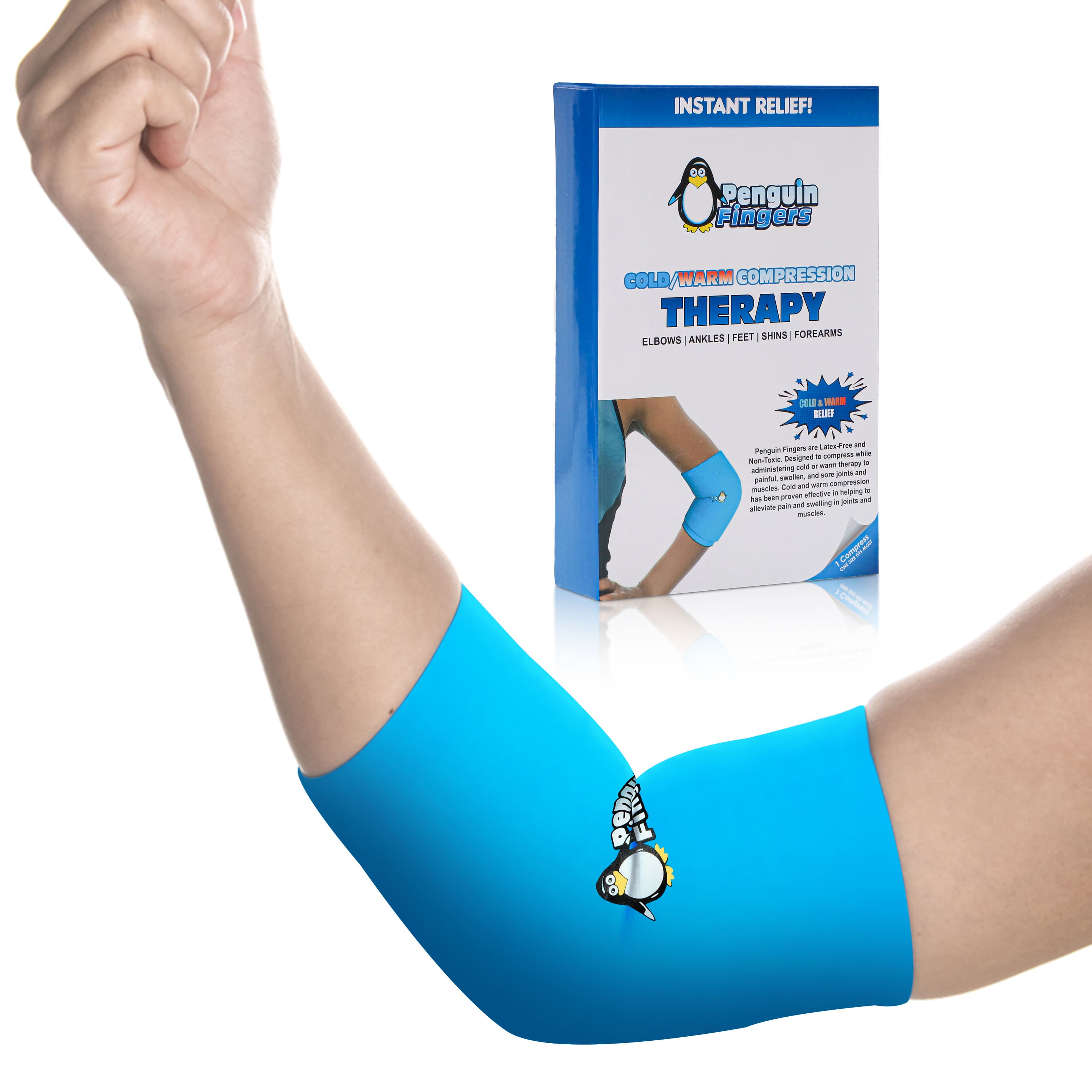
Our Penguin Fingers Elbow and Foot Cold Compression Therapy Sleeve is a reusable sleeve that offers hot or cold therapy. It costs $22.95.
How to Stop Gout Pain at Night Without Disturbing Sleep
Night-time flares are common, and many people wake up in pain. Apply a cold compress for 10 to 15 minutes before bed, using a cloth barrier and a soft sleeve that will not slide off as you move. Remove it before you fall asleep to avoid skin irritation or pressure on the joint. Keeping the joint comfortably supported after removing the compress can also help with managing arthritis hand pain during the night.
If you wake with a flare, a wrapped pack for a short period may help. Keep the sleeve loose enough that it does not restrict blood flow.
Immediate Gout Pain Relief: Cold Therapy Alongside Your Medication
Cold therapy is a comfort measure, not a treatment for the cause of gout. It can temporarily ease pain and swelling, but it does not lower uric acid or dissolve the crystals that trigger a flare. That work belongs to medication and your overall treatment plan. For a broader, step-by-step plan beyond cold therapy, see How to Manage Gout Pain: A Step-by-Step Relief Plan.
A review of acute gout treatment noted that the American College of Rheumatology recommends pharmacologic therapy as first-line treatment, with topical ice and rest used as needed (Review of acute gout treatment options). In practice, that means:
- Keep taking prescribed medication as directed. Do not skip or delay a dose because cold is making you more comfortable.
- Use cold for symptom relief during the first day or two of a flare, when pain and swelling are worst.
- Rest and protect the joint. Avoid putting weight on a painful foot or toe when you can.
- Do not massage the joint during an acute flare. Massage can increase blood flow and worsen inflammation in some people.
Who should be cautious with cold therapy: People with poor circulation, peripheral artery disease, diabetes with reduced sensation, or nerve damage should check with a clinician before using cold packs. The same applies to anyone with Raynaud's phenomenon or a history of cold-related skin injury. Cold can reduce sensation and, in rare cases, cause skin damage if left on too long.
What the evidence does and does not show: A 2021 systematic review concluded that cryotherapy may reduce pain in people with gout, but it also noted that evidence is limited and more studies are needed (Systematic review of cryotherapy for gout pain). A cold-water immersion study reported reduced inflammation and pain, though the summary did not include numerical results (PubMed study on cold-water immersion for gout arthritis). Treat cold as a low-risk add-on with modest evidence, not a proven stand-alone remedy.
When to call your doctor: Seek prompt care if the pain is severe, if a joint looks very red or hot, if you develop a fever, or if your flare does not improve within a few days. These signs can mean something more serious than a typical flare, including infection.
Scheduling Your Next Cold Compress Session and When to Call Your Doctor
Plan cold sessions during a flare, with breaks between each one. Keep a simple log of when you apply cold, how long you leave it on and how your pain changes.
Contact your doctor if the pain is severe, if a joint looks very red or hot, if you develop a fever, or if your flare does not improve within a few days. These signs can mean something more serious than a typical flare.
Ready to try cold therapy for your flare? Shop the Penguin Fingers Cold Compression Gel Packs for fingers and toes, or the Penguin Fingers Elbow and Foot Cold Compression Therapy Sleeve for ankles and feet.
Frequently Asked Questions
Can cold treatment help with gout?
Cold therapy can temporarily ease pain and swelling during an acute gout flare. Cold is best viewed as a symptom-relief step that works alongside prescribed gout medication, not as a replacement for it. Apply cold in short sessions with a cloth barrier and stop if the skin looks white, numb, or blistered.
Should you use ice or heat for gout pain?
During an acute flare, cold is generally the better choice for many people. Heat can increase blood flow and swelling in an inflamed joint, which may make a flare feel worse. If you are unsure which works for you, check with your doctor, especially if you have circulation problems or diabetes.
How long should you apply a cold compress for gout?
Published guidance varies slightly. Start with shorter sessions and remove the cold pack if your skin becomes pale, numb, or painful. Always place a towel or cloth between the pack and your skin.
When should you seek medical care for a gout flare?
Contact a doctor if a gout flare does not improve within a few days, if you develop a fever, if the joint is hot and red across a large area, or if you have trouble moving the joint. Cold therapy should never delay prescribed treatment.


