

Table of Contents
- Why Finger Arthritis Swelling Happens and What It Means
- Step-by-Step Plan to Reduce Finger Swelling During a Flare
- Ice or Heat for Hand Arthritis: Which One to Use and When
- Hand Arthritis Home Remedies That Actually Help
- Hand Exercises for Arthritis to Improve Stiffness and Flexibility
- Joint Protection, Splints, and Daily Activity Changes
- When to See a Doctor for Swollen Finger Joints
- Frequently Asked Questions
Last Updated: October 12, 2026
Why Finger Arthritis Swelling Happens and What It Means
Finger arthritis swelling is fluid buildup around the joints in your hands, usually signaling that the joint lining is irritated.
At Penguin Fingers, we hear the same story daily: fingers that swell overnight, rings that won't slide off, joints that ache before a storm.
That matters because finger arthritis swelling isn't just cosmetic.
American Academy of Orthopaedic Surgeons patient guide on arthritis of the hand
Osteoarthritis vs. Inflammatory Arthritis: Two Different Swelling Patterns
The two main types of hand arthritis swell differently, and knowing which you have changes treatment.
Osteoarthritis is wear-and-tear damage to cartilage. It hits the joints closest to your fingertips (DIP) and middle joints (PIP), with bony, hard swelling that builds over months.
Inflammatory arthritis, such as rheumatoid arthritis, is an immune system problem. It usually affects the same joint on both hands, especially the knuckles, and swelling can appear in weeks.
Here's the practical difference:
- Osteoarthritis swelling: hard, knobby, worse after heavy use
- Inflammatory swelling: soft, warm, worse in the morning, often on both sides
- Osteoarthritis: pain with activity, relief with rest
- Inflammatory: morning stiffness that lasts more than an hour
How to Tell Arthritis Swelling From an Infection or Injury
This is the part most guides skip, and it can keep you out of the hospital.
Arthritis swelling comes on gradually, follows a pattern you recognize, and calms with rest and cold. Infection does the opposite: it hits one finger, spikes fast, and brings redness, severe heat, and pain you can't ignore.
Watch for these red flags:
- One joint that's much hotter and redder than the others
- Fever, chills, or feeling generally unwell
- Pain that gets worse instead of better over 24 hours
- A cut, bite, or recent injury near the joint
Step-by-Step Plan to Reduce Finger Swelling During a Flare
A flare needs a plan you can start in ten minutes.
Step 1: Stop the activity that triggered it. Put down the tool, keyboard, or garden hose and give the joint a break.
Step 5: Take the rings off, before the swelling peaks. A swollen finger plus a tight ring can cut off circulation.
Step 7: Log what you did. Note the trigger, time, and how much swelling dropped.
Finger-Specific Adaptations While You Recover
General hand advice doesn't always translate to swollen fingers. A few adjustments make the plan work:
- Typing: Switch to a keyboard with a lighter actuation force, or dictate instead of typing for the rest of the day. Rest your wrists on a pad so your fingers aren't reaching down.
- Gripping: Use a jar opener, a strap-style bottle opener, or a rubber grip pad instead of twisting by hand. Push doors with your forearm, not your fingertips.
- Writing: Wrap a foam pencil grip around pens and utensils. It spreads the force across a wider area and takes load off the small joints.
- Sleeping: If you wake with puffy fingers, you may be curling your hands under your pillow or chest. Try sleeping with your hand resting flat on a pillow beside you.
- Phone use: Hold the phone with your palm and the opposite hand, not a single-finger grip. Text with your thumbs only in short bursts.
How Long to Try This Before Escalating
A typical overuse or osteoarthritis flare settles noticeably within 24 to 72 hours of consistent cold, elevation, and rest. If swelling is unchanged after three days, or worsening, stop self-treating and call your doctor, inflammatory flares behave differently and often need medical treatment to break the cycle.
Ice or Heat for Hand Arthritis: Which One to Use and When
The rule is simple: cold for swelling, heat for stiffness.
Cold therapy narrows blood vessels, reducing fluid buildup and numbing pain. Use it when a joint is puffy, hot, or freshly irritated.
Heat therapy relaxes muscles and loosens stiff tissue. Use it when a joint is stiff but not swollen, like in the morning or before exercise.
Penguin Fingers Cold Compression Gel Packs for Fingers and Toes →
Here's how the two compare:
| Situation | Best Choice | How Long | Why |
|---|---|---|---|
| Puffy, hot joint | Cold | 10-15 min | Reduces fluid and pain |
| Morning stiffness | Heat | 15-20 min | Loosens tight tissue |
| After exercise | Cold | 10-15 min | Calms fresh irritation |
| Before exercise | Heat | 10-15 min | Prepares joints to move |
| Both swollen and stiff | Cold first, then heat later | 10-15 min each | Treats each problem in turn |
A warm water soak, a low heating pad, or a paraffin wax bath all work for heat.
Hand Arthritis Home Remedies That Actually Help
Most home remedies for hand arthritis fall into three groups: evidence-backed, plausible but unproven, and money-wasting or risky. Here's the honest split.
What Tends to Help (and Why)
- Cold and heat therapy, used at the right time. Cold reduces fluid buildup; heat loosens stiffness. Timing matters more than the device.
- Gentle movement throughout the day instead of long rests. Short, frequent range-of-motion breaks beat one long rest.
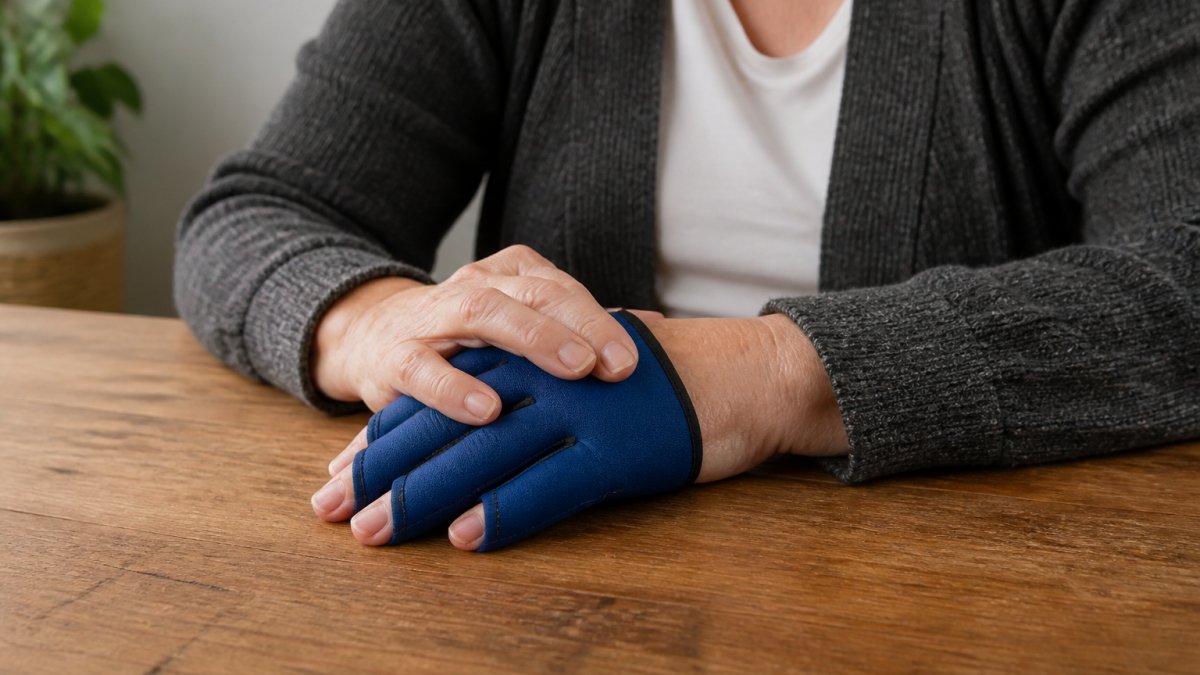
- Compression that supports without cutting off circulation. A finger sleeve or compression glove limits fluid pooling. It should feel snug, not tight, if your fingertip turns pale or numb, it's too tight.
- Elevating your hand while you sleep. A pillow under the forearm reduces morning puffiness for many people.
- Cutting back on salt. High sodium adds to fluid retention, which shows up in the fingers. A modest lever, not a cure.
What Has Weak or Mixed Evidence
- Most supplement claims sold online. Glucosamine and chondroitin show mixed results for knee osteoarthritis and thinner evidence for hands. Turmeric (curcumin) and omega-3s have small studies suggesting modest relief, but results are inconsistent and product quality varies.
- Copper bracelets and magnetic wraps. Controlled studies show no reliable effect beyond placebo. Wear one if you like, just don't let it replace cold, movement, and medical care.
- Extreme elimination diets. Cutting entire food groups without medical guidance causes nutrient gaps and rarely addresses joint swelling. Anti-inflammatory eating patterns are reasonable; crash diets are not.
- Apple cider vinegar, Epsom salt soaks, and similar folk remedies. Low-risk for most people but no strong evidence for reducing joint swelling. A warm Epsom soak feels good because of the warmth, not the minerals.
If You Want to Try a Supplement
Talk to your doctor or pharmacist first: some supplements interact with prescription medications (omega-3s and turmeric can add to blood-thinning effects), and none replace the basics above. Give any supplement 8 to 12 weeks at a consistent dose before deciding, and stop if you notice stomach upset, unusual bruising, or any new symptom.
The Most Underrated Remedy Is Consistency
Ten minutes of cold therapy every evening beats an hour of ice once a week, same for movement, elevation, and pacing. Home remedies work through repetition, not intensity, and the ones that fit your routine are the ones you'll keep doing.
Hand Exercises for Arthritis to Improve Stiffness and Flexibility
Exercise is your best tool for keeping hand function, and it works best once swelling has calmed. Don't force a hot, puffy joint through a workout.
Try this short routine twice a day:
- Fist stretch: Open your hand wide, then curl into a soft fist. Repeat 10 times.
- Finger walk: Walk your fingertips across a table like a spider. 30 seconds.
- Thumb touch: Touch your thumb to each fingertip in turn. 2 rounds.
- Tendon glide: Straighten, then hook, then make a full fist. 10 reps.
- Wrist turn: Rotate your palm up and down slowly. 10 reps.
Stop if pain spikes. Mild stretch is fine, sharp pain is not.
Joint Protection, Splints, and Daily Activity Changes
Joint protection means changing how you use your hands so the joints do less work, the difference between stable hands and hands that flare every month.
Start with these swaps:
- Use a jar opener instead of twisting by hand
- Push doors with your forearm, not your fingers
- Carry groceries with your palm and forearm, not your fingertips
- Use larger grips on pens, tools, and utensils
- Switch to electric tools for repetitive tasks
- Take breaks every 20 to 30 minutes during repetitive work
A splint or brace can rest a painful joint and reduce strain during specific tasks.
Pacing matters as much as any device. Break big tasks into short blocks and do heavy gripping early, when your hands are freshest.
When to See a Doctor for Swollen Finger Joints
Call your doctor if swelling lasts more than two weeks, keeps coming back, or worsens despite home care, signs something more than wear-and-tear is going on.
Go sooner, or seek urgent care, if you notice:
- A joint that's hot, red, and spreading
- Fever or chills with joint swelling
- Sudden severe pain in one joint
- Numbness, tingling, or color changes in the finger
- Swelling after a fall, cut, or animal bite
A doctor can check for inflammatory arthritis with blood tests and imaging. Early treatment for conditions like rheumatoid arthritis protects joints long before damage shows on an X-ray. Arthritis Foundation guidance on when to see a doctor
Nonsurgical treatment usually starts with medication, physical therapy, and activity changes. Surgery is a later option, not a first one.
Swollen, aching fingers don't have to run your day. Penguin Fingers builds wearable cold compression sleeves and wraps for fingers, toes, wrists, and more, with dual hot and cold options so one product covers both sides of your routine. If you're ready to stop managing flares and start preventing them, explore our cold compression therapy sleeves and build the daily habit your hands have been asking for.

Frequently Asked Questions
Does ice help reduce swelling from finger arthritis?
Yes. Cold therapy narrows blood vessels, which lowers blood flow to the area and reduces joint swelling and pain. Apply a cold pack to the swollen finger for 10 to 15 minutes, up to three times a day. Always wrap the pack in a thin cloth first to protect your skin. A wearable cold compression sleeve made for fingers, like those from Penguin Fingers, keeps the cold exactly where you need it without freezing your whole hand.
What are some home remedies for swollen hands?
Start with cold therapy for sudden swelling and warmth for stiffness. Elevate your hand above heart level when resting. Try gentle hand exercises like fist stretches and finger lifts to keep joints moving. Soaking in warm water with Epsom salt may ease stiffness, though evidence for salt is limited. Avoid repetitive gripping and twisting during a flare. Staying at a healthy weight and managing stress also support overall joint health.
When should I see a doctor about a swollen finger joint?
See a doctor if one finger is hot, red, and very painful, if swelling comes with fever or chills, or if you cannot bend the finger at all. These signs may point to infection or injury rather than arthritis. Also seek care if swelling lasts more than two weeks, keeps getting worse, or if over-the-counter pain relievers do not help. Early treatment can prevent lasting joint damage.
Are hand exercises helpful for swollen, stiff finger joints?
Yes, gentle hand exercises improve range of motion and flexibility. Try a fist stretch: slowly curl your fingers into a loose fist, hold for five seconds, then straighten. Repeat five to ten times. Do finger lifts by placing your hand flat and raising each finger one at a time. Move slowly and stop if pain increases. Exercises work best when swelling is down, so use cold therapy first if needed.


