

Table of Contents
- KT Tape vs Compression Sleeves: Key Differences
- How Cold Compression Therapy Works for Recovery
- KT Tape vs Compression Sleeve for Knee Pain
- How to Apply KT Tape Correctly
- How Long to Wear a Compression Sleeve
- Compression Sleeves for Joint Pain and Swelling
- Which Option Is Right for You
- Frequently Asked Questions
Last Updated: October 10, 2026
KT Tape vs Compression Sleeves: Key Differences
When dealing with joint pain, swelling, or injury recovery, the choice between KT tape and compression sleeves matters. Both deliver targeted relief but work differently. KT tape vs compression sleeves isn't about which is universally better, it's about which matches your situation, activity level, and recovery goals.
KT tape is flexible athletic tape applied directly to skin, designed to stay in place for several days. Compression sleeves are wearable garments you slip on and off as needed. Understanding these distinctions helps you choose the right tool.
Below, we'll break down how each works, where each excels, and how to decide which is right for you.
How Cold Compression Therapy Works for Recovery
Cold compression therapy combines cold's numbing effect with compression's stabilizing pressure. Cold reduces inflammation and temporarily numbs pain signals. Compression limits swelling and provides structural support to the joint.

Cold slows blood flow, reducing swelling. Compression prevents fluid from pooling around the joint. Together, they create an environment where recovery happens faster.
KT Tape vs Compression Sleeve for Knee Pain
For knee pain, KT tape excels when you need continuous support through physical activity. Once applied, it stays put during running, jumping, or cutting movements. It provides proprioceptive feedback, your body feels the tape and adjusts movement patterns accordingly, making it popular with athletes.
Compression sleeves provide immediate, consistent pressure but require you to put them on each time you need support. They're ideal for pain that flares during specific activities and more comfortable for all-day wear since they don't stick to skin.
For chronic knee pain from arthritis or tendinitis, compression sleeves often win because you can adjust fit as swelling changes and remove them anytime. KT tape works better for acute injuries requiring continuous support through activity.
How to Apply KT Tape Correctly
Poor KT tape application causes shifting, reduced effectiveness, or skin irritation. Proper application requires understanding adhesion mechanics and physiological factors.
Skin Preparation
Start with clean, dry skin free of oils, lotions, and sweat. Wait at least 30 minutes after exercise or showering. Trim body hair short (not shave) to allow the acrylic adhesive direct contact with skin, resulting in stronger adhesion.
Measurement and Tension
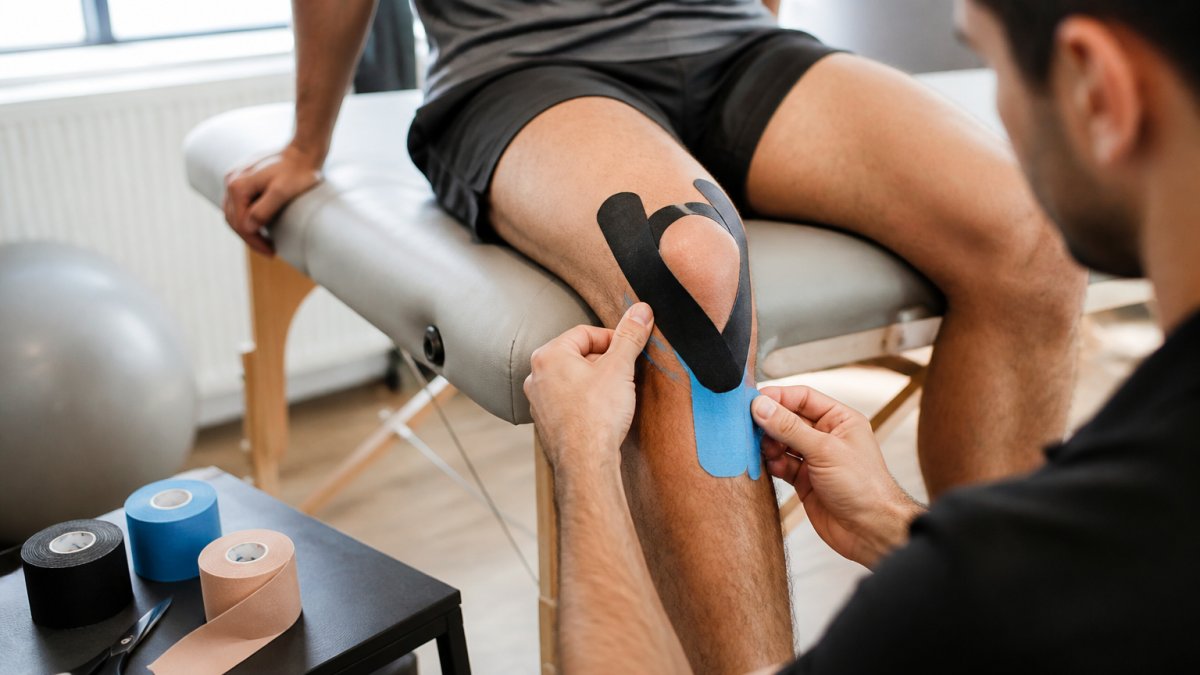
Most applications use two or three strips. Standard knee applications use one 16-inch anchor strip and one or two 12-inch support strips. Cut with rounded corners to prevent peeling.
KT tape works best at 25-50% of maximum stretch. Apply the anchor strip at 25% stretch for light stabilization without restricting blood flow. Support strips can use 35-50% stretch. Full stretch restricts circulation and reduces effectiveness. Maintaining proper tension ensures that the tape remains a reliable component of your routine, much like other effective recovery tools that assist in managing post-exercise inflammation.
A practical test: after application, you should be able to slide one finger under the tape comfortably. If you cannot, the tape is too tight.
Adhesive Activation and Setting Time
KT tape adhesive is heat-activated. The acrylic adhesive bonds more strongly as skin temperature rises. Immediately after application, gently rub the tape for 30-60 seconds to generate friction and activate the adhesive. This step is often skipped and is a major reason tape fails prematurely.
Allow the tape to set for 2-4 hours before intense activity. The adhesive continues to strengthen during this window. If you apply tape and immediately engage in high-intensity exercise, sweat and movement can prevent full adhesive activation, causing the tape to shift before it reaches peak holding strength. For competition or training, apply tape 3-4 hours beforehand when possible.
Expected Performance and Durability
How Long to Wear a Compression Sleeve
Compression sleeves offer more flexibility than tape because you control when to wear them. However, duration safety depends on compression level, fit, material, and individual circulation factors. Understanding these variables helps you maximize benefit while avoiding complications.
Compression Levels and Safe Wear Duration
Compression sleeves are classified by pressure in millimeters of mercury (mmHg):
- Mild compression (8-15 mmHg): Safe for all-day wear, 12+ hours daily. This level provides gentle support and swelling reduction without restricting blood flow. Most over-the-counter sleeves fall into this category.
- Moderate compression (15-20 mmHg): Safe for 6-8 hours daily. This level delivers noticeable swelling reduction and is appropriate for chronic pain management during work or activity.
- Firm compression (20-30 mmHg): Limit to 4-6 hours per session. This level is typically prescribed post-surgery or for significant swelling and requires proper fit to avoid circulation problems.
- Extra-firm compression (30+ mmHg): Medical-grade, requires professional fitting and supervision. Not recommended for self-directed use beyond 2-3 hours per session.
Check your sleeve's packaging or product specifications for its compression rating. If unmarked, it is likely mild compression (8-15 mmHg), which is safe for extended wear.
Penguin Fingers Cold Compression Gel Packs for Fingers and Toes →
Fit and Circulation Monitoring
Proper fit is essential for safe duration. A sleeve that is too tight restricts arterial blood flow; one that is too loose provides minimal benefit and can slip, causing skin irritation. Correct fit means:
- The sleeve sits snugly against skin without leaving deep indentation marks after removal.
- You can slide one finger under the sleeve at the top and bottom edges.
- Skin color below the sleeve (fingers, toes, or distal limb) remains normal, no blanching (whitening) or cyanosis (bluish discoloration).
- No numbness, tingling, or "pins and needles" sensation during or after wear.
If you notice any of these warning signs, indentation marks that persist 10+ minutes after removal, numbness, tingling, skin discoloration, or coolness in the limb below the sleeve, remove it immediately and wait 30 minutes before reapplying. These are signs of excessive compression or poor fit.
Acute Injury vs. Chronic Condition Protocols
For acute injuries (first 48-72 hours), many people wear sleeves continuously, removing them only for bathing and sleep. This approach is safe with mild-to-moderate compression sleeves and supports the inflammation-reduction phase of healing. Expect swelling to decrease noticeably within the first 3-5 days.
For chronic conditions like arthritis or tendinitis, wear patterns vary widely. Some people wear sleeves all day; others use them only during activities that trigger symptoms. A common starting protocol recommended by physical therapists is:
- Days 1-3: 2-3 hour sessions, 2-3 times daily, with 1-2 hour breaks between sessions.
- Days 4-7: Extend to 4-6 hour sessions if comfort and circulation remain normal.
- Week 2+: Transition to on-demand wear during symptomatic activities, or all-day wear if pain and swelling improve.
This graduated approach allows your body to adapt and helps you identify the minimum duration needed for symptom relief.
Material Durability and Hygiene Considerations
Compression sleeves made from neoprene or elastic blends maintain consistent pressure through repeated wear and washing. However, material fatigue occurs over time.
Wash sleeves weekly in cool water with mild soap and air-dry flat. Machine washing and high heat accelerate material breakdown.
When to Seek Clinical Guidance
Compression Sleeves for Joint Pain and Swelling
Compression sleeves work by applying graduated pressure, typically tighter at the extremity and gradually looser toward the body. This pressure pattern promotes blood flow back toward the heart, reducing swelling. For joints prone to puffiness, swollen ankles after standing all day, puffy fingers from arthritis, this mechanism is highly effective.
The material matters. Quality compression sleeves use neoprene or specialized elastic blends that maintain consistent pressure without cutting off circulation. Penguin Fingers Elbow and Foot Cold Compression Therapy Sleeve combines this compression with a gel pack that can be chilled or warmed, giving you both pressure and temperature therapy in one product.

This makes sleeves particularly useful for people managing chronic conditions where swelling is the primary complaint. Unlike KT tape, which works mainly through proprioceptive feedback and light support, compression sleeves directly address fluid retention around joints.
Which Option Is Right for You
Your choice depends on three factors: your activity level, how long you need support, and whether you prefer continuous wear or on-demand relief.
Choose KT tape if you're an athlete or highly active person who needs support through intense movement. The tape provides proprioceptive feedback that helps you move more confidently, and it stays in place through sweating and activity. It's also ideal if you need support for several consecutive days without removing it.
Choose a compression sleeve if you have chronic pain that flares up during specific activities, prefer on-demand support you can remove anytime, or deal with significant swelling. Sleeves are more comfortable for all-day wear, easier to adjust, and don't require reapplication. For conditions like arthritis or tendinitis where you're managing ongoing inflammation rather than recovering from acute injury, sleeves typically deliver better results.
Many people use both. KT tape during competition or intense training, compression sleeves during recovery and daily activities. The Penguin Fingers Cold Compression Gel Packs for Fingers and Toes ($14.95) offer a third option specifically designed for targeted relief on smaller joints, combining compression with optional cold therapy.
| Approach | Best For | Duration | Comfort Level | Reapplication |
|---|---|---|---|---|
| KT Tape | Athletes, acute injuries | 3-5 days continuous | Good during activity | Not needed until removal |
| Compression Sleeve | Chronic pain, swelling | On-demand or all-day | Excellent for daily wear | None, put on/take off |
| Cold Compression Gel Pack | Fingers, toes, targeted areas | 20-30 minutes per session | Excellent for specific joints | As needed |
Choosing between KT tape and compression sleeves comes down to your lifestyle and recovery needs. If you're managing chronic joint pain and swelling, compression sleeves offer the flexibility and comfort most people prefer. If you're recovering from an acute injury or competing in sports, KT tape provides the continuous support and proprioceptive feedback athletes need. For targeted relief on smaller joints like fingers and toes, Penguin Fingers Cold Compression Gel Packs deliver both compression and optional cold therapy in a design made specifically for those areas. Start with the approach that matches your primary concern, pain, swelling, or movement support, and adjust based on how your body responds.
Frequently Asked Questions
What is the difference between KT tape and a compression sleeve?
KT tape is an elastic adhesive tape that provides targeted support and proprioceptive feedback through skin stimulation. Compression sleeves are wearable garments that deliver sustained pressure and cold compression therapy to reduce swelling and pain. KT tape works through movement and muscle activation, while compression sleeves provide continuous cooling and compression without requiring specific application techniques.
Is KT tape or a compression sleeve better for knee pain?
KT tape works better for ongoing support during activity and proprioceptive feedback. Many athletes use both: compression sleeves during recovery phases and KT tape during training or competition. Your choice depends on whether you need immediate swelling reduction or active movement support.
How long should you wear a compression sleeve?
Some sleeves are designed for daily wear during work or activity. Always follow the product's guidance.
Can you wear KT tape and a compression sleeve together?
Yes, many athletes and patients combine both for layered support. KT tape provides proprioceptive feedback and targeted muscle support, while a compression sleeve adds swelling reduction and cold therapy. This combination works well during recovery phases when you want both movement support and inflammation control. Ensure the tape doesn't restrict sleeve fit or create uncomfortable pressure points.


