

Table of Contents
- Why KT Tape Falls Short for Finger Support
- Athletic Tape vs Kinesiology Tape for Fingers
- Finger Splint for Joint Support: When Rigid Beats Flexible
- Finger Compression Gloves and Sleeves for Arthritis and Daily Wear
- How to Tape an Index Finger Knuckle (and Safe Removal)
- Cold Compression: A Reusable Finger Support Alternative
- Choosing the Right Finger Support by Injury and Activity
- What to Ignore When Shopping for Finger Support
- Frequently Asked Questions
Last Updated: October 9, 2026
Why KT Tape Falls Short for Finger Support
Kinesiology tape has become the default answer for almost every ache and strain, but it is a poor fit for finger support. At Penguin Fingers, we hear from customers who tried taping, wrapping, and splinting before finding a reusable option.

The core problem is mechanical: a finger bends dozens of times an hour, and every bend pulls against the adhesive. Add hand-washing and sweat, and most tape jobs barely survive a single workday.
Adhesion and Wear Time on Fingers
Adhesion is where finger taping fails first. A finger's surface area is tiny, so there is very little tape-to-skin contact to distribute the load, and every grip or keystroke lifts the edges.
Wear time also depends on skin type. Oily skin, hairy knuckles, and frequent hand-washing shorten how long any adhesive stays bonded, so a finger tape job often lasts only a few hours.
Skin Sensitivity and Allergies
Frequent taping irritates skin. The adhesive that makes tape stick also causes redness, itching, and sometimes a contact reaction after repeated use.
This matters for anyone taping daily. If your skin needs a break between applications, a tape-based routine becomes hard to sustain, which is one reason reusable compression options appeal to people managing a long-term condition.
Athletic Tape vs Kinesiology Tape for Fingers
Athletic tape and kinesiology tape do different jobs, and neither is designed specifically for fingers.
For finger support, the trade-off is between rigidity and flexibility.
| Option | Support Level | Range of Motion | Realistic Wear Time on a Finger | Ease of Use |
|---|---|---|---|---|
| Athletic tape | High, limits motion | Very low | A few hours of active use before edges lift | Moderate; needs firm tension and clean skin |
| Kinesiology tape | Mild, moves with skin | High | Often only a few hours on a knuckle before peeling | Moderate; small strips lift easily |
| Cohesive self-adherent wrap | Low to moderate | Moderate | Usually one activity session | Easy to apply, no adhesive residue |
| Paper tape | Minimal | High | Short; secures dressings only | Very easy |
| Foam tape | Low to moderate | Moderate | Varies with padding thickness | Easy, but bulky on small joints |
| Compression sleeve or glove | Low to moderate, even pressure | High | Hours, reusable | Very easy; no adhesive |
| Cold compression sleeve | Low, plus cooling | High | 15 to 20 minutes per session, reusable | Very easy; no adhesive |
| Rigid splint | High, blocks motion | None at the joint | Continuous until removed | Easy to wear, hard to work in |
The practical takeaway: tape alone rarely delivers real stabilization on a finger. Kinesiology tape provides light awareness and compression, but expect to reapply often.
A few mechanics explain the differences. Athletic tape holds because it does not stretch, so any bend pulls against the adhesive.
Match the option to the job: rigid tape or a splint for immobilization, kinesiology tape for light awareness, and a reusable compression or cold compression sleeve when you need hours of wear without adhesive.
One more consideration is skin tolerance. Every adhesive option carries some risk of irritation with repeated use, while adhesive-free options such as compression and cold compression sleeves avoid that problem entirely.
Finger Splint for Joint Support: When Rigid Beats Flexible
A finger splint is the right choice when a joint needs to be held still. Splints are rigid supports, often plastic or metal, that limit bending at a specific joint.
Rigid support has a downside: it blocks range of motion entirely, which is fine for a short recovery window but frustrating for daily life.
Flexible support sits in the middle, offering gentle stabilization and compression without locking the joint.
Finger Compression Gloves and Sleeves for Arthritis and Daily Wear
Compression gloves and sleeves are the most wearable option for ongoing finger support. They apply gentle, even pressure across the hand and fingers, which many people with arthritis find soothing during long days of typing, gardening, or household tasks.
The appeal is comfort and consistency. Unlike tape, a compression glove goes on and off in seconds and can be worn for hours without adhesive residue.
Compression Gloves vs Sleeves
Gloves cover the whole hand, including the palm and often the wrist. Sleeves are open-ended and target specific areas, like a single finger or the wrist. Gloves suit broad, whole-hand stiffness.
A stretchy glove feels warmer and more enclosing, which some users like and others find too much for all-day wear, while a finger sleeve is lighter and more discreet.
How to Tape an Index Finger Knuckle (and Safe Removal)
If you still want to try taping, technique matters. A clean, dry finger and the right tape are the difference between a job that lasts a few hours and one that lasts a full day.
Penguin Fingers Cold Compression Gel Packs for Fingers and Toes →
Here is a simple method for the index finger knuckle:
- Wash and dry the hand completely, and trim any hair around the joint.
- Cut a strip of tape about twice the length of the finger.
- Anchor one end just below the knuckle on the palm side.
- Wrap over the knuckle with light tension, letting the tape follow the natural bend.
- Press the tape down firmly for 10 to 15 seconds to activate the adhesive.
- Test the bend. If the tape pulls tight or wrinkles, remove and reapply.
Safe removal matters as much as application. Peel the tape back slowly, in the direction of hair growth, while pressing the skin down with your other hand.
Cold Compression: A Reusable Finger Support Alternative
Cold compression is a reusable alternative that sidesteps the adhesion problem entirely.
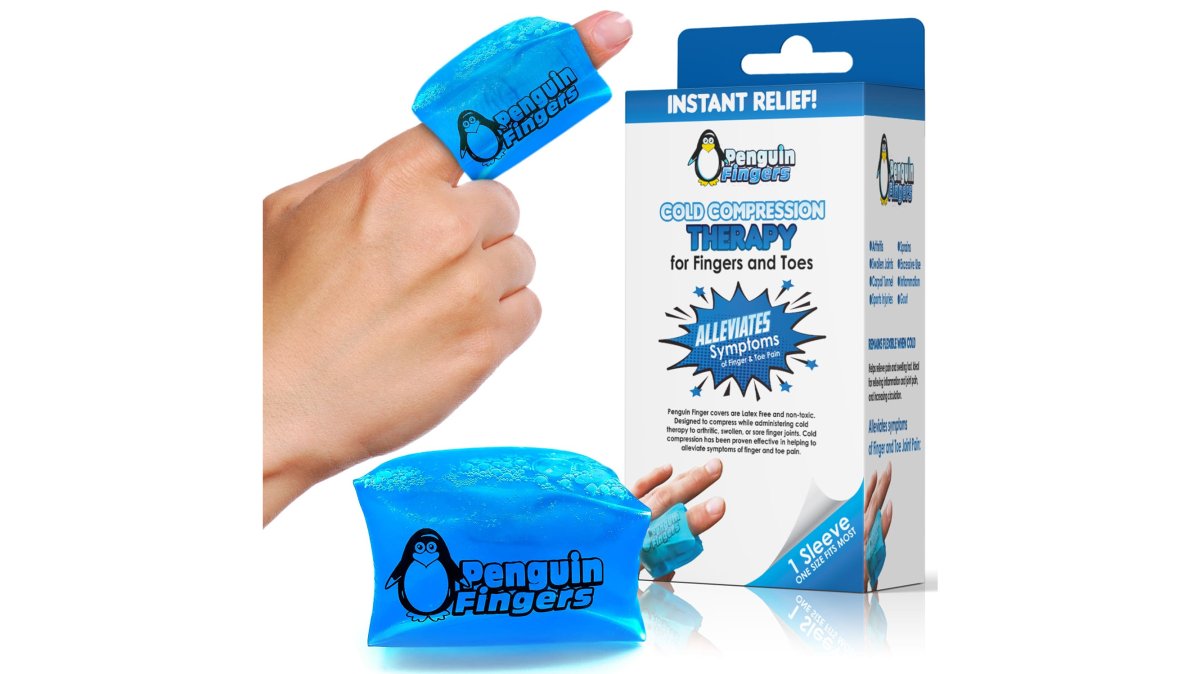
This is the category we build for. Our Penguin Fingers cold compression gel packs for fingers and toes slide over a finger or toe and compress only the area that needs it.
For anyone managing arthritis, a jammed finger, or a sprain, a reusable sleeve is easier to live with than daily taping.
Choosing the Right Finger Support by Injury and Activity
The right support depends on what you are dealing with and what you need to keep doing. There is no single best option, only the best match for the situation.
| Situation | Best Support Type | Why |
|---|---|---|
| Acute sprain or jam | Rigid splint | Holds the joint still while it heals |
| Arthritis, daily stiffness | Compression glove or sleeve | Gentle pressure, comfortable for hours |
| Post-activity swelling | Cold compression sleeve | Reduces swelling without adhesive |
| Climbing or gripping sports | Flexible tape or sleeve | Keeps grip and dexterity |
| Typing or office work | Compression sleeve or glove | Discreet, wearable during tasks |
| Finger hypermobility | Flexible support or ring splint | Limits end-range motion without locking the joint |
| Mild soreness after use | Compression sleeve or cold compression | Low-cost, reusable, no adhesive |
Start with the goal, not the product
A useful way to choose is to ask what you are trying to accomplish. Four goals each point to a different category.
- Immobilize. If a joint needs to stop moving so it can heal, you want a rigid splint, not tape. Tape cannot reliably prevent motion at a small joint.
- Stabilize without locking. If the joint is unstable or hypermobile but you still need to use your hand, flexible support such as a compression sleeve or a ring splint is the middle ground.
- Manage swelling and soreness. Cold compression and gentle compression reduce swelling and ease discomfort without restricting motion.
Match the support to the condition
Mild soreness after a long day of typing or gardening rarely needs more than a compression sleeve worn for a few hours. Joint instability calls for something that limits end-range motion, such as a flexible support or a ring splint.
Treating these as interchangeable is the most common mistake. A rigid splint on a hypermobile finger can weaken the surrounding muscles over time, while a light sleeve on an acutely injured joint may not provide enough protection.
What support can and cannot do
Support products manage symptoms and protect a joint; they do not heal tissue or reverse a condition. Compression and cold can ease swelling and discomfort, and a splint can hold a joint still while it heals, but none replace a proper diagnosis.
Seek professional assessment when:
- The finger is deformed, or you cannot straighten or bend it.
- Pain, swelling, or stiffness is worsening rather than improving.
- Numbness, tingling, or color changes appear in the finger.
A quick decision path
If you are unsure, work through these questions:
- Does the joint need to stop moving? If yes, use a rigid splint and follow clinician guidance.
- Is the joint unstable or hypermobile but still usable? Choose flexible support such as a compression sleeve or ring splint.
- Is the main problem swelling or soreness after activity? Use cold compression or gentle compression.
- Is the goal protection during sport or work? Choose a flexible sleeve or tape that preserves grip.
For athletes, the priority is keeping grip and range of motion. For someone managing a chronic condition, comfort over long wear matters more. For an acute injury, follow your clinician's guidance on immobilization.
What to Ignore When Shopping for Finger Support
Marketing language is where most buyers get misled. A few claims deserve skepticism.
- "One size fits all" tape. Tape does not adapt to finger size, and a bad fit means it peels.
- "Medical grade" as a selling point. The phrase is vague and rarely means anything specific.
- "Cures arthritis." No support product cures arthritis. Compression and cold can ease symptoms, not reverse a condition.
What actually matters is fit, material, and how the product is used. Look for something that stays in place, feels comfortable against your skin, and suits your activity. Reusable options tend to cost less per use than a constant supply of tape.
Frequently Asked Questions
What can I use instead of KT Tape to support a finger?
For flexible support, finger compression gloves or sleeves work well for arthritis and mild swelling. For joint stabilization after a sprain, a finger splint offers rigid support. For cold therapy and compression in one step, reusable gel sleeves like Penguin Fingers Finger and Toe Ice Pack ($14.95) slip over the finger and stay put without adhesive. Each option suits different injuries, so match the support level to your activity and recovery stage.
Are finger splints or compression gloves better than tape?
It depends on what you need. Splints limit joint movement, which helps healing after a sprain or fracture. Compression gloves provide gentle pressure and warmth for arthritis and sore joints without restricting range of motion. Tape offers mild support but can loosen when hands sweat or get wet. For long-term daily wear, compression gloves and reusable cold compression sleeves often last longer and cost less per use than disposable tape.
How do you tape an index finger knuckle?
Clean and dry the finger first. Use 1-inch athletic tape and start just below the knuckle, wrapping toward the fingertip with slight overlap. Keep the tape snug but not tight enough to cut off circulation. Avoid wrapping directly over the joint crease if you need full bending. Check for numbness or color changes, and remove the tape after a few hours to let skin breathe. For reusable support without adhesive, a compression sleeve is a practical alternative.
Can athletic tape restrict finger movement?
Yes. Athletic tape is less stretchy than kinesiology tape, so wrapping a finger too tightly or across the joint can limit bending and grip. That restriction can be helpful for immobilizing an injured knuckle, but it becomes a problem during sports that need dexterity, like climbing or bowling. If you want support without losing range of motion, choose a flexible compression glove or a low-profile sleeve instead.
Finger pain that returns every day deserves a support option that keeps up with you, not one you have to reapply by lunchtime. Penguin Fingers makes reusable cold compression sleeves and wraps designed for fingers, toes, wrists, and more, with dual hot and cold therapy so one product covers both needs. If tape keeps letting you down, try a wearable alternative that stays put. Get started with Penguin Fingers and give your hands the consistent, comfortable support they have been missing.


