

Table of Contents
- Why Nighttime Wrist Support Matters for Carpal Tunnel
- Quick Comparison: 5 Best Wrist Braces for Sleeping
- How to Choose a Carpal Tunnel Brace for Night Use
- How Tight Should a Wrist Brace Be at Night?
- How Long to Wear a Wrist Brace for Carpal Tunnel
- Sizing and Fit Guide for Sleeping Braces
- When to Get Medical Advice Before Buying a Brace
- Conclusion: Picking the Right Sleep Brace for You
- Frequently Asked Questions
Last Updated: October 18, 2026
Why Nighttime Wrist Support Matters for Carpal Tunnel
Nighttime is when carpal tunnel symptoms often hit hardest. During sleep, your wrists tend to curl inward, and that bent position puts pressure on the median nerve, which runs through the narrow carpal tunnel at the base of your hand.
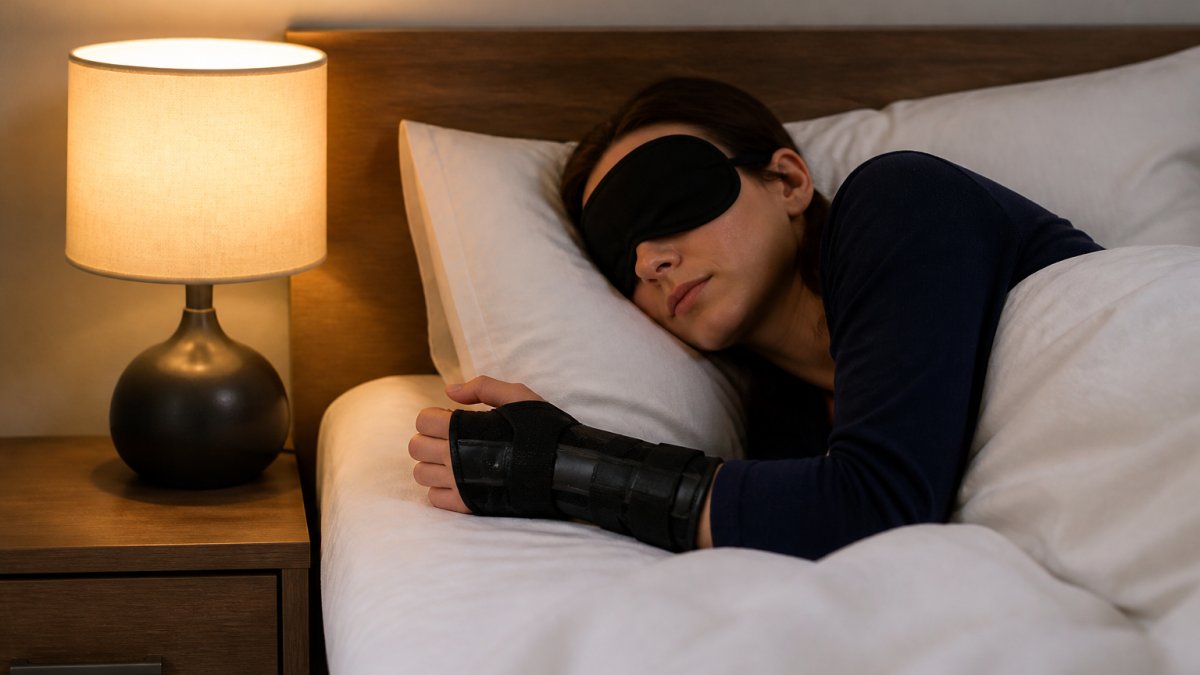
A wrist brace for sleeping works by holding the wrist in a neutral, straight position so the carpal tunnel stays open and nerve compression eases.
The logic is simple. If your wrist stays straight for six to eight hours, the nerve gets a genuine rest.
Quick Comparison: 5 Best Wrist Braces for Sleeping
Below is our summary of five sleep-focused brace styles worth considering, judged on the criteria that actually matter at night: neutral positioning, comfort, fit, and breathability.
| Brace Style | Support Level | Best For | Sleep Comfort | Typical Price Band |
|---|---|---|---|---|
| Rigid palmar-stay night splint | Firm, rigid | Moderate symptoms, wrist curling at night | Good once fitted | $20-$40 |
| Semi-rigid splint with removable stay | Adjustable | Mild to moderate, mixed day/night use | Very good | $15-$35 |
| Soft compression sleeve with stay pocket | Light | Mild symptoms, sensitive skin | Excellent | $10-$25 |
| Molded thermoplastic night splint | Firm, custom | Persistent symptoms, fitted by a clinician | Good, needs fitting | $40-$90 |
| Adjustable wrap-style brace | Light to moderate | Swelling, variable tightness needs | Good | $12-$30 |
No single style wins for everyone. The right pick depends on how much support your wrist needs and how you sleep.
What separates a good sleep brace from a good daytime brace
A brace that feels fine at a desk can be miserable at 2 a.m. When we compare sleep braces, we look at five things product descriptions rarely mention:
- Bulk under the pillow. A thick palmar pad or wide dorsal strap can press into the mattress when you roll onto that side. Slimmer profiles tend to stay on all night.
- Heat retention. Non-breathable neoprene traps sweat; perforated fabric or a ventilated stay pocket keeps the hand cooler through six to eight hours.
- Fastener noise. Hook-and-loop straps can be loud enough to wake a partner. If you share a bed, look for low-profile closures or a sleeve-style design.
- Pressure points. Edges that dig into the palm or the base of the thumb cause most people to remove the brace overnight. A padded palm and rounded stay ends help.
- Stays-in-place performance. A brace that migrates up the forearm or twists during sleep stops holding the wrist neutral. Adjustable straps and a contoured fit reduce this.
Rigid versus semi-rigid: which belongs on your nightstand
Rigid palmar-stay splints hold the wrist firmly in neutral and are the closest match to the classic night splint described by orthopedic guidance. They suit people whose wrist curls strongly during sleep or who have moderate symptoms.
Semi-rigid splints with a removable stay let you dial support up or down. Many people start with the stay in, then remove it once symptoms settle. They are the most versatile pick for mixed day/night use.
Soft compression sleeves with a stay pocket are the most comfortable for mild symptoms and sensitive skin, but they offer the least positional control.
A note on evidence and expectations
Night splinting is widely used and commonly recommended as a conservative first step for mild to moderate carpal tunnel syndrome, but relief varies. A brace does not address every cause of wrist pain, and it will not reverse nerve damage. If symptoms persist or worsen despite consistent nighttime wear, that is a signal to get evaluated rather than to buy a stiffer brace.
How to Choose a Carpal Tunnel Brace for Night Use
Choosing a brace for sleep is a different exercise from choosing one for daytime typing. At night, comfort and a true neutral position matter more than maximum rigidity. Here is how we would narrow it down.
- Check the stay. A palmar stay (the metal or plastic strip along the palm) is what keeps the wrist straight. Removable stays let you dial support up or down.
- Prioritize breathability. You will wear it for hours. Look for breathable material and a palm cushion to reduce pressure points.
- Confirm left or right hand. Most braces are hand-specific. Order the correct side.
- Look for adjustable straps. Straps let you fine-tune compression as swelling changes overnight.
- Weigh rigid versus semi-rigid support. Rigid support holds the wrist firmly; semi-rigid support allows slight movement and often feels better for sleep.
How Tight Should a Wrist Brace Be at Night?
A wrist brace should be snug enough to hold the wrist straight but loose enough that you can slide one finger under the straps. If your fingers tingle more, or the hand feels cold or numb, it is too tight.
Tightness is the number one reason people abandon a night brace. Compression should feel supportive, not restrictive. Adjustable straps make this easier: start firm, then loosen slightly once you are lying down, since swelling and position change pressure.
Watch for these signs it is too tight:
- New or worsening numbness in the fingers
- A throbbing sensation or visible swelling
- Red marks or pressure points that persist after removal
If tightness does not resolve after adjusting, stop wearing it and speak with a clinician.
How Long to Wear a Wrist Brace for Carpal Tunnel
Most people wear a night brace for several weeks, often while sleeping only, and reassess symptoms along the way. There is no universal timeline, and the right wearing schedule depends on your symptoms and your clinician's guidance.
Penguin Fingers Wrist Cold Compression Pack →
A practical approach many people follow: wear it nightly for the first few weeks, then taper to nights when symptoms flare. Daytime use depends on your activities; some people wear a lighter brace during typing, others only at night. Consistency matters more than duration.
Sizing and Fit Guide for Sleeping Braces
Fit decides whether a brace helps or hurts. A brace that is too loose slides off during the night and stops holding the wrist neutral; one that is too tight can worsen tingling and pressure. Use this step-by-step guide before you buy and again when the brace arrives.
Step 1: Measure the right spot
Measure the circumference of your wrist just below the wrist bone, using a soft tape measure or a strip of paper you mark and lay against a ruler. Measure the hand you plan to brace, not the other one. If you are between sizes, size up for sleep, since a slightly roomier fit is more comfortable overnight and easier to adjust.
Step 2: Confirm left or right hand
Most braces are hand-specific, with the palmar stay shaped for one side. Order the correct side. A brace worn on the wrong hand will not hold the wrist in neutral and can create pressure points along the thumb or the outside of the wrist. If you need support on both hands, buy two braces rather than trying to make one fit both.
Step 3: Set the straps lying down
Adjust the straps while you are lying in bed, not standing at a counter. Swelling and position change pressure once you are horizontal. Start with the straps firm enough to hold the wrist straight, then loosen slightly. You should be able to slide one finger under each strap.
Step 4: Check the neutral position
A well-fitted sleep brace should:
- Hold the wrist in a neutral position, not bent up or down
- Leave the fingers free to move
- Sit smoothly against the skin without digging in
- Stay in place when you roll over
Step 5: Troubleshoot overnight problems
If a brace shifts during the night or leaves deep marks, it is the wrong size or wrongly adjusted. Use this quick diagnostic:
- Brace slides up the forearm: the straps are too loose or the size is too large. Tighten incrementally, then consider a smaller size if it still migrates.
- Brace twists during sleep: the palmar stay may be too short for your hand, or the wrist strap is not snug enough. Check that the stay runs from the palm to the forearm.
- Deep red marks or pressure points: the brace is too tight or the edges are digging in. Loosen the straps and check for a padded palm or rounded stay ends.
- Fingers tingle more, or the hand feels cold or numb: the brace is too tight. Loosen it; if the sensation does not resolve, stop wearing it and speak with a clinician.
- Brace feels hot and sweaty: switch to a more breathable material or a sleeve-style design, and avoid wearing it over lotion.
Before you buy: check the return policy
Fit problems are common on the first try, so check the return or exchange policy before ordering. A brace you can exchange for a different size is worth more than a slightly cheaper one you are stuck with. Wash instructions matter too: most fabric braces are hand-washable and air-dry, and a brace that cannot be cleaned will not last through weeks of nightly wear.
When to Get Medical Advice Before Buying a Brace
Self-selecting a brace is fine for mild, occasional symptoms. It is not fine for everyone. See a clinician first if you have persistent numbness, muscle wasting at the base of the thumb, weakness dropping objects, symptoms in both hands, or symptoms that do not improve after a few weeks of bracing.
The National Institute of Neurological Disorders and Stroke notes that carpal tunnel syndrome can worsen without treatment, and that accurate diagnosis matters because other conditions mimic it. A brace manages symptoms; it does not replace a diagnosis. If you are unsure, get checked before you buy.
Conclusion: Picking the Right Sleep Brace for You
Finding relief at night comes down to one thing: keeping your wrist neutral while you sleep, without so much pressure that you tear the brace off at 2 a.m. Start with a semi-rigid or rigid splint with a palmar stay, get the size right, and adjust the straps until it is snug, not tight.
For daytime aches and swelling between nights, our Penguin Fingers Wrist Cold Compression Pack delivers cooling compression to tired, swollen wrists, and it is safe for daily use. Get started with Penguin Fingers and support your wrists around the clock.

Frequently Asked Questions
What is the best wrist brace to wear at night for carpal tunnel?
The best night brace keeps your wrist in a neutral position without being too tight. Look for a sleep-specific splint with a rigid or semi-rigid palmar stay, breathable material, and adjustable straps. A comfortable fit that you can wear all night is more important than maximum rigidity. Many people find a low-profile splint works well for sleeping, while others prefer a slightly firmer support. Try one and adjust based on comfort and morning symptoms.
Should you sleep with a wrist brace if you have carpal tunnel?
Yes, many people with carpal tunnel syndrome find nighttime splinting helpful because symptoms often worsen at night when the wrist bends. A brace keeps the wrist straight, reducing pressure on the median nerve. However, it's not a cure, and you should consult a doctor for proper diagnosis and treatment. If you wake with numbness or tingling, a night brace may help, but check with a healthcare provider before starting.
How tight should a carpal tunnel wrist brace be at night?
A night brace should be snug enough to keep your wrist from bending but not so tight that it restricts circulation or causes numbness. You should be able to slide a finger under the straps. If your fingers turn cold, pale, or tingle more, loosen the straps. Comfort is key for sleeping; adjust until it feels supportive but not painful. Always follow the manufacturer's fitting instructions.
How long should you wear a wrist brace for carpal tunnel?
Wear a night brace for as long as your doctor recommends, often several weeks to months. Many people wear one only at night while sleeping. If symptoms persist or worsen, consult a healthcare professional. For daytime use, take breaks and follow medical advice. The duration depends on severity and response to treatment; some may need surgery if conservative measures fail.


